Unknown's avatar

More XOLA!


We’re developing a workshop for politically motivated outdoor cinema producers. This fall there’ll be two workshops, one in Malmö and one in Gothenburg. In Gothenburg, the workshop is arranged for young activists and artists involved with the organization Pantrarna. In Malmö, the participants come from a variety of organizations for young people, gathered through Den Nya Konstutbildningen.
3D jubileum

The workshops will provide some basic technical know-how and some hands-on practice with doing outdoor screenings. We’ve talked a lot about what happens after the workshops, once we leave. What we’re trying to do is make it as feasible as possible for the participants to continue without us there. This means that we’ll be leaving technical equipment behind, for the participants to continue using, but also that we’ll try to introduce them to existing local networks, for example.

The workshop has grown out of our work with a presentation called To Own The Means Of Image Production, and with our Manual – info on both can be found here on the blog.

As a socialist cinema, we’re happy to say that both workshops are funded by the state, through The Public Art Agency, or Statens Konstråd. Special thanks to Edi Muka, Isak Mozard, Martì Manen, and Joanna Zawieja at Statens Konstråd! Both workshops are also produced in collaboration with Konstfrämjandet, the art wing of the people’s movements in Sweden. Special thank you’s to Lisa Nyberg and Kim Einarsson from Konstfrämjandet!
Unknown's avatar

The Electrification Of Hoja (VI)

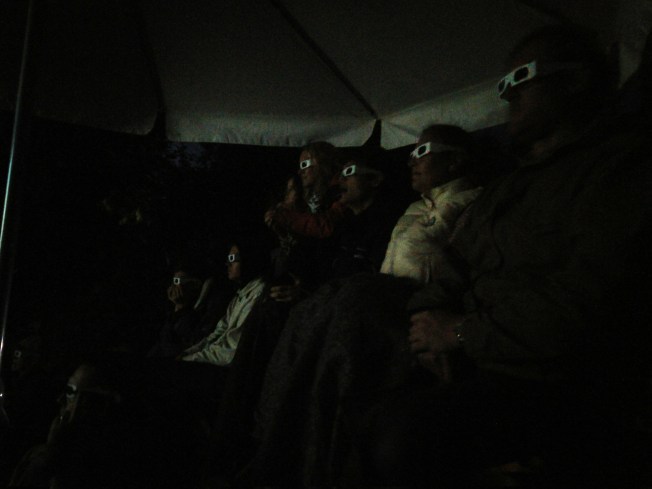
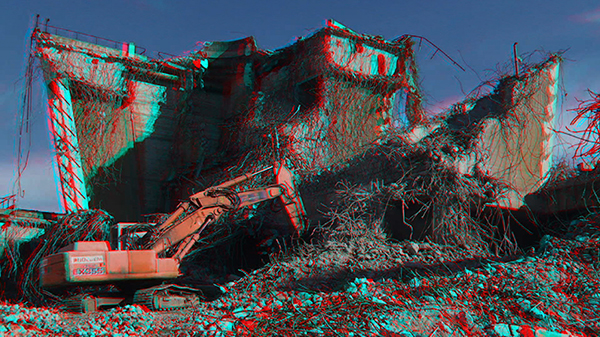
The third film of our jubilee screening, Nuclear Voyage by Armin Linke, will also be our very first screening of a 3D film. Visitors to the cinema will be provided with classical paper 3D glasses.

nucleare1.2

Nuclear Voyage (c) Armin Linke

Quoting from the website of German video distributors Arsenal:

The video NUCLEAR VOYAGE depicts inactive nuclear power stations and waste sites in a state of eternal coma. Observed in long takes during their radiation- and security-checks, the few people still working there stand in marked contrast to the James Bond-like world of high hopes for the future and faith in technology. Filmed and transmitted in 3-D technology, the video also serves as a comment on the current hype regarding spatial viewing of images, the spectacle of which had already been celebrated as photography’s great promise in the 19th century with the advent of stereoscopy. Its renaissance today comes as a curious conflation of joyous anticipation of things to come with a dash of melancholia. (Text: Klosterfelde)

nucleare1.17+++

Nuclear Voyage (c) Armin Linke

As we’re situated half an hour’s drive from the closed down nuclear power plant Barseback, we find these images especially fascinating. The demolition of Barseback is expected to take up to 15 years to complete. It’s the first ever demolition of a nuclear power plant in Sweden, and therefore there are many variables to sort out – like where to keep the radioactive debris, for example.  There have been plans to construct housing on the soonish-to-be vacant land, once demolition is completed, but these plans have been scrapped for now.

Newsclip and article on the demolition of Barseback >

nucleare1.14

Nuclear Voyage (c) Armin Linke

Unknown's avatar

The Electrification Of Hoja (V)

Some resources and links in case you wish to learn more about Russian Cosmism…

IMG_20160701_071003

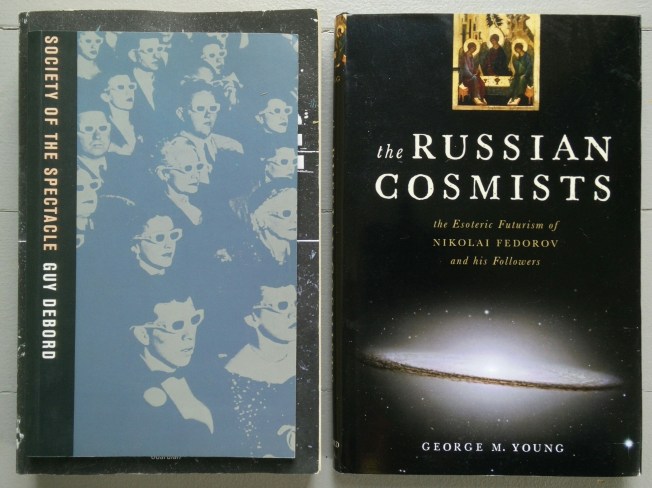
Our reference library has more than doubled its’ number of books since last summer. All the books are available for loaning, if you happen to live in the village of Hoja. One of the new additions is The Russian Cosmists, researched and written by George M. Young.

Meanwhile, on the www:

Marina Simakova writes about contemporary artists influenced by Nikolai Fedorov and his followers, and suggests a couple of explanations for why there’s a growing interest in these ideas: a demand for images and thoughts on the universal; an unresolved relationship to the future; the confluence of anthropocentrism and ecocentrism, or humans as caretakers of the world rather than exploiters…

Link >

Boris Groys writes about Cosmism, and its’ influencing artists and writers throughout the 20:th Century. The text was presented at last year’s Venice biennale. There’s a mention of the opera Victory Over The Sun which has us especially fascinated – a brief quote:

The opera celebrated the extinction of the sun and the descent of cosmos into chaos, symbolized by the black square that Malevich painted for the first time as part of the scenography for the opera.

Link >

Unknown's avatar

The Electrification Of Hoja (IV)

Among the films to be shown in our jubilee screening in August is The Communist Revolution Was Caused By The Sun, by Anton Vidokle.

anton_vidokle_02_300dpi_cmyk copy

The Communist Revolution Was Caused By The Sun (c) Anton Vidokle

This film was screened at the 2016 Berlinale film festival. Quoting from their website:

“…The Communist Revolution Was Caused By The Sun, looks at the poetic dimension of the solar cosmology of Soviet biophysicist Alexander Chizhevsky. Shot in Kazakhstan, where Chizhevsky was imprisoned and later exiled, the film introduces Сhizhevsky’s research into the impact of solar emissions on human sociology, psychology, politics, and economics in the form of wars, revolutions, epidemics, and other upheavals.”

anton_vidokle_03_300dpi_cmyk copy

The Communist Revolution Was Caused By The Sun (c) Anton Vidokle

A version of the script for the film was presented during last year’s Venice Biennale, and can be read here

According to the script, an aero-ionization dish is constructed in a factory in Karaganda, Kazakhstan. Its’ purpose is to give an electrical charge to oxygen atoms, matching or complementing the electrical charge of our red blood cells. These chandeliers were originally designed to be installed on spaceships, where they would benefit the health of cosmonauts. But instead they were hung in the offices of Soviet government officials, to prevent them from growing senile.

anton_vidokle_04_300dpi_cmyk copy

The Communist Revolution Was Caused By The Sun (c) Anton Vidokle

An interview with Anton Vidokle regarding the films in the trilogy can be found here

Quoting from the interview:

Kazakhstan was the site of a very large network of labor camps known as Karlag, similar to the better-known Gulag. It was also the key site of the Soviet space program, with most of the rockets launching from Baikonur and landing in the steppe surrounding Karaganda. Sort of like the American city of Houston, in Texas, the city was both an enormous prison and one of the first spaceports. Architecturally, it is dominated by vast coal mines, most of which are now shut down, as well as enormous cemeteries which evolved a very particular architectural style that I have not seen elsewhere: they look like miniature cities full of manifold mausoleum structures quoting various Islamic traditional styles, albeit all made from cheap, Soviet-era materials. It’s a very unusual place.”


Unknown's avatar

The Electrification Of Hoja (III)

Among all the local jubilees we could have celebrated this year – Ängelholm 500 years! Sunshine Socialist Cinema 5 years! – we chose the centennial of the Electrification of Hoja. As there’s an abundance of jubilees, we decided to inform ourselves about surplus values, and have added some interesting volumes to our library. All the books in the library can be borrowed home by people living in the village of Hoja, by the way.

There’s a tagline we use to describe the cinema, “Re-distributing a surplus of light from day to night, via solar panel and projector”. Now we’ve found some literary references for it, thanks to our study group. Georges Bataille wrote in his volumes on economy, The Accursed Share, about abundance, surplus, and the discharge of energy, using the sun as an introductory example.

Bataille’s inquiry takes the superabundance of energy, beginning from the outpouring of solar energy or the surpluses produced by life’s basic chemical reactions, as the norm for organisms. In other words, an organism in Bataille’s general economy, unlike the rational actors of classical economy who are motivated by scarcity, normally has an “excess” of energy available to it. This extra energy can be used productively for the organism’s growth or it can be lavishly expended. Bataille insists that an organism’s growth or expansion always runs up against limits and becomes impossible.” – quoted from Wikipedia

Well, yes, more power from the sun hits the Earth in an hour than all of humanity could spend in a year. 430 quintillion Joules, if you want a figure (a quintillion has 18 zeroes).

…the accursed share is that excessive and non-recuperable part of any economy which must either be spent luxuriously and knowingly without gain in the arts, in non-procreative sexuality, in spectacles and sumptuous monuments, or it is obliviously destined to an outrageous and catastrophic outpouring, in the contemporary age most often in war, or in former ages as destructive and ruinous acts of giving or sacrifice, but always in a manner that threatens the prevailing system.” – quoted from Wikipedia

If we accept the limits to growth, and if we can manage a fair re-distribution of wealth and surplus value, what would we then spend our time upon, instead of working towards even more growth? According to Bataille, it’s either destructive war, or non-productive things, including art plus sex plus celebrations of jubilees.

Unknown's avatar

The Electrification Of Hoja (II)

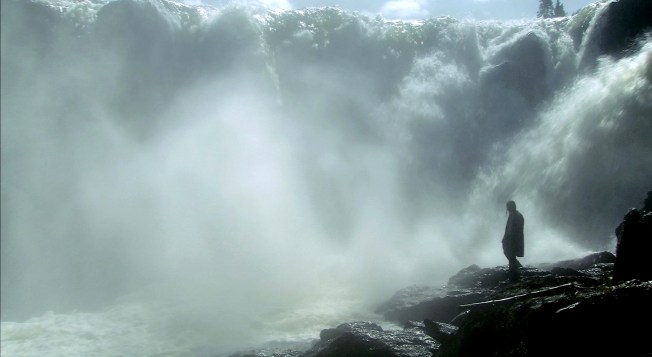
Among the films to be shown in our jubilee screening in August is How to Civilize a Waterfall, by Hanna Ljungh.

How to Civilize2

(c) Hanna Ljungh

“In the video How to Civilize a Waterfall, artist Hanna Ljungh performs an authoritative confrontation with nature, an indifferent and independent force. Inspired by the dramatic expressiveness of hard rock music, Ljungh challenges a waterfall and tries to persuade it to turn into a hydroelectric power plant. The text used in the video is based on the information about hydroelectric power distributed by one of Sweden’s largest power companies. The work reveals humanity’s comical and paradoxical relationship with nature.”  – more info over at the artist’s website

How to civilize6

Images are (c) Hanna Ljungh, used by permission

Unknown's avatar

The Electrification Of Hoja (I)

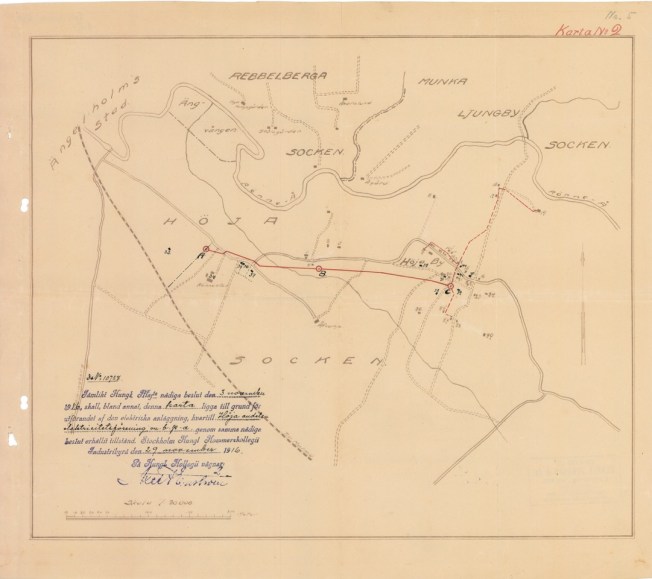
The Electrification of Hoja, or Höja (using the Swedish spelling), took place in 1916. Local farmers formed an association to pay for a power line, connecting the village to the national electricity grid. As the amount of electricity received was not enough for the needs of all the homesteads involved in the association, a schedule for the use of electricity had to be written, and farmers had to take turns powering their equipment.

Hoja karta elledning 1916  200kb

Map from 1916, showing the extension of the power line

As 2016 marks the 100-year jubilee of the Electrification of Hoja, we’ve decided to make this the underlying theme of this year’s screening in the cinema. The program will be presented here on the blog over the next few days. The jubilee screening will take place during the first week of August, but the exact date will be set when we see the weather prognosis.

In addition to a number of films, we’ve also booked a performance by musician (and regular visitor to the cinema) Torgny Handreck. Check out his amazing loop pedal performance here >

More coming soon!

Unknown's avatar

XOLA’s out for the summer

XOLA! is a workshop aimed at young people who want to learn more about outdoors cinemas and what to possibly do with them. Our first version will be launched in Malmö this September, in collaboration with a number of organisations – Statens Konstråd, Den Nya Konstutbildningen, Konstfrämjandet, Kontrapunkt, and RåFILM, with possibly more to come. A flyer announcing the workshop has just been posted by Den Nya Konstutbildningen and will be circulated during the summer; interested parties can get in touch via Lisa Nyberg at this www

For us in the SSC, the workshop is a way of gradually making ourselves redundant; we’d like to see a lot of different takes on solarpowered socialist cinemas in the future. All part of the five year plan!

a4 flyer


Unknown's avatar

Happy New Five Year Plan (II)

atlases 1

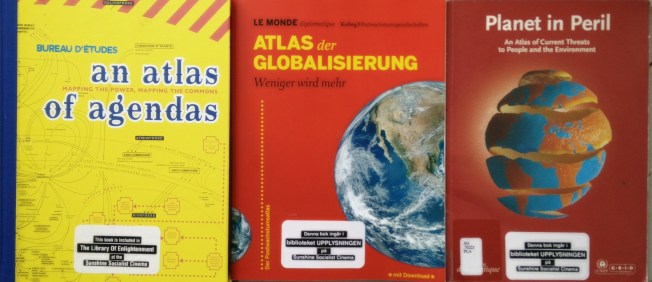
Among the new titles for the library: An Atlas Of Agendas by Bureau D’Etudes, Atlas Der Globalisierung by Le Monde Diplomatique, and Planet In Peril – An Atlas Of Current Threats To People And The Environment also by Le Monde Diplomatique

Our plans for the next five years of the cinema are under discussion throughout the spring, and we’ll continue to share them here on the blog.

The Swedish government has set some goals of their own for the year 2020, chief among them the reduction of carbon emissions by 40%, while 50% of our energy use should come from renewable sources, 10% of our energy for transportation should come from renewable sources, and energy use in general should be 20% more efficient. Progress can be followed here >

When we set the goals for the cinema, of course we want to be better than the government. So we’re aiming for a steeper reduction of our carbon emissions. It will result in our giving up touring with the van. If anyone would still be interested in hosting us by 2020, we’d have to use another mode of transportation, or another format for the screenings – and we’ll have more info on this shortly! We’re of course also aiming for an expansion of the solar panel setup at our main facility in the village, even though most of the energy used by the cinema during a summer season already comes from them. But the installation of more panels could compensate for energy used outside-of-but-for the cinema in the production by others of goods and services that we need. Finally, in this segment, we’re also discussing how the format of a library can be used in the village. What could usefully be lent and borrowed at the library besides books, for efficiency and savings? Maybe electricity?

atlases 2

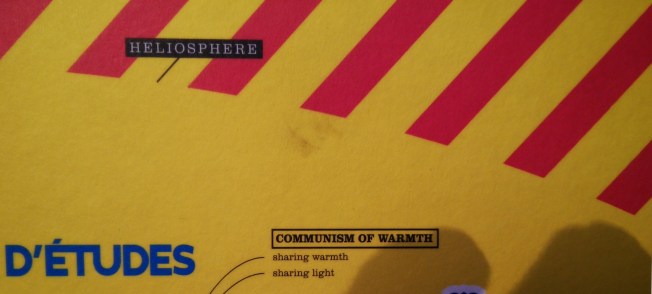
From the cover of An Atlas Of Agendas by Bureau D’Etudes: HELIOSPEHRE – COMMUNISM OF WARMTH – sharing warmth – sharing light

.

Unknown's avatar

Power And Powerlessness (Final Entry)

In the interest of financial transparency: the budget we received from Moderna for arranging the screening at Tempo Documentary Film Festival was set to 10 000 Swedish Crowns (around 1070 Euros, at the moment). We decided to split the sum into five parts, where the participating artists would receive one part each. The fifth part, which would have been our fee for putting the program together, became a topic of discussion in the group. Since our activities at the main site in Höja are financed for many years to come, maybe we could re-direct the relatively small sum of money from our fee into assisting some fellow travellers, some other cinema somewhere?
.
We’ve written before about the Rojava Film Commune >
.
.
kulturnatt_45
.
.
Rojava is an autonomous region in the north of Syria (close to the border of Turkey), practicing stateless democracy based on self-governance, gender equality, the right to self-defense, and a communal economy.
.
The EU and the Swedish state recently promised financial support to Turkey, funds to be used for keeping Syrian refugees in Turkey and preventing them from continuing on into Europe. 3 billion Euros from the EU, 77 million Euros from Sweden. What if these funds were to be given to the re-building of Rojava instead? That’s a big ‘just imagine’.
.
We got in touch with the Rojava Film Commune and begun discussions on possible forms of co-operation with them. The first step is arranging a transfer of our fee from Moderna – 200 Euros – to the Film Commune. We know this sum is next to nothing for them. But Moderna is a state-funded museum, and so as part of our ‘just imagine’, we choose to see the fee as originating from somewhere within the Swedish state budget.
.
.
.
.