Unknown's avatar

The Birth of Cinema in Mozambique

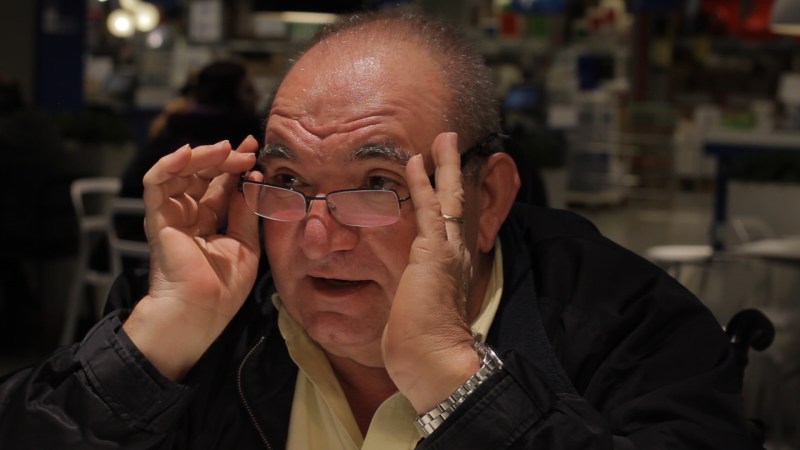
Luis Patraquim, who was scriptwriter and voiceover for the Kuxa Kanema newsreels in ’70s Mozambique (interviewed Feb. 2013).

Kuxa Kanema, meaning ‘Birth of Cinema’, were newsreels produced by the National Film Institute in Mozambique after independence was won from Portugal in 1975. The newsreels pictured the people of Mozambique building a nation from the ground up. They were shown in cinemas in Maputo, and in mobile outdoor cinemas in villages in the countryside.

We are now working on editing recorded interviews with people who were involved with Kuxa Kanema, and hope to be able to screen these in the near future.

Both Luis Patraquim and Americo Soares were members of a leftwing group and fled Mozambique in the early 1970’s, moving first to Portugal and from there to Sweden, where they found refuge. In Stockholm they hung out at the Swedish Film Institute. After Mozambique became an independent nation, they moved back to Maputo and founded the first National Film Institute of Mozambique.

Americo Soares, who was director of the National Film Institute in ’70s Mozambique, where Kuxa Kanema was produced (interviewed Feb. 2013).

Unknown's avatar

Themes and Interests

The films and art videos we’ve shown so far and the films we will show in the upcoming season, although chosen according to fancy, reflect our specific interests, and a couple of themes have emerged.

rainbow

We debuted last summer with Workers Leaving the Factory by the brothers Lumière, thinking that the first film shown in a cinema in 1885 should also be our first film shown. The image of workers leaving the factory was then used to introduce our interest in post-industrial survival. Images from societies which depended on a local industry, thrown into a crisis condition when that industry was outsourced or closed down. What actions do people take, what are their strategies for survival? And maybe even more interesting to us is the question of what attitude you adopt in order to survive? How do you think about society, work, friendship, the future; how do you respond to the overwhelming apparatus geared towards dismantling your life? And how do you present yourself and your attitudes – as opposition, optimism, off-grid drop-out autonomy, absurdist artistic activism, active participation or desperate compassion? We’re looking around for films and videos depicting the results and future projections of the current austerity measures imposed on European societies. We are also looking at examples from other parts of the world and other points in history when crisis has hit a society, to find ideas and strategies already used, with or without success.

Another theme we’re interested in is the relationship between an artist and a political collective. An artist joins a collective in the capacity of a citizen, same as everybody else, but can also participate and work with the collective in the capacity of an artist or filmmaker, hir chosen vocation. We’re looking at films made by artists wishing to document the collective they belong to, and films made by artists who try to give form to the voice of the collective. But we’re also interested in artists describing their personal experiences, talking about what happened to them and their art when they chose to join a collective, whether the relationship between individual and collective produces conflict, disillusionment, euphoria, evolution, conformity, or new possibilities. We’re taking a special interest in professional filmmakers working to teach other members of the collective how to express themselves through filmmaking and art, to idealistically help found a cinema of the people, where the images of the people are made by the people.

These are just some of our interests. If you share them, please send us your links.

Unknown's avatar

It’s the Economy, Cupid!

We’ve done  a couple of public appearances during the fall to introduce and talk about the Sunshine Socialist Cinema, and recurring questions from the audience usually include “How much did the equipment cost?” and “How do you finance it?” Well – the solarpanel cost around 600 Euros and the projector cost around 500 Euros. We’ve worked without any financing so far (meaning we’ve paid for the equipment through working other jobs). But – we get free electricity now. What does that mean for our economy?

A solar panel of this kind will generate electricity for around 25 years (and after that too, only not at full capacity anymore). Let’s make a couple of assumptions before jumping into a mathematical calculation:

1. The price of electricity will remain the same from now on. It will not increase due to shortage of natural resources or demands for higher profit margins in power companies. It will not increase due to taxation in order to protect the environment. If the price of electricity were to increase, as it has for the last decade, solar panels would become more cost efficient than in our example below.

2. The cost of producing solar panels will remain the same from now on, and they will not become more efficient due to research into the technology behind solar panels. This is a s good as it ever will get. If a later model of solar panels would be more efficient than the models available today (if they were to produce more electricity at the same cost or at a lower cost), well, yes, they would be more cost efficient than in our example below.

On to the calculation. We’re looking at this really long-term. Let’s say we invest in one solar panel, spending 600 Euros. After ten years, it will have produced enough electricity to earn us back our initial investment (after ten years, it will have earned us 600 Euros). It will still work for another fifteen years, so everything from now on is bonus (another 900 Euros).

Let’s say we re-invest the 600 Euros we just earned back after ten years, buying another solar panel. We now have two of them, one of which will work for another fifteen years, one of which will work for another twentyfive years. After only five years, they will have earned us back our initial investment (the two of them together will have earned us 600 Euros in five years). To sum up – fifteen years after the initial investment, we have two solar panels, both of them paid for. One of them will work for another ten years and one of them will work for another twenty years. Everything from now on is bonus.

Let’s say we re-invest the 600 Euros, the same money as fifteen years ago. We now have three solar panels. After three years and nine months, they will together have earned us back our initial investment. Let’s say four years, to make it easier for us to count! So, nineteen years after the initial investment, we have all our money back, and three solar panels paid for. One of them will work for another twentyone years, one of them will work for another sixteen years, and one of them will work for another six years, producing free electricity.

Let’s just do one more round, even though we could obviously continue on and on. Here we go. We re-invest the original amount of 600 Euros, the same money as nineteen years ago. We add another solar panel, and now have four of them. The four of them together will earn us back the 600 Euros in just two and a half years. So. Twentyone and a half years after the initial investment, we have all our money back and four solar panels paid for. One of them will produce free electricity for another twentytwo and a half years, one will work for another eighteen and a half years, one will work for another thirteen and a half years, one will work for another three and a half years.

This is where we’re going.

Unknown's avatar

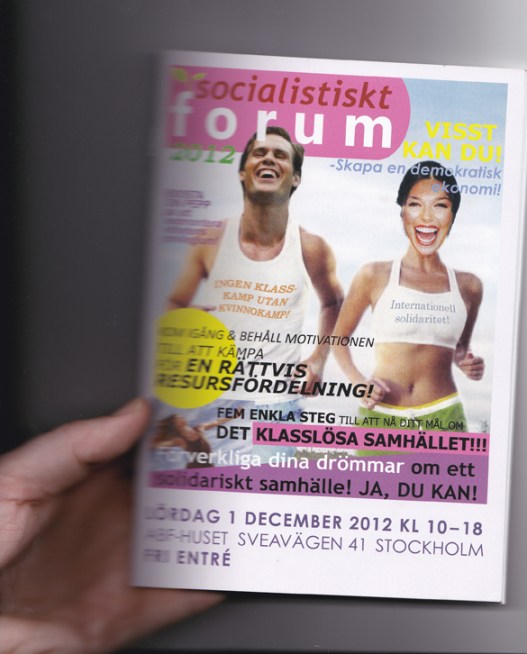
Printed matter from Socialistiskt Forum in Stockholm:

Socialistiskt Forum

About us in the program booklet (bottom left):

Socialistiskt Forum

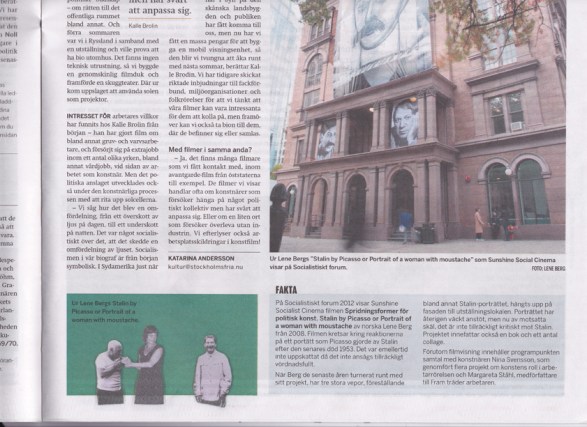
An article about our cinema and the screening of Stalin By Picasso, in print on the day of the Forum:

Socialistiskt Forum

Written by Katarina Andersson, published in Stockholms Fria Tidning on December 1 2012.

Socialistiskt Forum

Unknown's avatar

Our interview with Lene Berg, the filmmaker behind Stalin By Picasso

Below is the Swedish version of our short interview with Lene Berg, the filmmaker behind Stalin By Picasso. We’ll try to work out an English translation shortly. Stalin by Picasso or Portrait of Woman with Moustache will be screened during a presentation of the Sunshine Socialist Cinema during the Socialist Forum in Stockholm on Saturday December 1 2012. Check out previous posts or the Program-page for more info on the screening. Huge thanks to Lene Berg for doing the interview.

1. Vad ser du som det centrala motivet i din film? Vari består konflikten mellan konstnären och partiet, vad ligger till grund för konflikten? Vilka olika syner på vad konst är och gör?

Min första reaktion på Picassos porträtt av Stalin var att det var komiskt, på alla sätt. Det liknar inte Stalin, och det liknar inte heller Picasso. Det skorrar med allt man vet om båda männen. Sådana oöverensstämmelser intresserar mig. När jag senare läste om kontroversen porträttet väckte 1953 tyckte jag att argumenten var intressanta. Man sa att porträttet inte var tillräckligt heroiskt, att Picasso inte var bra nog att rita den store Stalin, att han inte hade förmågan att se och tänka som vanliga människor. Argumenten påminde om saker jag hört tusen gånger i diskussioner om statlig kulturpolitik till exempel, där man talar om “vad folk vill ha” som att det är något självklart och statiskt. Eftersom objektet här är Stalin och eftersom uppfattningen om Stalin har ändrats en hel del sen 1953, får argumenten en lite annan klang än i nutida diskussioner om vad folk vill ha. Sett med nutida ögon kan man säga att Picasso var intelligent nog att inte följa sina kamraters smak och åsikter. Samtidigt tyder inget på att han önskade att provocera, snarare tvärt om, och han fattade inte att han gjort det innan han och porträttet fördömdes offentligt. Kanske kan man säga att det handlar om konflikten mellan en konstnärlig inställning och en ideologisk inställning. Poeten Louis Aragon, som var högt uppe i det franska kommunistpartiet, valde att foga sig till partilinjen och ångrade offentligt att han publicerat porträttet. Picasso å andra sidan bad aldrig om ursäkt, även om kritiken sårade honom. Jag vet inte om det här beskriver det centrala motivet i filmen, men någonstans här låg den första impulsen.

2. Vi kände inte till historien om Picassos porträtt av Stalin förrän vi såg din bok på Konsthall C i våras. Historien är för oss både intressant som diskussionsunderlag, och gripande i de känslor som väcks. Vilka reaktioner har du fått på filmen när den visats tidigare? Från publik, press/debattörer, institutioner eller myndigheter? Och från människor som jobbar/är aktiva i vänsterorganisationer och radikala politiska partier?

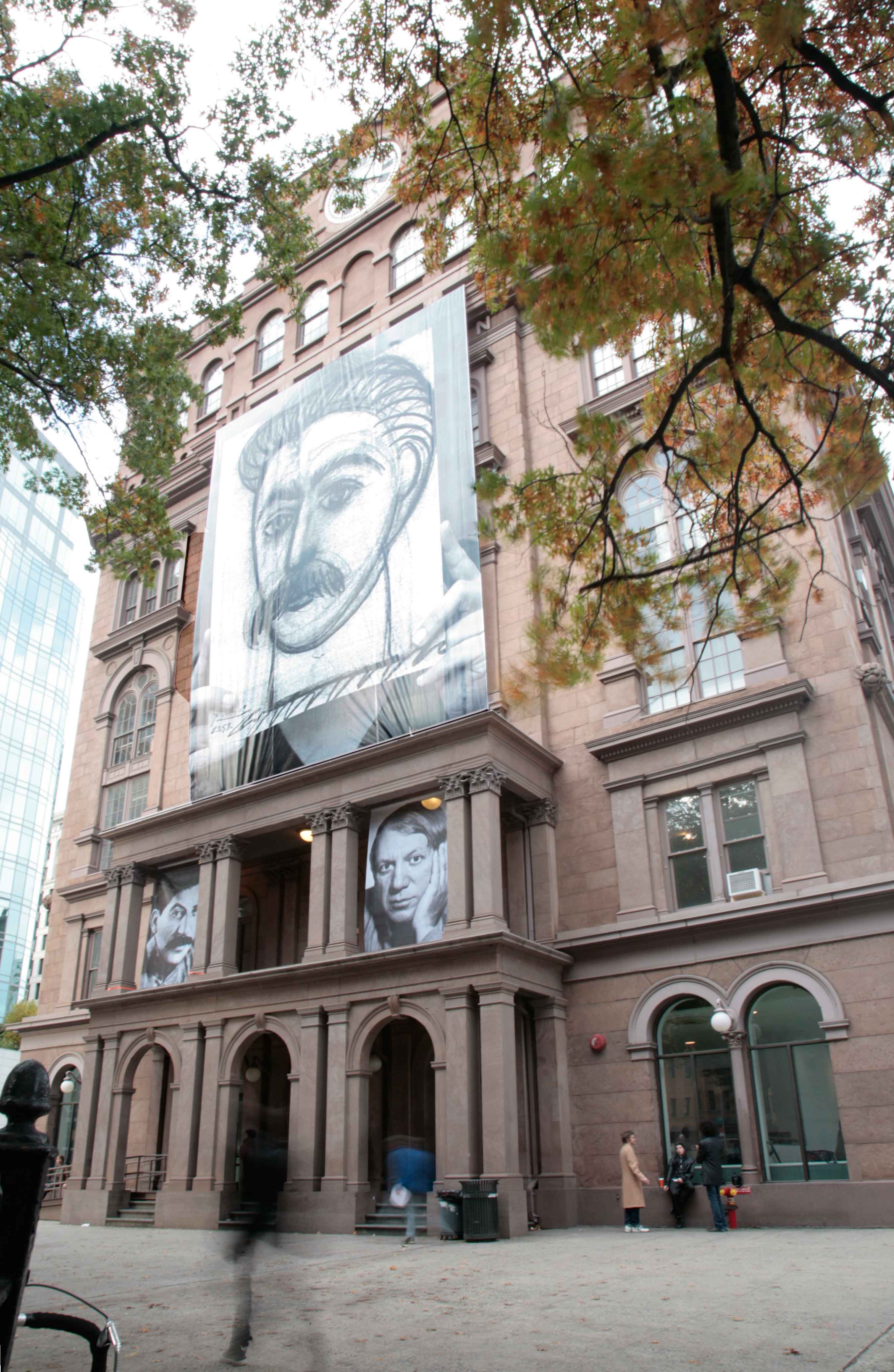
Generellt har projektet fått mycket positiva reaktioner, det har visats en hel del och i många olika sammanhang och länder, såsom Indien, Taiwan och Ryssland. Det vill säga filmen och boken. Men när jag ville hänga ett fasadbanér med Picassos teckning utomhus i samband med utställningar blev det bråk. I Oslo blev projektet stoppat, även om banéret bara skulle hänga i 24 timmar. I New York skulle det hänga i sex veckor, men de tog ner det efter två dagar. Det visade sig att när det här porträttet visas i ett offentligt rum, utanför en konstkontext, läses det som propaganda, eller som reklam. Även om jag tycker det är uppenbart att teckningen inte är någon enkel hyllning till Stalin, något dåtidens franska kommunister skulle hålla med mig om, uppfattades den av många som det. Jag blev lite överraskad över de starka reaktionerna. Min intention var inte att diskutera Stalin, men snarare att lägga något till den ganska stela macho-myten som Picasso blivit och på så sätt bidra till en bredare diskussion om konst och politik. Jag försökte säga till Cooper Union (som tog ner banéret i New York) att de hade tagit ner Picasso och inte Stalin från sin fasad. Men de trodde mig inte, de trodde jag skojade. Skillnaden på hur man läser en bild innanför och utanför “konstrummet” chockerade och överraskade mig egentligen. Det gjorde också att jag kände stor sympati med Picasso och hans inställning under den kontrovers han var med om 1953.

3. Med filmens Picasso i åtanke  – hur vill du att din egen film skall fungera som konstverk, och i vilket sammanhang? Vad skulle den kunna tillföra, inom vilken gemenskap?

Jag vet inte hur jag ska svara på en sådan fråga. Kanske finns det ett svar, men det är svårt att skriva eller uttala det utan att riskera att det går förlorat.

Unknown's avatar

Solar Cinema and more

More and more solarpowered cinemas around the world! The Dutch project Solar Cinema is touring Latin America right now, setting up local solarpowered cinemas all over the continent.

Solar Cinema

Solar World Cinema

Servers seem to be down temporarily, but you can also check out their Rio-workshop on this blog.


Then there’s the Sol Cinema, “World’s smallest solar movie theatre”, housed in a caravan.

Sol Cinema

And Gorilla Cinema, which will “take film where it has never been before”.

Gorilla Cinema

There’s OneWay Theatre.

OneWay Theatre

And Groovy Movie Picture House Solar Cinema, “the world’s first mobile solar powered cinema”.

Groovy Movie Picture House


Finally, Swedish artist Ida-Britta Petrelius has worked out an ingenious art installation with solar powered projections.

Ida-Britta Petrelius


Unknown's avatar

Stalin By Picasso shown at Socialist Forum

“If they had been here I would have looked down upon both of them – even without heels” – filmstill from Stalin by Picasso or Portrait of Woman with Moustache by Lene Berg

On December 1 2012 we’ll do a brief presentation of the Sunshine Socialist Cinema and screen the film Stalin by Picasso or Portrait of Woman with Moustache by Lene Berg during the Socialist Forum 2012 in Stockholm. The screening takes place at 15.45 in the ABF house at Sveavägen 41.

In 1953 Joseph Stalin died. Pablo Picasso was asked to draw a portrait of Stalin for a commemorative issue of the French Communist weekly Les Lettres françaises, which was edited by Louis Aragon, a friend of Picasso. The drawing provoked strong reactions from the French Communist Party, and the party’s Central Committee published a condemnation of both Picasso and Aragon on the front-page of the daily L’Humanité. The major criticism of the portrait was that the style in which it was drawn did not do justice to “the moral, spiritual, and intellectual personality of Stalin”.

Stalin by Picasso or Portrait of Woman with Moustache consists of a video, a book and three façade-banners. The project deals with the so-called ‘Portrait Scandal’, or `L’affaire du Portrait`, which later has been named the first consequence of Joseph Stalin’s death in 1953. It centers around two great, short men and a drawing that created strong reactions. On one level, it is about how two icons from the 20th Century, Stalin and Picasso, once were perceived and how much their public personas have changed since then. On another level, it is about art and artistic freedom, or un-freedom, and of ways of reading and using images, particularly images of so-called great men. But perhaps the most interesting aspect of this anecdote from the beginning of the Cold War, is how one simple charcoal drawing can initiate so many feelings, discussions and intrigues as this one did – both in 1953, and in 2008.

The reactions towards Picasso’s drawing in 1953 expressed a need to control what was
presented in public, and strong demands for obedience towards common beliefs in something
particular, in this case Joseph Stalin. Seemingly these are thoughts from a distant past. But the project proved to be less nostalgic than expected when the party-secretary of the governing Norwegian Labor-party unexpectedly withdrew the permission to use the façade of the People’s Theatre Building in Oslo for the public part of the project, a permission that had been granted by the board of the building some months before.This attitude was later more or less repeated when I was invited to show the project at Cooper Union in New York in October 2008. After two days of a planned 6 weeks show, the three façadebanners were taken down from the façade without a warning and without discussing it neither with me nor with the curator before hand. In 1953 one of the problems with Picassos drawing was that it was considered bad propaganda for Stalin and thus for the communist cause. In 2008 one of the problems was that the façade-banners were not clear publicity, and that some people found it unacceptable that the project did not express a clear critique of Joseph Stalin.

Stalin by Picasso or Portrait of Woman with Moustache was first presented on the topfloor of
the People’s Theatre in Oslo March 2008 (without the façade-banners). Later that year it
was part of the show Headlines and Footnotes at Henie Onstad Artcenter in Oslo and the
Taipei-Biennial. It has later been shown among other places at the Bienale Cuvée in Linz
2009 and Contour, Mechelen 2009.”

– Lene Berg, New York, November 2008

The Sunshine Socialist Cinema will be sharing the stage with artist Nina Svensson and writer Margareta Ståhl, who’ll be presenting a graphics portfolio made by Albin Amelin and Ruben Blomqvist in 1933, Humanitet, with images protesting against the rise of fascism. We’ll look at similarities and differences in how a political work of art can be constituted and distributed.

The Socialist Forum takes place between 10-18 on December 1 2012 in the ABF house at Sveavägen 41. The program includes talks, presentations, discussions, debates and recitations by people like Nina Björk, Stina Oscarsson, Kajsa Ekis Ekman, Liv Strömqvist, Stefan Jonsson, Mattias Gardell, Jenny Wrangborg, Guy Standing, Ann Ighe, Anna-Klara Bratt, and a hundred more. The full program for the Socialist Forum 2012 can be found here.

Free entrance, open to all.

Unknown's avatar

Kuxa Kanema in Mozambique

During the symposium CIRCULAR GROUNDS #1 the Sunshine Socialist Cinema will introduce a couple of clips from Kuxa Kanema newsreels, recorded in Mozambique in the mid 1970’s. Kuxa Kanema means “Birth of Cinema”. When Mozambique gained independence in 1975 after nearly 500 years of colonial rule, the Marxist FRELIMO party and the president Samora Machel founded the National Institute of Cinema in order to produce and distribute images of the country re-building itself into an independent nation. The 10 minute Kuxa Kanema newsreels were screened weekly in cinemas and through mobile screening units transported around the country in old VW buses.

The people working on these newsreels were all novices, educated by foreign filmmakers invited by FRELIMO from Yugoslavia, Cuba, Brazil and the Soviet Union. Jean-Luc Godard attempted to help set up a national television system, teaching people in rural villages to film using video cameras. The anthropologist Jean Rouch set up documentary filmmaking workshops which shot so-called Cartes Postales every morning on 8 mm and then screened them the same evening, in the first instance of what became known as Varan Workshops. Postcards on film, of the people, by the people, and presented to the people.

In Kuxa Kanema, film was meant to be an educational tool used to create an independent  Marxist state. Its’ example has inspired several contemporary artists to comment upon it. Kuxa Kanema speaks of jilted idealism and of conflicting desires, of a wish for art to get to play a part in the construction of a new society.