
A pre-screening article in local daily newspaper HD
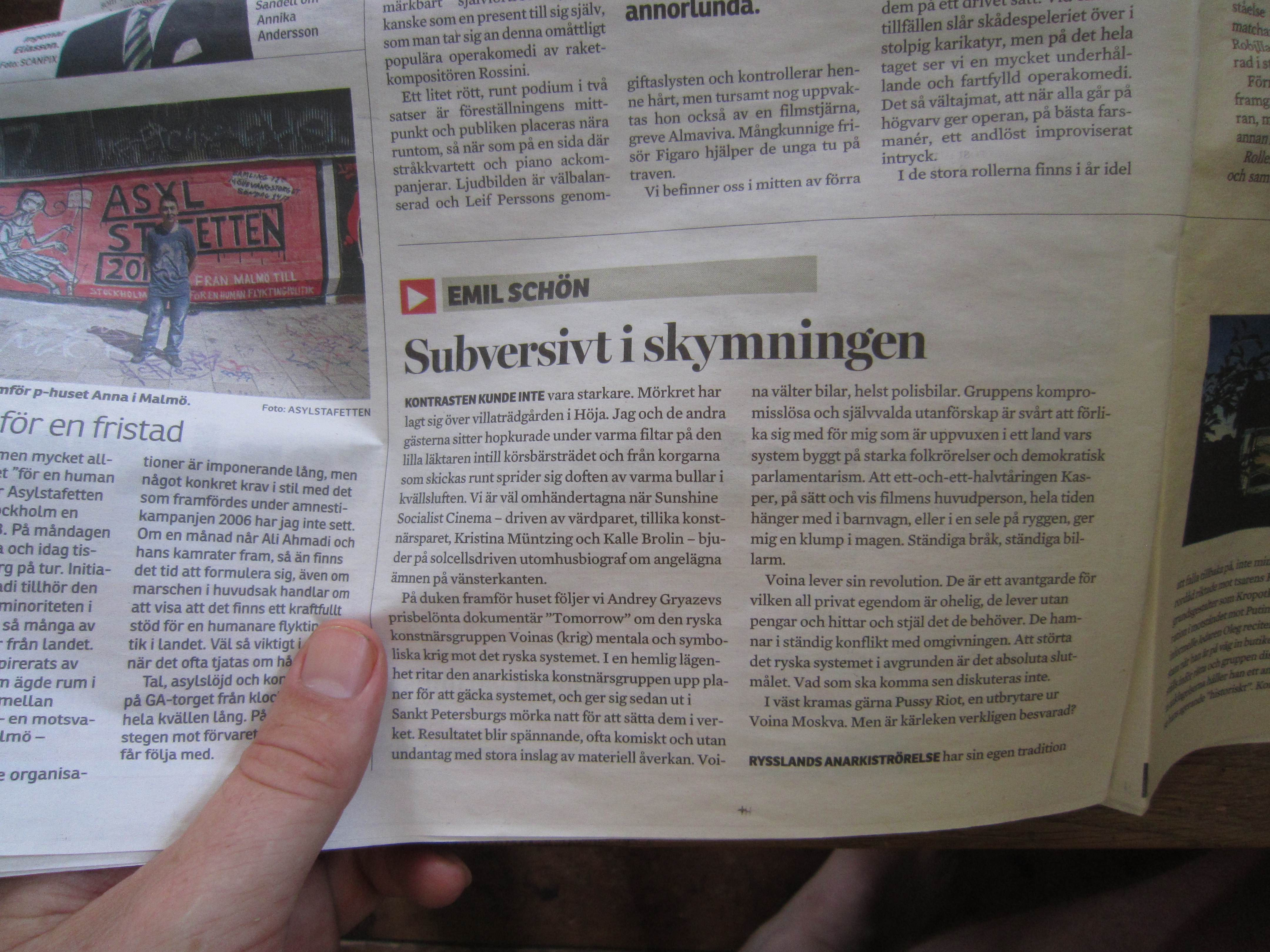
A post-screening review in the culture section of local daily newspaper HD
(link)
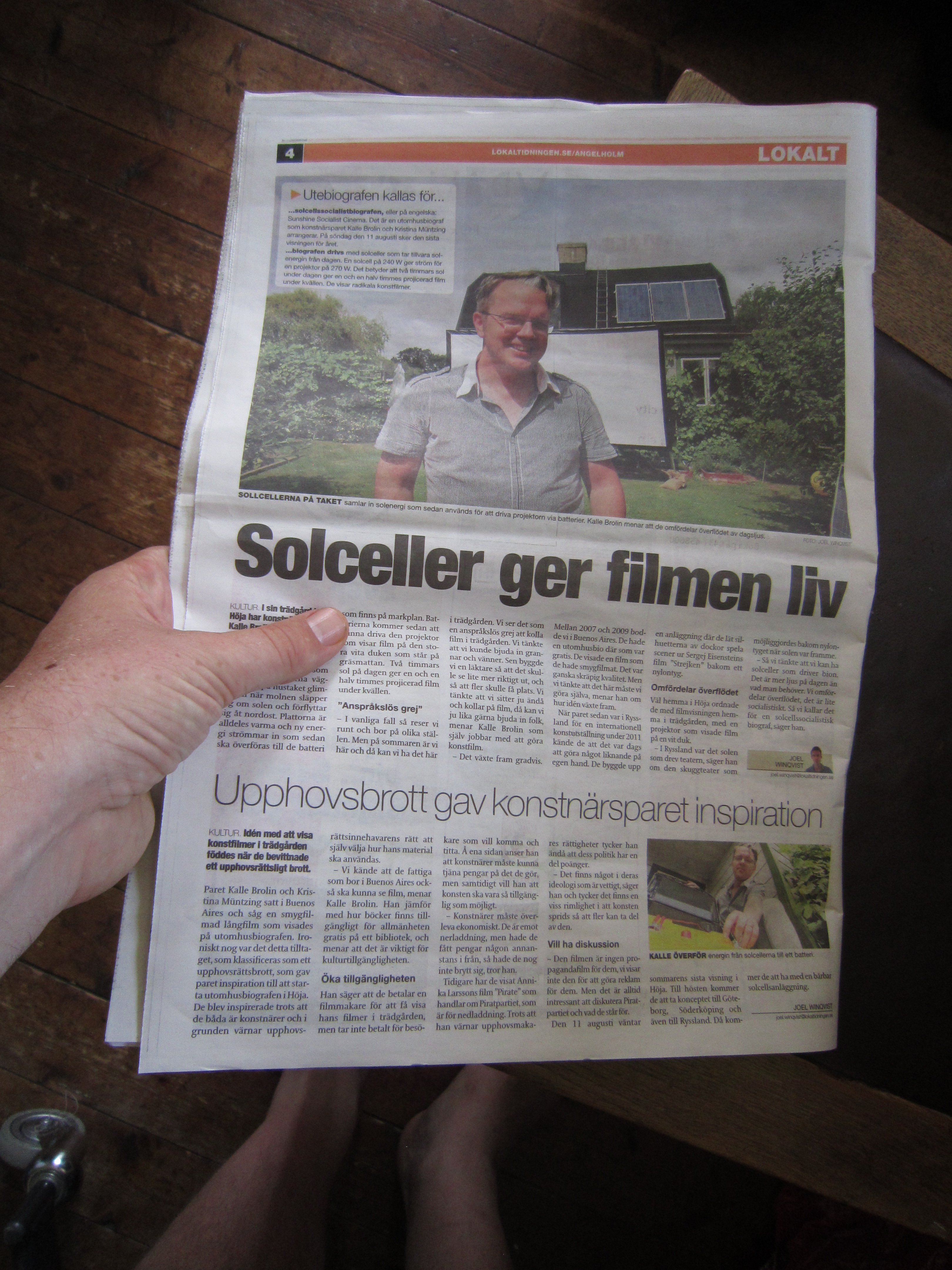
Big article in local ad-paper Lokaltidningen

A pre-screening article in local daily newspaper HD
A post-screening review in the culture section of local daily newspaper HD
(link)
Big article in local ad-paper Lokaltidningen
Regional news crew from Swedish television does a spot on the Sunshine Socialist Cinema, in advance of the upcoming screening.

Interviewed by Hans Larsson and Firas Razak
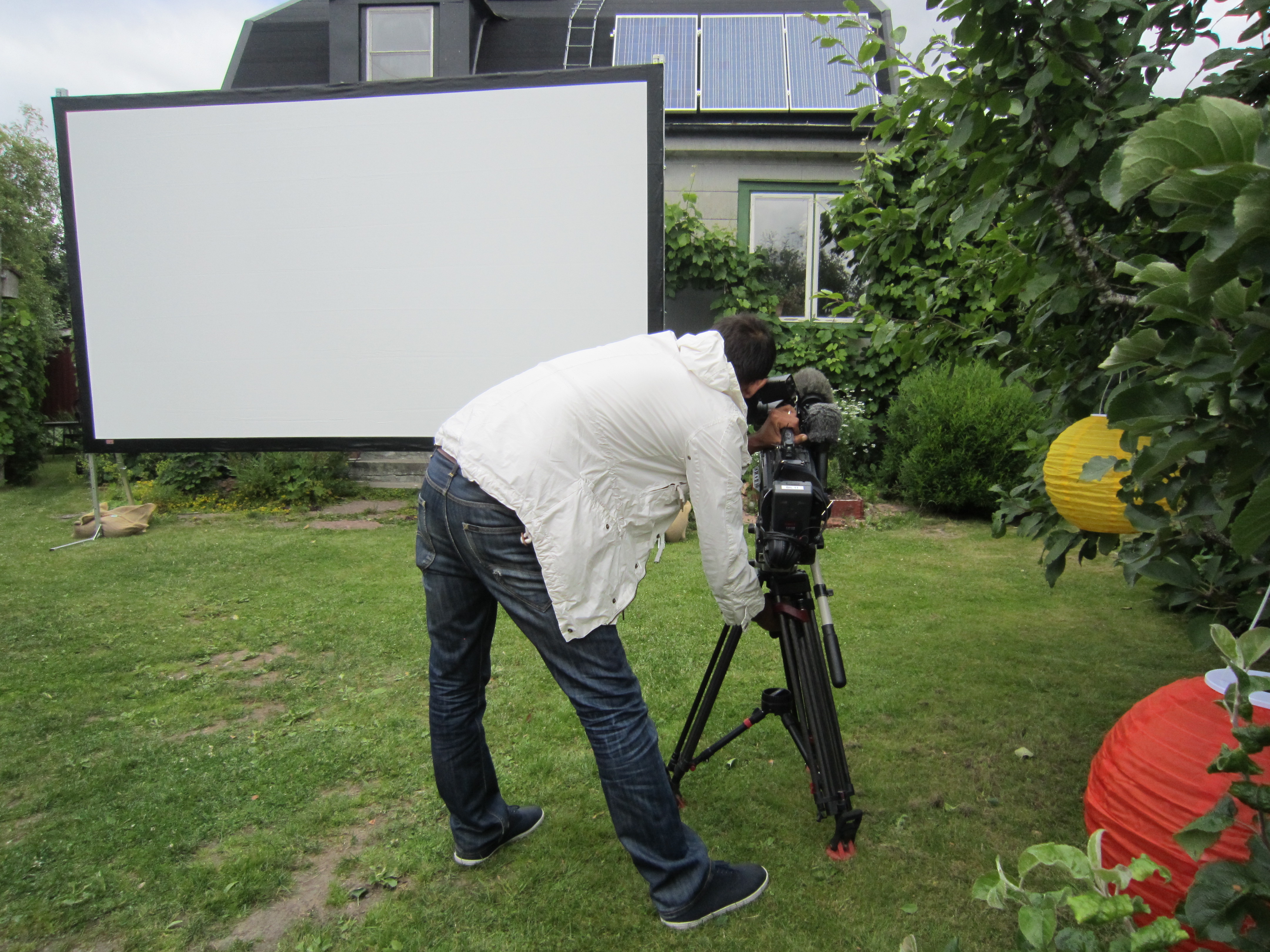
It’ll be found here eventually

Cameraman Firas Razak
On July 14 we’re showing the films Pirate by Annika Larsson, and Tomorrow by Andrey Gryazev.


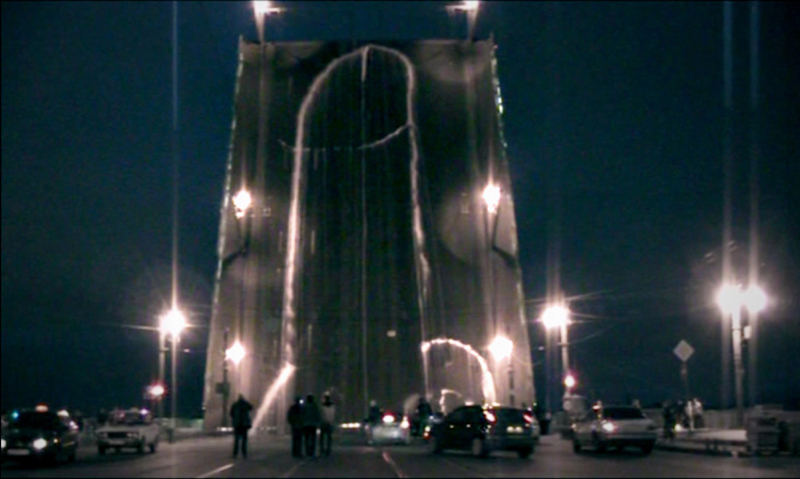
We’re getting ready for this years’ first outdoor screening in our original location, the village of Höja in southern Sweden. It takes place on Sunday July 14 between 21.00-23.00. We’ll be showing the video Pirate by Annika Larsson followed by a documentary on the art-activist group Voina, Tomorrow by Andrey Gryazev. In the garden there’ll be posters from Formfront on display. We’ll be back with more info on these films shortly, plus some weather forecasts.
Meanwhile, some improvements made to the stationary setup since last year:

Diagonal supports for eliminating traces of wobbliness in the bleachers. And:

Two extra solar panels, giving us a total of 720 Watts per hour under optimal conditions. Enough for the projector and our new soundsystem.
Folkets Bio, “the Cinema of the People”, is a Swedish organization importing, distributing and screening films in local cinema salons. It was founded in 1973, on the initiative of among others the filmmaker Stefan Jarl, to provide screening opportunities for films made outside of the bigger studios. In the first paragraph of the statutes of the association Folkets Bio, the organization is described as a socialist cultural association not affiliated with any political party, or in Swedish: “partipolitiskt obunden socialistisk kulturförening”.
The use of the word ‘socialist’ in describing the character of Folkets Bio has recently come up for debate among the local member associations incorporated in Folkets Bio. For the annual meeting in 2012, the Västerås section proposed that the word ‘socialist’ should be stricken from the statutes. It is motivated by two thoughts:
One, that everybody should feel welcome to the cinemas, and that they, regardless of their political position, should feel free to air their opinions there.
“Om vi vill att alla ska känna sig välkomna till våra biografer så måste det också avspeglas i våra stadgar. Vi måste visa att vi är en öppen förening där det är högt i tak och där personer med olika politisk hemvist kan ventilera sina synpunkter.”
Two, when looking for funding for the cinemas, the possibility of finding corporate sponsors should be considered. Corporate sponsors might be turned off by the thought of sponsoring a socialist association.
“Vi ser oss om efter möjligheter att få sponsorer. De flesta företag läser noga stadgar innan de lämnar bidrag till en förening och att då vara en socialistisk kulturförening innebär att de flesta inte lämnar några bidrag.”
The proposal was supported by the national board of the association, who added that not only private, corporate sponsors found the word ‘socialist’ troublesome, but that also institutions which provide public funding have a problem with it.
In our view, though, the two points seem to contradict each other slightly: all associations are not free to air their opinions, unless they are willing to manage without corporate sponsorship.
In a recent article for Swedish art magazine Paletten, Henrik Andersson writes about the ideologies behind different institutions providing funding for the arts. For example, the state committee Kulturbryggan which aims at exploring “alternative and creative” forms of funding for arts, and which annually distributes 25 million Swedish Crowns to various art projects deemed to be of an especially innovative character. Among the alternative and creative new forms of funding, let’s mention the thought of the artist as entrepreneur, creating new markets for themselves where none previously existed, or entering into fruitful collaborations with corporate sponsors.
We decided to apply for funding for the Sunshine Socialist Cinema from Kulturbryggan, and in our application wrote that due to the name of our cinema containing the word ‘socialist’, it seems unlikely to us that we will get any funding from private, corporate sponsors, and that although we are not affiliated with any particular political party, the ideological charcter of our cinema might possibly also make it hard to receive public funding. The application to Kulturbryggan was a test, of sorts. We were surprised to be granted a large sum of money in order to develop a mobile version of our cinema, in order to be able to screen films at “outdoors events like for example demonstrations and manifestations”. The panel of experts that study all the applications for Kulturbryggan, and provide recommendations for approval or denial, consists of professional artists, not ideologues, who look at the artistic merit of the proposals rather than at their adherence to any specific ideological agenda. Nevertheless, there are directives provided for them. Quoting the website of Kulturbryggan (in Swedish):
I Kulturbryggans uppdrag ingår att ”sträva efter att etablera samverkan med andra finansiärer”. (Dir 2010:77). Regeringen ser det som avgörande att bidragsgivningen ger incitament till finansiering från flera parter. Därför har man i bidragsförordningen (xxx) 6 § skrivit in att ”Krav på finansiering även från annan part ska ställas som villkor för statsbidrag. Om det finns särskilda skäl, behöver dock sådant krav inte ställas, om bidrag ges för att påbörja en försöksverksamhet eller för att vidareutveckla en projektidé.”
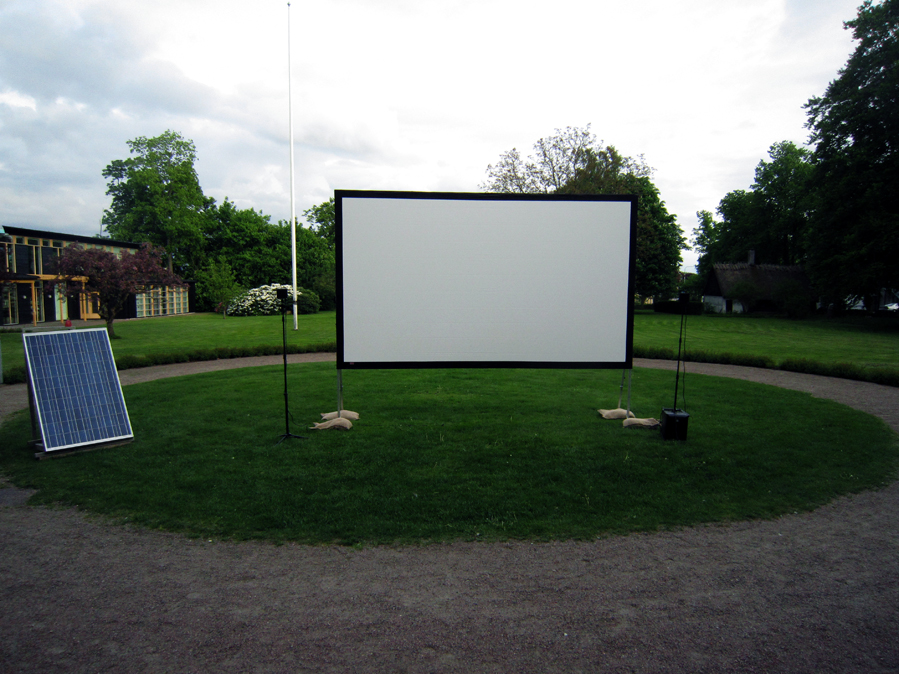
The new setup: foldable screen, soundsystem, three batteries charged by solarpanel
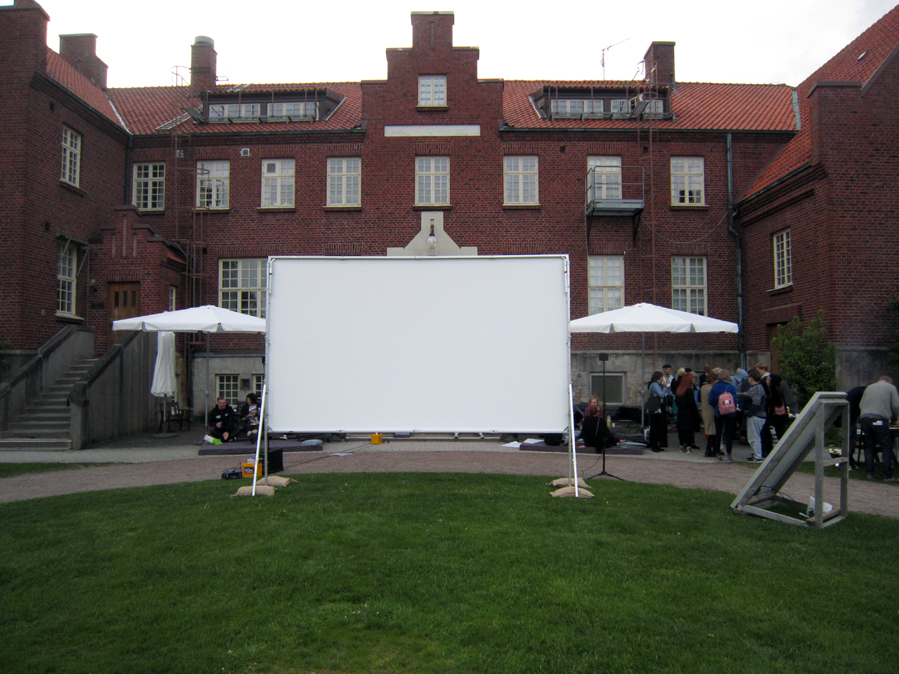
First stop: Munka Folk High School
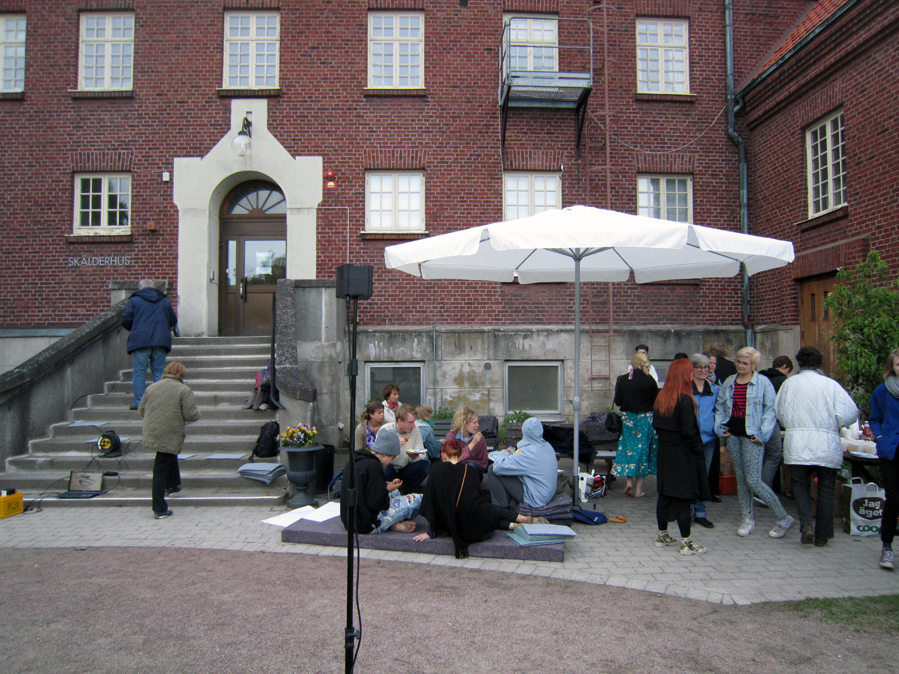
Podiums, parasols, recycled paper blankets
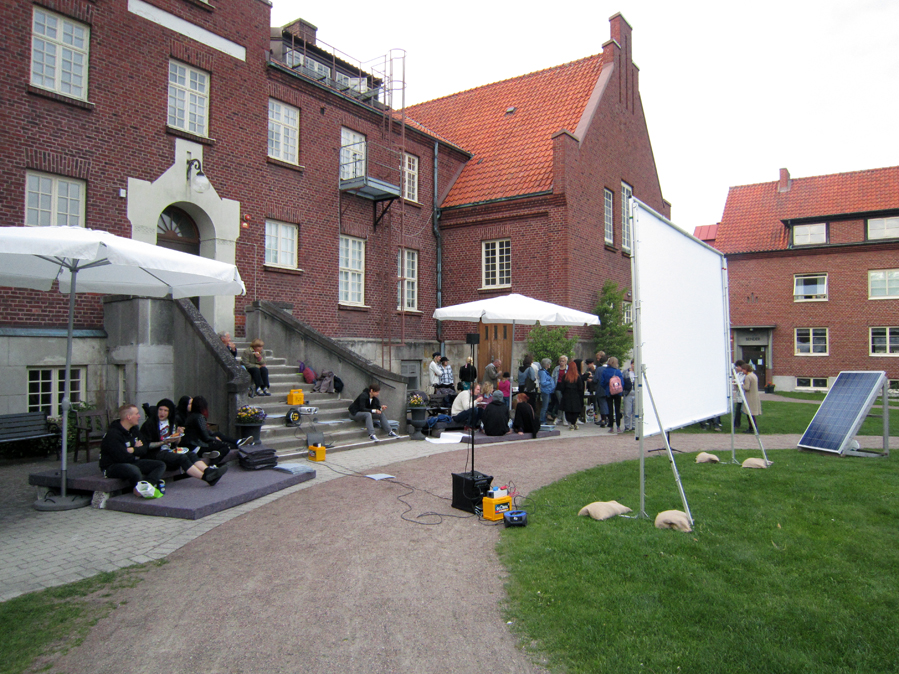
People starting to arrive: students, former students, neighbours, friends
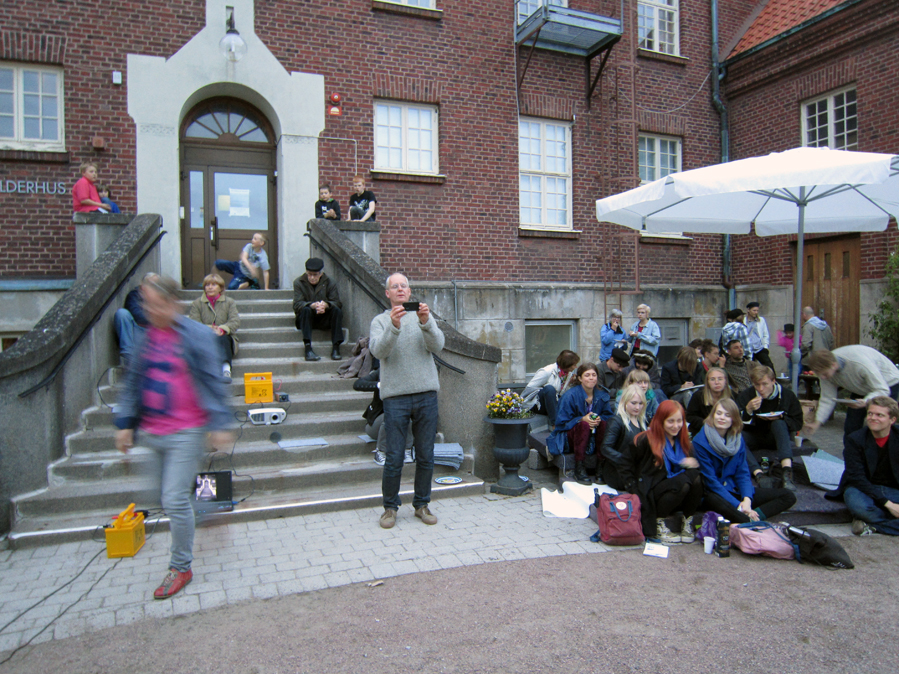
Front stairs of the school will be used as bleachers
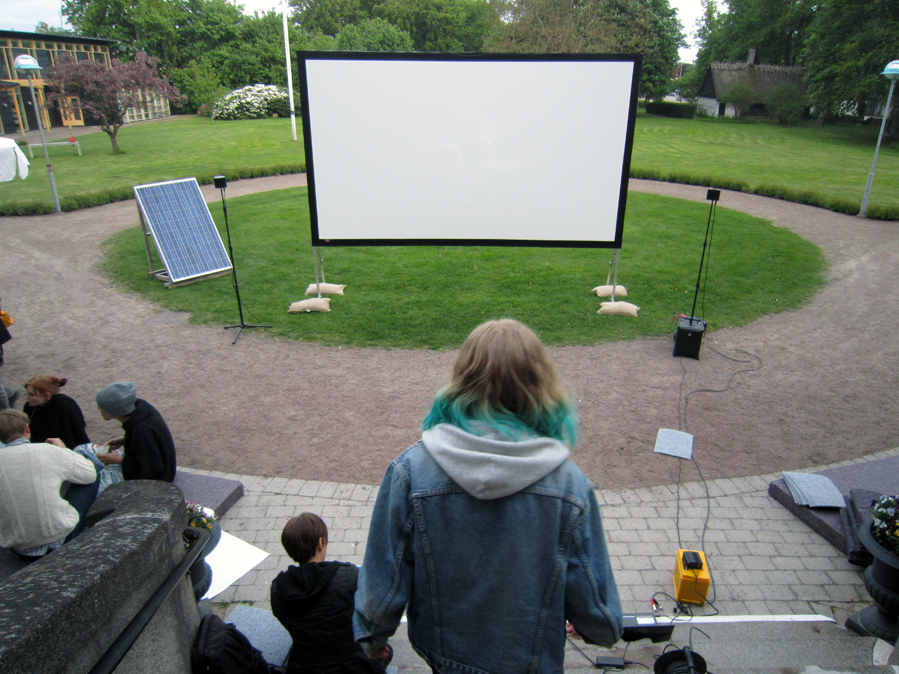
Frontal view
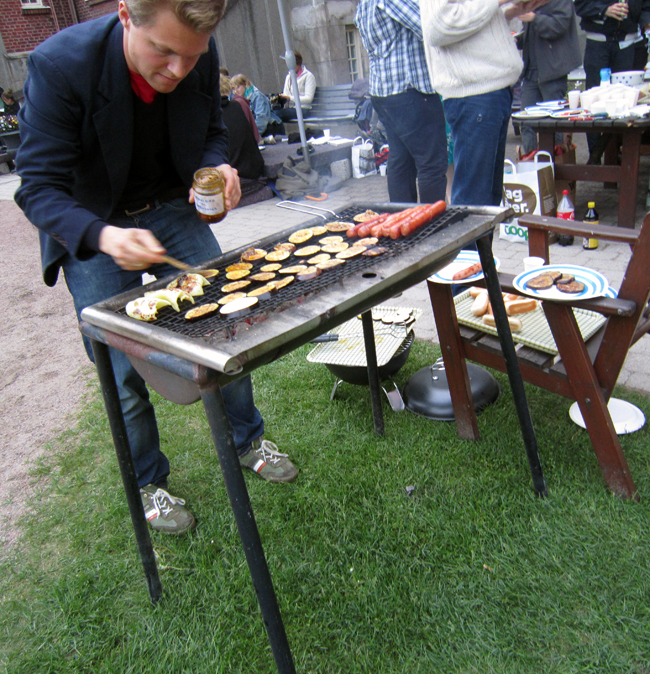
Old urinal re-tooled into a barbeque barrel

David Skoog, principal of the art school at Munka Folk High School
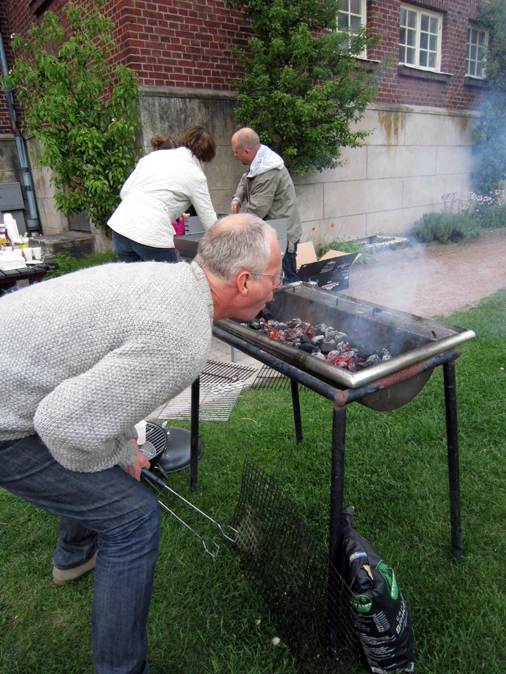
David Skoog working the barbeque barrel
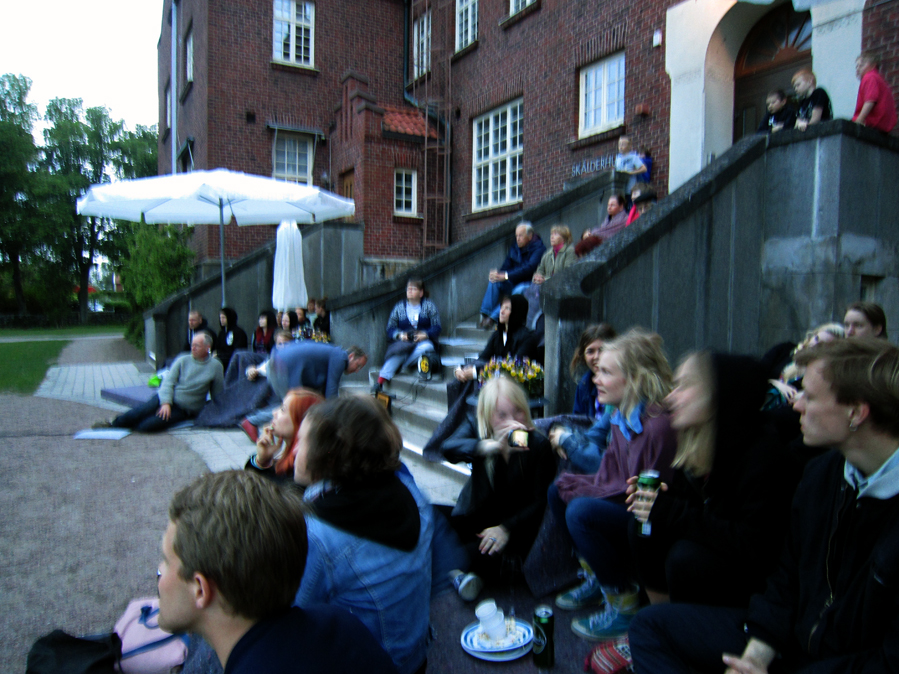
Audience
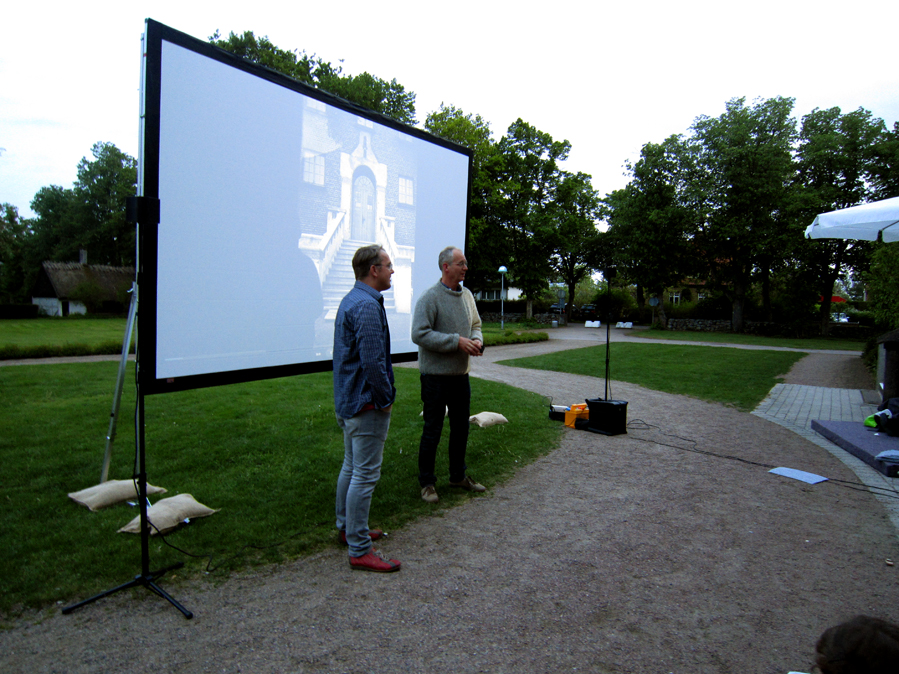
Introducing the Slideshow

Introducing the Future program
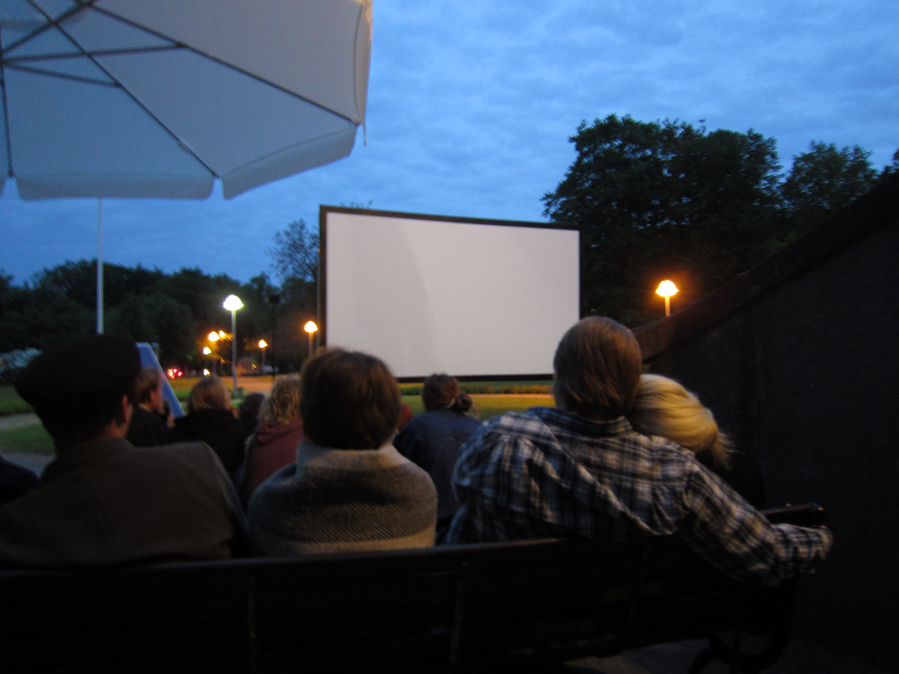
View from the podiums
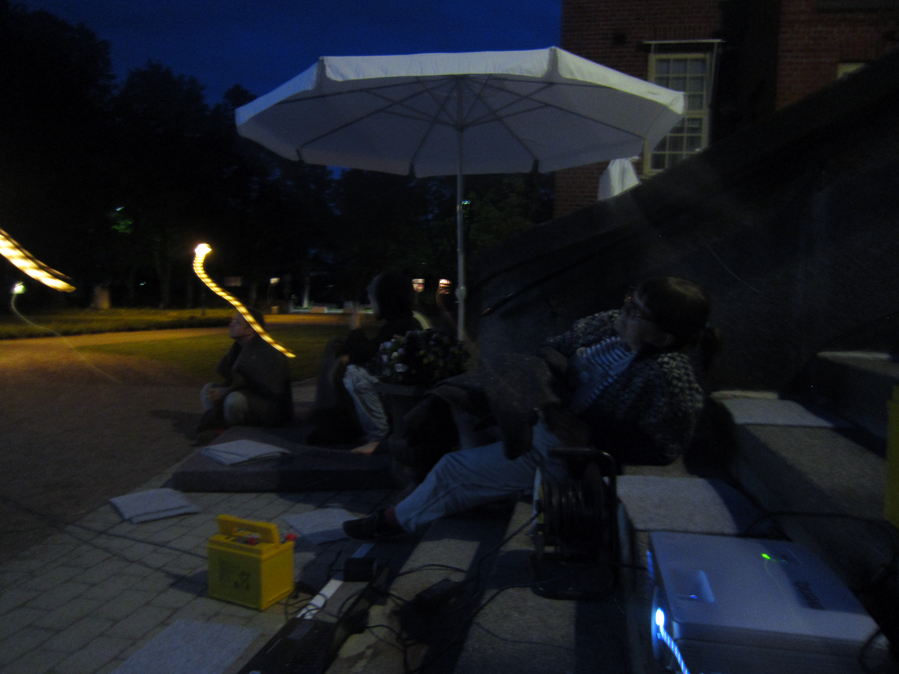
We Have No Art begins
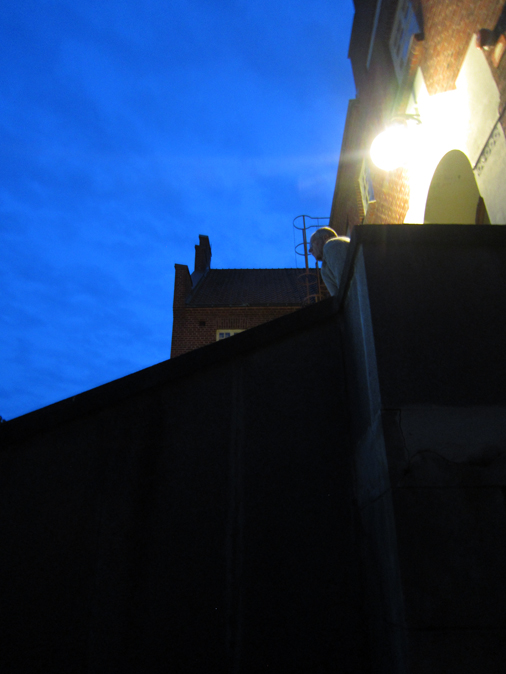
David Skoog viewing from the top of the stairs



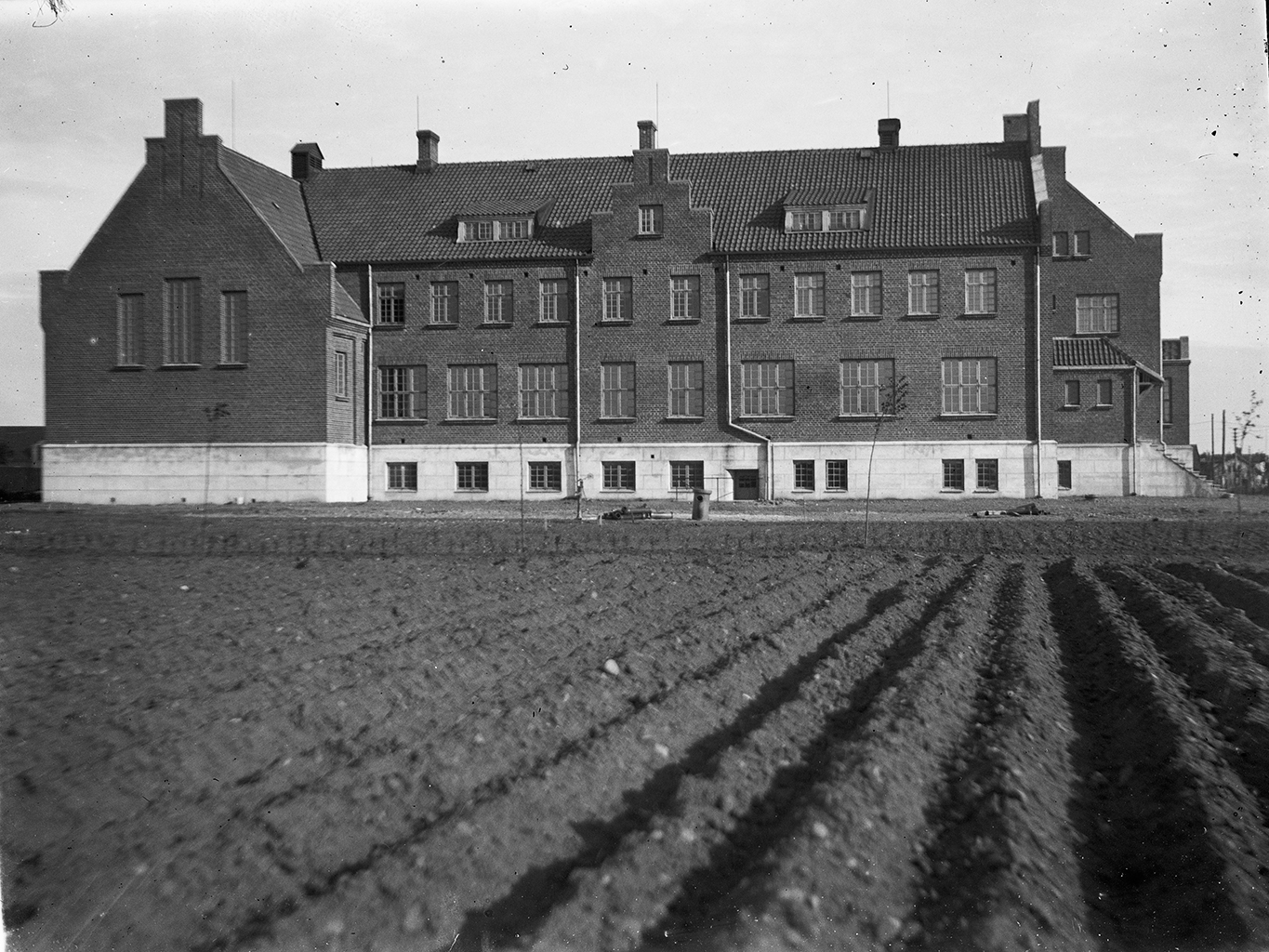
Glassplates by Ernst Larsson (the first headmaster), 1913
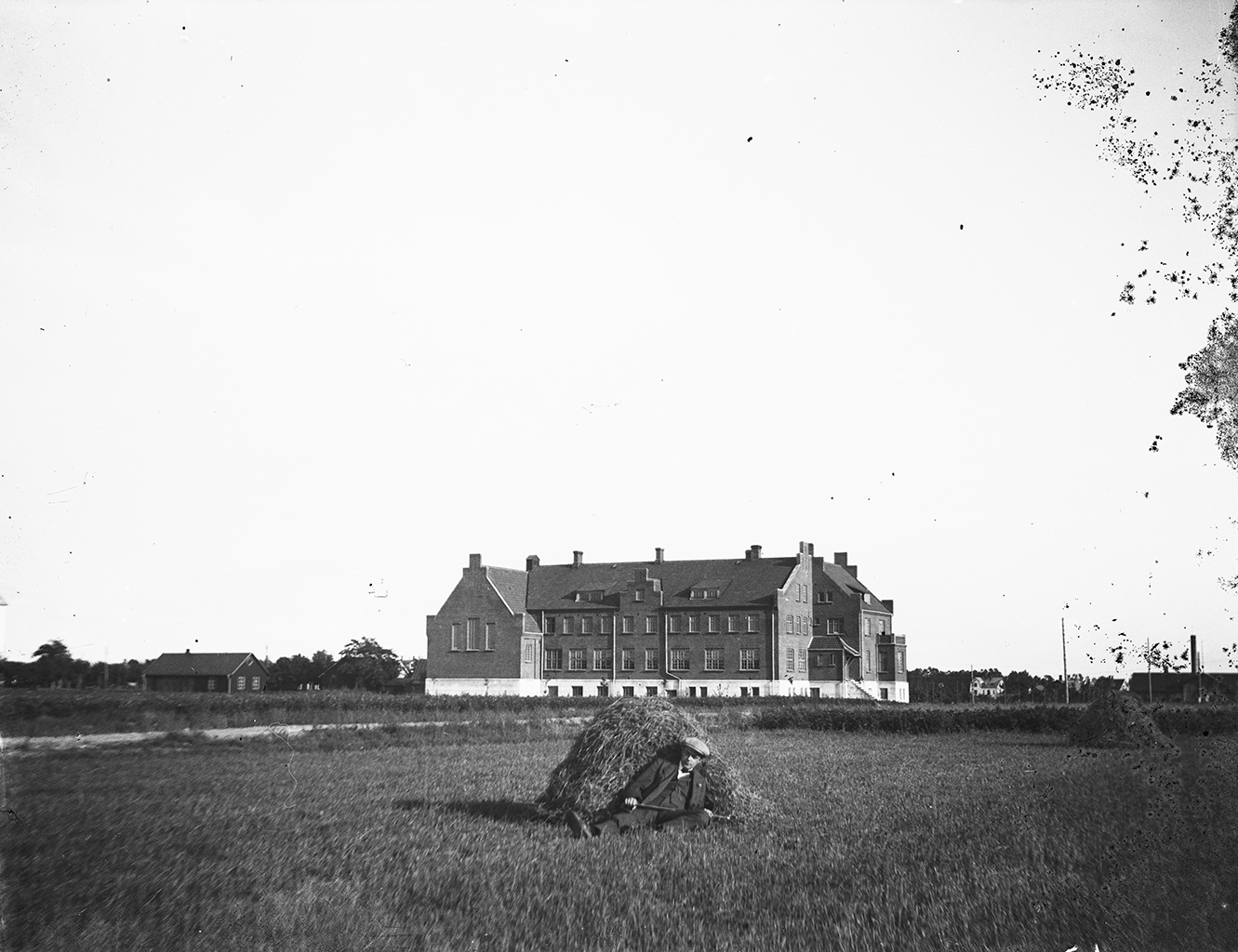
A folk high school is a form of popular adult education, and originated with the social movements of 19th and 20th century Sweden. As part of the Munka Folk High School celebrating it’s 100 year jubilee in 2013, we’ve arranged a screening on the lawn in front of the school. The screening starts with a Slideshow of old glassplates depicting the school when it was newly built in 1913.
Glassplates by Ernst Larsson (the first headmaster), 1913
The artvideos in The Future program have all been produced by art students at Munka Folk High School during a workshop organised by the Sunshine Socialist Cinema during the spring of 2013. The students – Siri Berg, Hanna Carlsen, Björn Delgård, Karin Ellerstrand Bengtsson, Malin Ida Eriksson, Alexander Findeisen, Ryan Karlsson, Nina Myrendal, Thomas Olsson, Louise Petersson, My Sjöberg and Nils Östbrant – have worked at imagining and visualizing thoughts of the future and future ways of seeing.

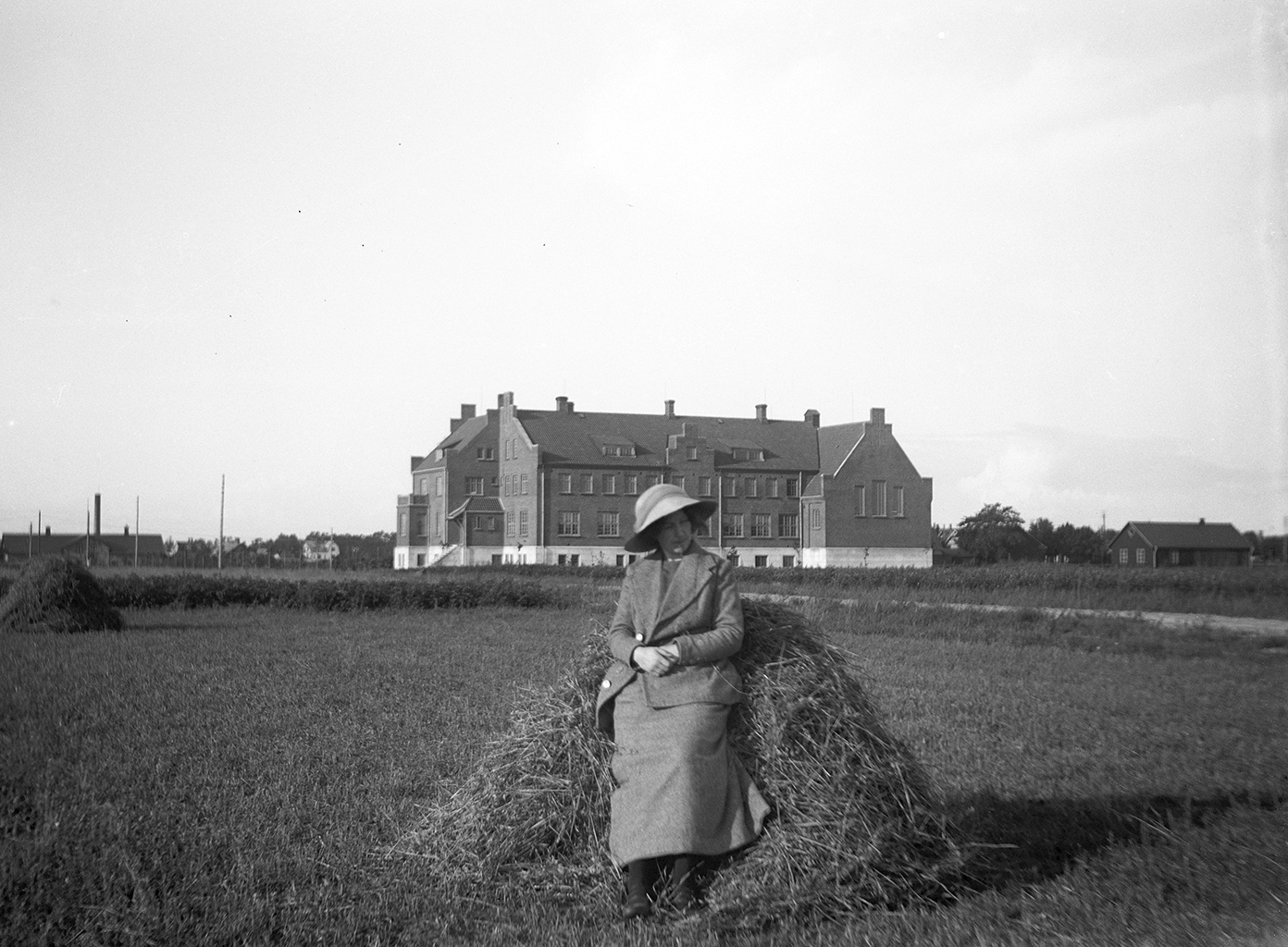
Glassplates by Ernst Larsson (the first headmaster), 1913

The Enthusiasts: Archive will start off a series of screenings devoted to films developed in amateur workshops led by established artists and filmmakers. These workshops have varied in form and content, and have been arranged in various times and geographies, but they also share a few common charcteristics: the wish on the part of the filmmaker to help create a cinema of the people, and a belief in creative filmmaking as a tool for personal and societal transformation.

We’re starting our 2013 season with a screening of the Enthusiasts: Archive, a collection of amateur films made by Polish workers within the context of the film clubs in socialist times. In these film clubs, the enthusiasts would receive instruction in filmmaking techniques from visiting professional filmdirectors, and the films would be screened in locally arranged filmfestivals. The films often reflect the conditions of life of the workers, and the film clubs opened up a social space for critique, discussion and celebration of these conditions.
The Enthusiasts: Archive has been compiled and the films restored by artists Marysia Lewandowska and Neil Cummings after two years of research. Their interest in the Polish film clubs came in part from seeing the film Amator made by Krzysztof Kieslowski.

A catalogue from when Enthusiasts: Archive was exhibited at Centre for Contemporary Art in Warsaw is available online here
From the website Chanceprojects:
“With 16mm film stock, cameras and editing tables supplied by the factory/state, a large number of clubs were created throughout Poland from 1950′s onwards. By the late 1960’s there were almost 300 clubs in existence. Out of this growing network, and in a mirror reflection of the professional media, film competitions evolved, prizes awarded, and festivals were organized on a local, regional, and eventually national and international level.”
“The films made, range from 2-minute animations, short experimental films, documentaries on family, village, city or factory life; to historical dramas, features and ambitious mini epics.”

This April, we’re doing a couple of talks and presentations in the south of Sweden, a public screening, a workshop, and a rave cinema (which equals a secret outdoor screening).

Extremely lightweight portable cinema screen
On April 4, Kalle Brolin will present the Sunshine Socialist Cinema at the public library in Bromolla. The talk starts at 19.30 and is free of charge. There will be trailers for the films of the upcoming season, among other things. On the day before the talk, Paula Von Seth will hold a workshop for local youth, on the theme of images of the future. These videos may become part of our screenings further down the road.
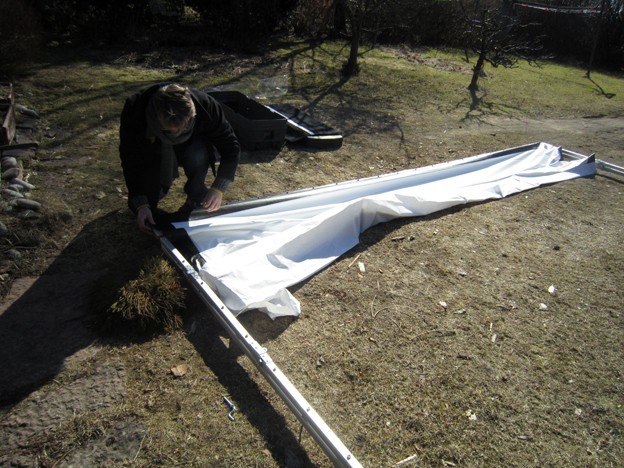
Screen snaps on
On April 17, we’re doing a screening of the Enthusiasts Archive, a collection of amateur films made by Polish workers within the context of the film clubs under socialism. The archive has been compiled and the films restored by artists Marysia Lewandowska and Neil Cummings.
From the website Chanceprojects:
“With 16mm film stock, cameras and editing tables supplied by the factory/state, a large number of clubs were created throughout Poland from 1950’s onwards. The films made, range from 2-minute animations, short experimental films, documentaries on family, village, city or factory life; to historical dramas, features and ambitious mini epics.
We are aware of around 300 clubs registered since 1960 in a number of different industrial zones e.g. Nowa Huta, Biesko Biala, Poznan, Oswiecim, Bialystok, Warszawa, Katowice, Szczecin and Gdansk.”
The screening is arranged in cooperation with the International Cafe of Angelholm.
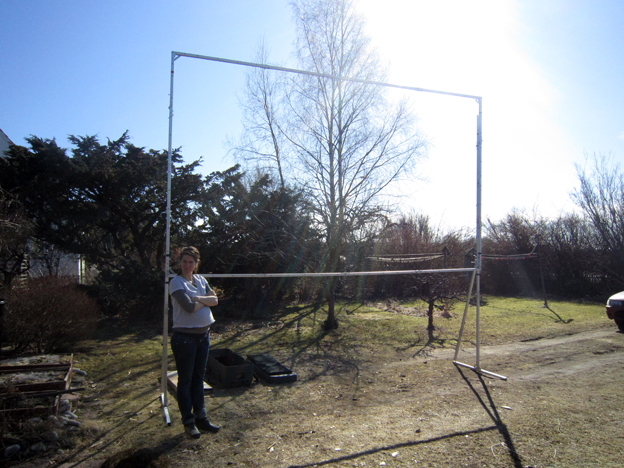
Widescreen format
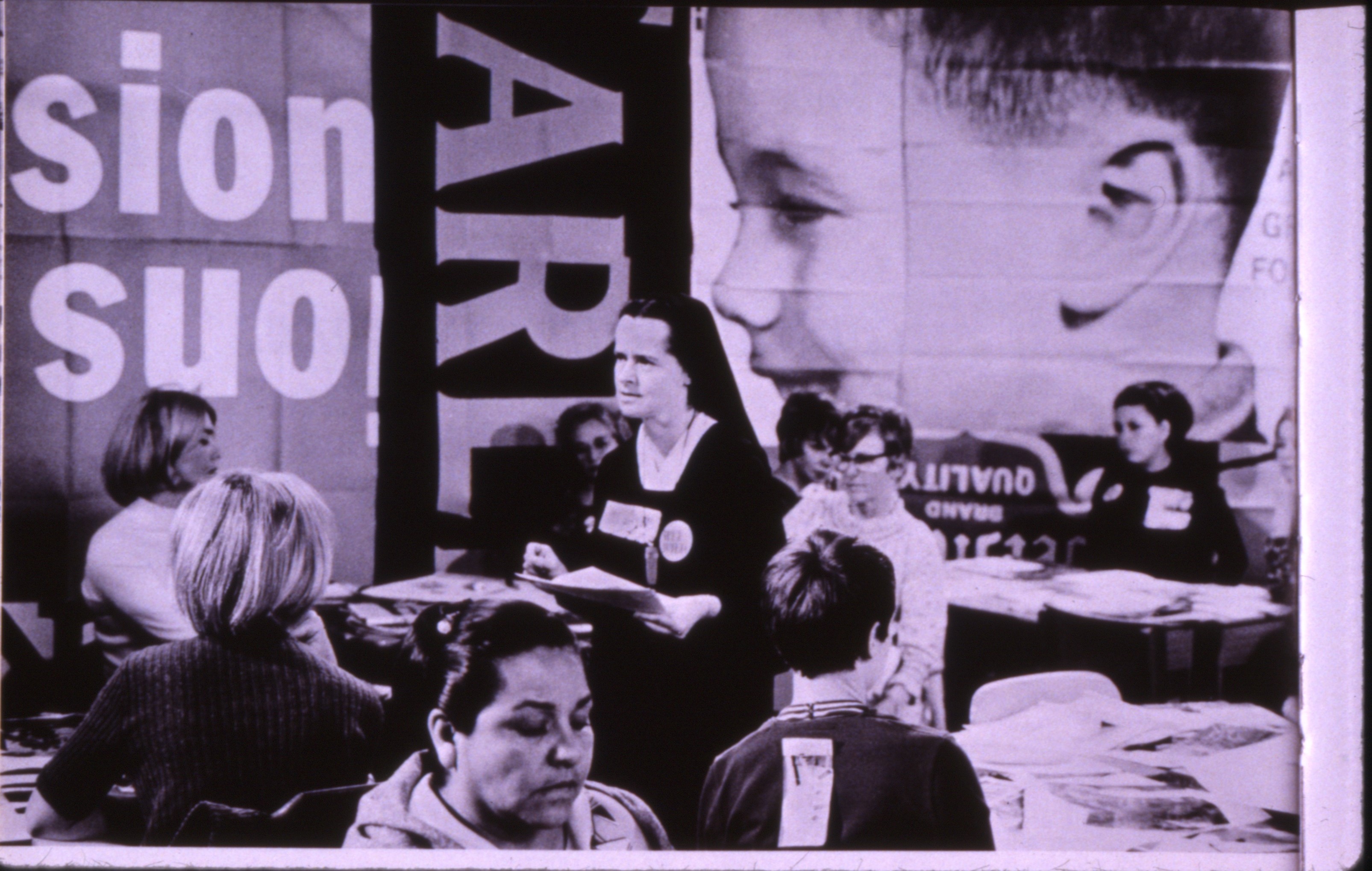
Throughout April and May we’re doing a workshop with the artstudents of Nordvastra Skane Folk High School. The students will work on art videos imagining The Future, and these videos will be screened to the public by the end of May. The outdoor screening takes place on the evening of May 25, on the lawn in front of the folk high school, and will celebrate the 100 year jubilee of the school. A folk high school is a form of popular adult education, and originated as part of the peoples movements of 19th and 20th century Sweden. The screening will start with a slideshow of old glass print photographs of the school from when it was newly built. As part of the screening, we will also show the film We Have No Art by Baylis Glascock, a documentary made in 1967 about Sister Corita Kent. Sister Corita was a Roman Catholic nun who taught at an art school in Los Angeles.

Fits in a coffin-sized box on wheels
On April 25th, Kalle Brolin will present the Sunshine Socialist Cinema at the Glimakra Folk High School. There will be trailers for the films of the upcoming season, among other things.

Screen measures 4 meters wide and 1,80 meters high
As we’ve received a large sum of money to produce a portable version of our solar powered cinema and take the show on the road, we will begin in mid-April with a secret outdoor screening, part of our Rave Cinema series. More info on this momentarily.
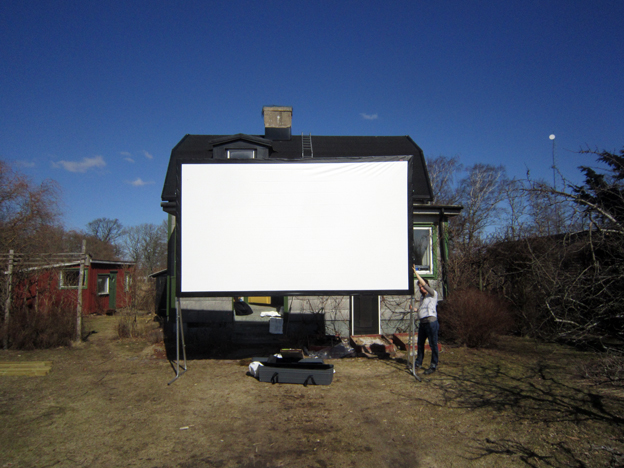
Portable screen in full glory obscures house
Our program this summer is starting to take shape, and we’ve got confirmed screenings of Centaur by Tamás St. Auby, Tomorrow by Andrey Gyazev, and Todos Vos Sodes Capitans by Oliver Laxe. More to come as summer approaches.
 Sunshine Socialist Cinema