Unknown's avatar

On Rich And Poor Alike

The sun shines down On Rich And Poor Alike between May and September, as we engage in a longterm discussion on forms of commons together with  groups and projects like Trampolinhuset, Kuratorisk Aktion, Ensayos, Mustarinda Association, Sorfinnset Skole/The Nord Land and SIFAV. It’s all part of the exhibition project Communities in Conversation, at Konsthall C in Hokarangen (Stockholm). Our contribution has so far consisted in two parts, a slideshow and filmscreening on smallscale coalmining in Sweden during WWII, and a draft of a future exhibition contract between the Sunshine Socialist Cinema and hosting institutions.

The Sunshine Socialist Cinema is located in the countryside of Scania, an area which served as the Swedish coalmining district for several centuries. Originally, the coal was mined by only one corporation, Hoganasbolaget, but during WWII when Swedish imports were blocked, coal became scarce, and an exception was made: private persons were temporarily allowed to mine coal on land that they owned, in gardens and on farmland. These years, when 140 new shafts were dug, became known as the Klondyke period in Scania.

The Sunshine Socialist Cinema has started collecting photographs for a slideshow of images from the Klondyke period, and has also screened a section of the film Billesholm i helg och socken (1946), which shows some of the mines being worked by local farmers. We’ve received kind assistance from Billesholms Hembygdsforening.

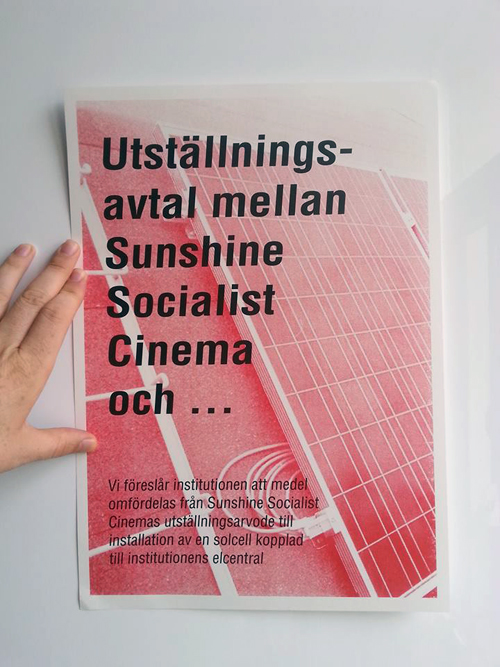
In tandem with collecting material on the smallscale coalmines, we are also following the current process and debate around smallscale private production of solar energy, something which we ourselves are involved in. Together with Konsthall C, we’ve begun working out an approach to regulating our future involvement with art institutions who would wish to include the Sunshine Socialist Cinema in their programming. This involves mounting solar panels which could turn institutions into microproducers of their own electricity.
 

1

Two-part poster outlining an approach to exhibiting the Cinema in art institutions

(printed in soy based ink on a Riso)
Unknown's avatar

The Music That Plays Before The Film Begins

We’ve received this question a couple of times, and thought we may as well answer it here – what IS that song/music that we play before the film begins?

Well sometimes it’s a collection of music made by Grupo de Experimentacion Sonora del ICAIC. This group worked on experimental film music for the Cuban film institute, ICAIC, from 1969 and onwards.

The title of the collection is 25 Años Cine Cubano Revolucion.

Unknown's avatar

Protests And Mines

ojnare-Lisa-av Joel Nilsson

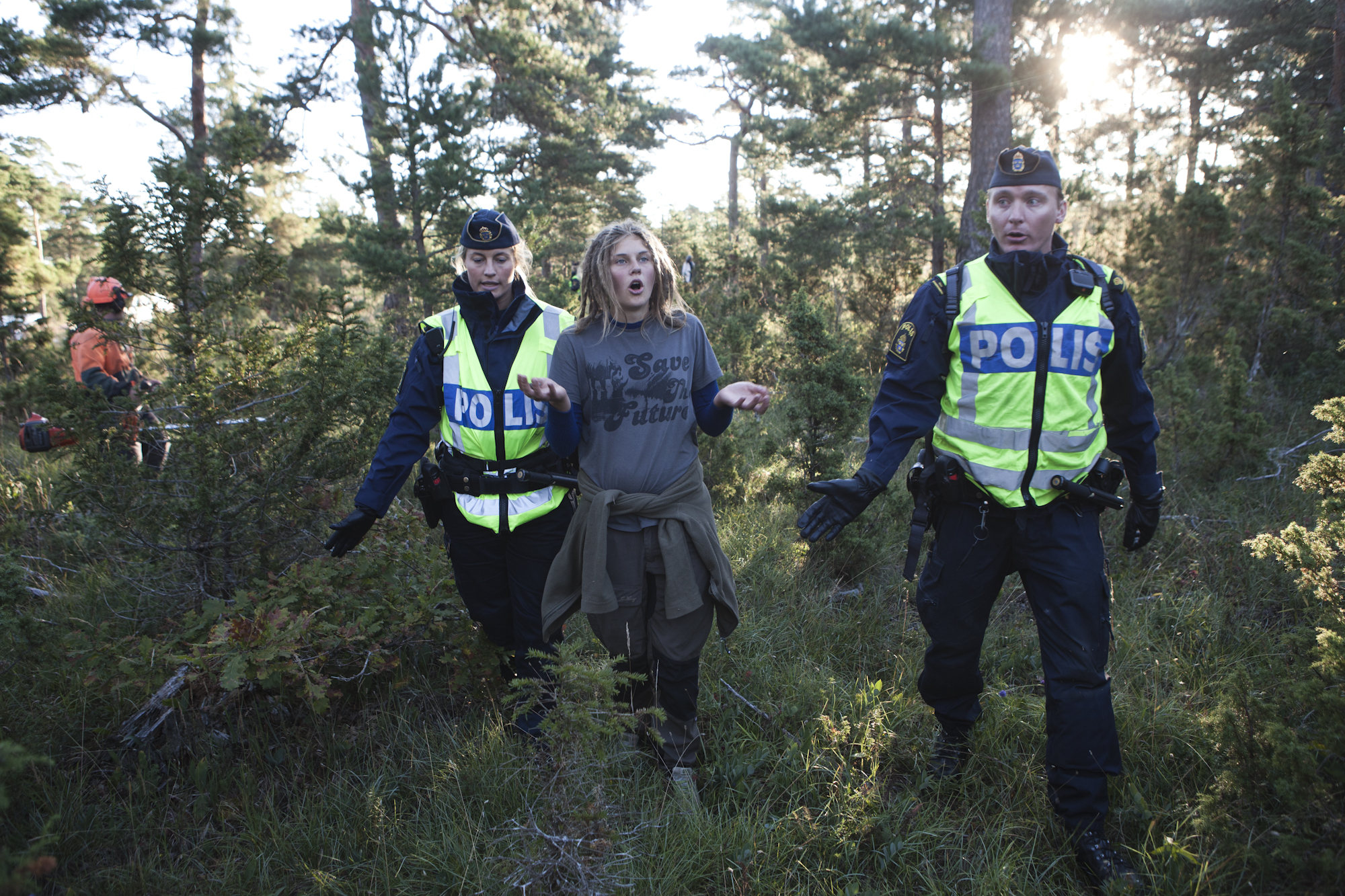
Lisa Berlin photographed in Ojnare forrest, Gotland, by Joel Nilsson

We’ve compiled a video program for the Gotland Art Museum in Visby. The program will run from February 8 to March 5 2014. Art videos will be shown parallell to a compilation of videos we’ve received after an open call, in which we asked for films made by anyone involved with the protests against prospected slake mining in the forrest of Ojnare in northern Gotland. Among the Ojnare videos we have for example information films made by local environmentalists, a video shot on a mobile by a woman sitting in a tree on the day the forrest was to be cut down, and five short clips shot by the police to be used as evidence against the protesters in upcoming trials.

.

01

Faire Le Mur by Bertille Bak

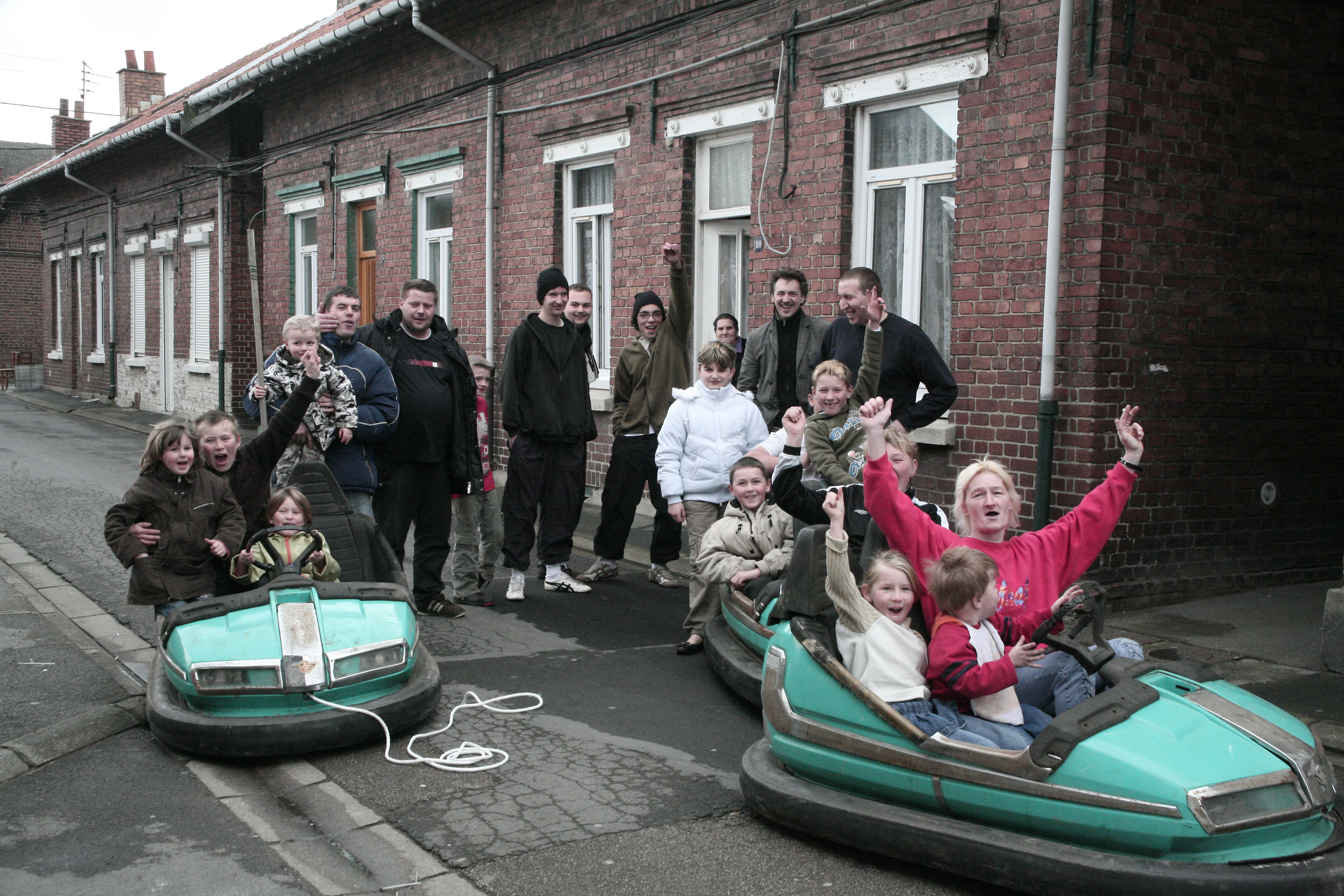
When it is announced that the mining area in northern France is due for renovation, which will lead to drastic increases in rent and effectively force people to move out, inhabitants of Barlin city n°5 in Pas-de-Calais organize the last revolt of  the mining territory. Artist Bertille Bak is the granddaughter of a coalminer from Barlin. Her film Faire Le Mur shows the people of the town involved in surreal and playful acts of resistance: banners passed from house to house so that everyone can contribute with their sewing; communication lines drawn with cans and string; bumper cars borrowed from the fun fair and driven through the streets. All the while the town is under siege by construction machinery, come to tear the old houses down. The compositions in the film are based on paintings by Poussin, Goya and Girodet, classical images of revolution and lost paradises.

photo1

Faire Le Mur by Bertille Bak

.

TheBigHolePh

The world’s smallest bible thrown in the biggest man-made hole by Cecilia Parsberg

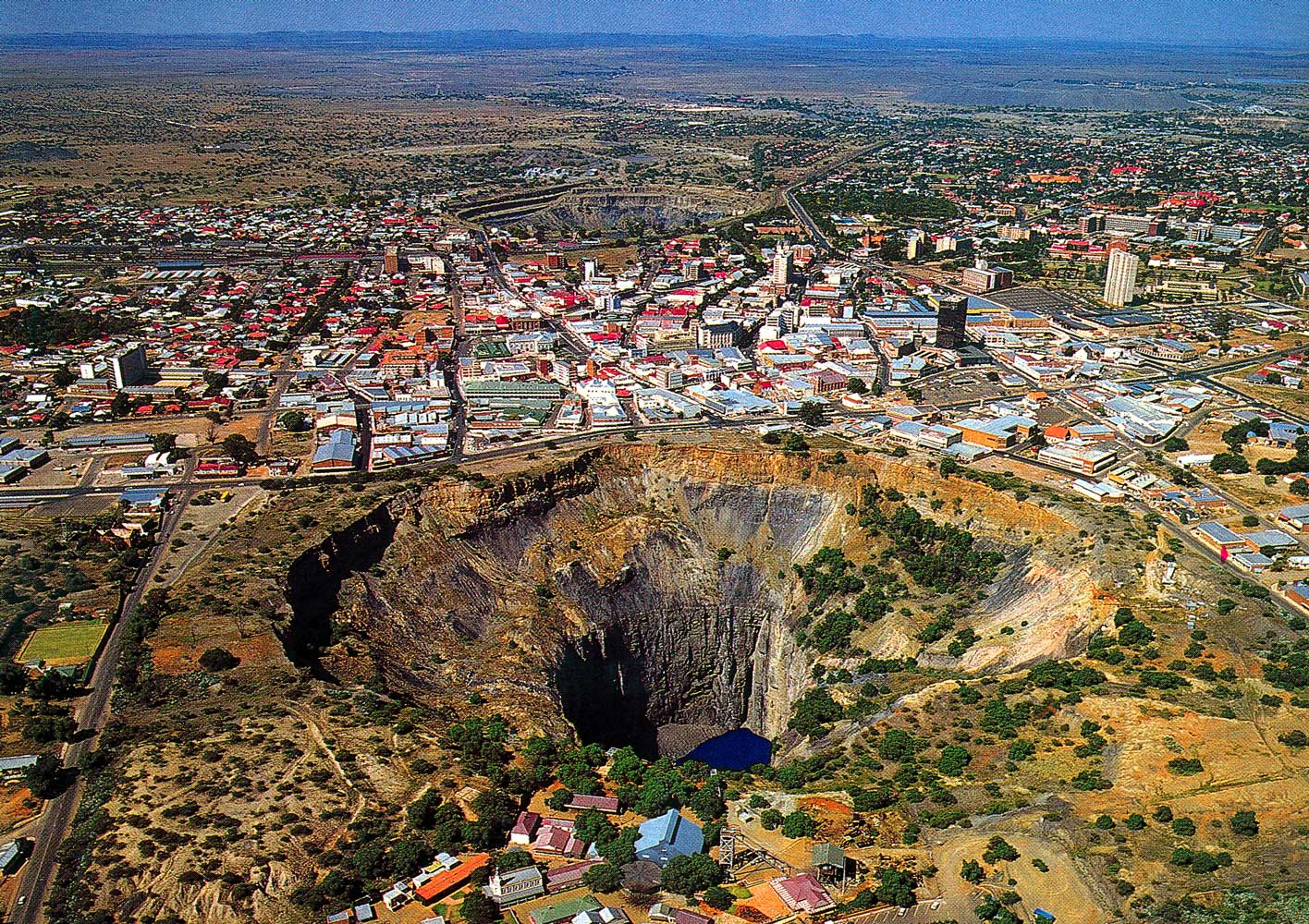
The film documents an action from the year 2000, when Cecilia Parsberg met bookbinder and rastafari Jabulani Dube from Kimberley in South Africa. In the film we see Jabulani Dube make a copy of the world’s smallest bible, the original of which is found in Stensele church in Luleå, Sweden. Cecilia Parsberg and Jabulani Dube meet in a discussion about life in two very different parts of the world, and they decide to try to make these parts meet up also in action. Jabulani, his daughter and Cecilia travel to his hometown, where the Big Hole is located. This is one of the holes resulting from diamond mining run by the De Beers company. All of Jabulanis relatives, as well as all black people from the area, have worked in the mines and dug these holes. Cecilia and Jabulani meet some people who have a small airplane, and who are open to the idea of helping them get the bible thrown in the hole. In the film we see what happens next.

The Big Hole has a circumference of 1,7 km, a diameter of 460 m. The mine was active between the years 1717-1914, and 14,5 million carats of diamonds were produced.

bibelihand3

The world’s smallest bible thrown in the biggest man-made hole by Cecilia Parsberg

.

weavers7

The Weavers by Anna Molska

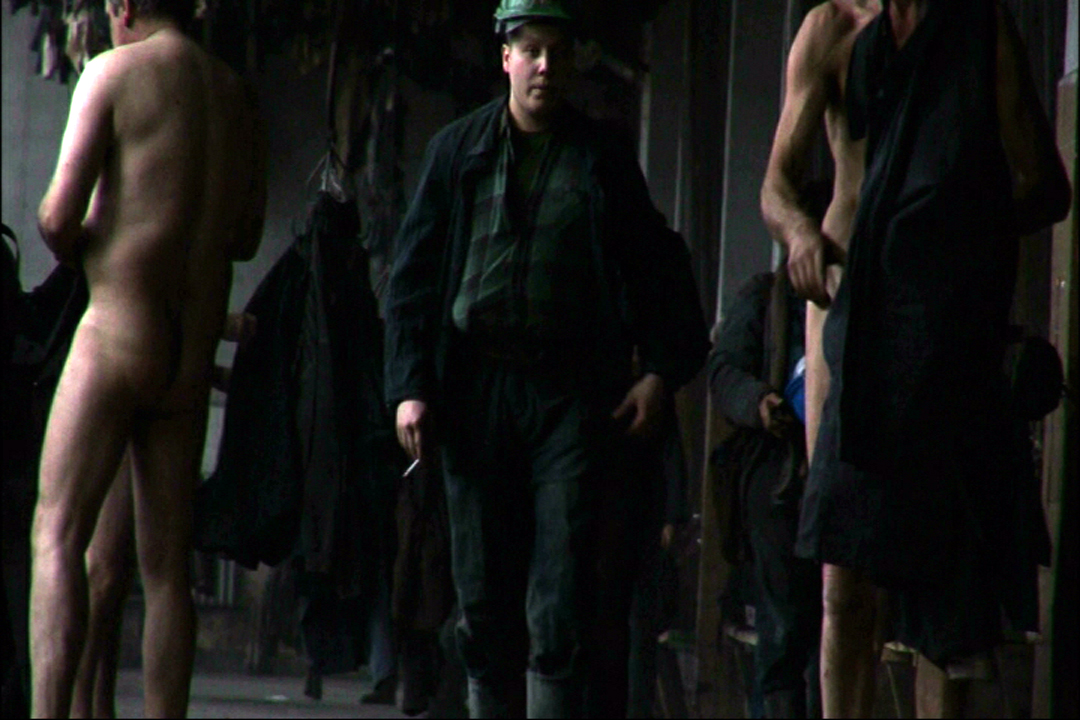
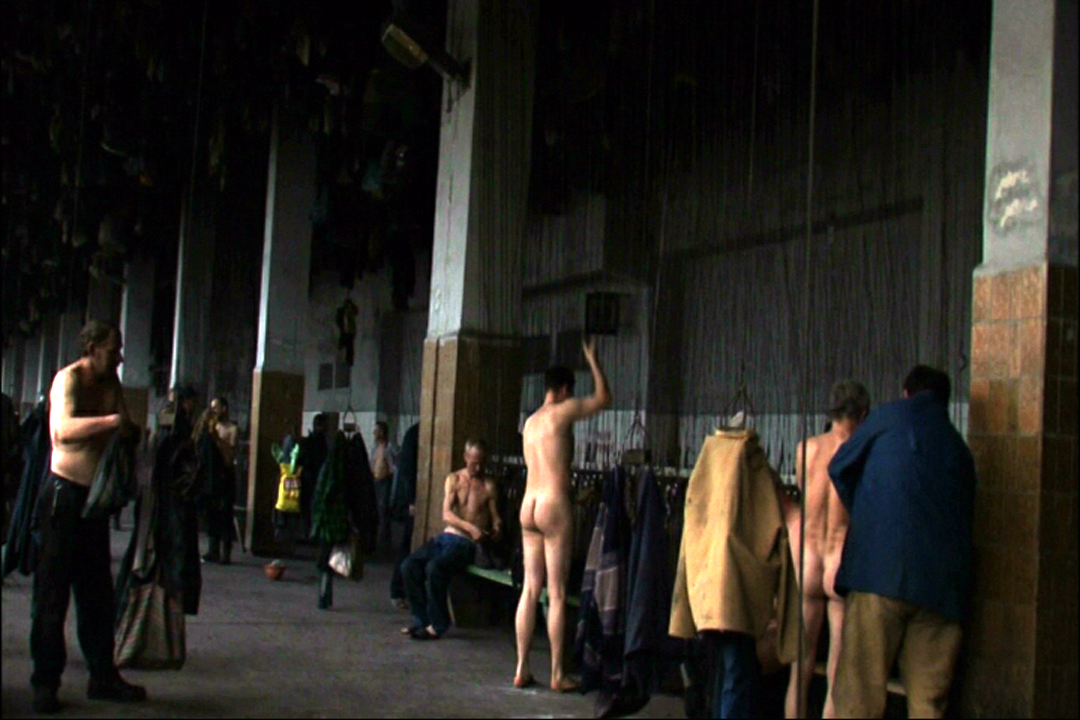
The Weavers by Anna Molska is a short film based on a play by Nobel Prize Laureate Gerhart Hauptmann written in 1892. Hauptmanns’ play portrays a revolt by weavers working in textile mills, which occurred in Silesia 50 years earlier. The film by Anna Molska is also recorded in the Silesian mountains, nowadays a region in Poland. Here, coalminers await notice of redundancies and the closing down of the mining industry. When the coalmine in Bobrek Centrum was closed, there were no protests from the miners, rather a sense of resignation. Anna Molska has used coalminers as actors, with the coalmines and the surrounding landscape as scenography. In her shortened version of the play, the revolt itself has been cut out. What is left is a dialogue amongst three men, and a doleful chorus singing at the end: ‘Oh, you villains, Satan’s spawn, you eat the bread but send hunger down’.

 weavers3

The Weavers by Anna Molska

Unknown's avatar

10 Minutes With The Working Class

the weaversstill from The Weavers by Anna Molska

Under the theme of Workers Leaving the Factory, we’re screening a filmprogram embedded within the installation Zoo at Skogen, Gothenburg.

weavers7still from The Weavers by Anna Molska

The Weavers by Anna Molska is a short film based on a play by Nobel Prize Laureate Gerhart Hauptmann written in 1892. Hauptmanns’ play portrays a revolt by weavers working in textile mills, which occurred in Silesia 50 years earlier. The film by Anna Molska is also recorded in the Silesian mountains, nowadays a region in Poland. Here, coalminers await notice of redundancies and the closing down of the mining industry. When the coalmine in Bobrek Centrum was closed, there were no protests from the miners, rather a sense of resignation. Anna Molska has used coalminers as actors, with the coalmines and the surrounding landscape as scenography. In her shortened version of the play, the revolt itself has been cut out. What is left is a dialogue amongst three men, and a doleful chorus singing at the end: ‘Oh, you villains, Satan’s spawn, you eat the bread but send hunger down’.

10 minutes with the working class

still from 10 Minutes With The Working Class by Florin Iepan

10 Minutes With The Working Class by Florin Iepan is a form of farewell to the industrial documentaries recorded in Romanias Communist times. Filmmakers were employed to portray the heroic collective of industrial workers. These documentaries were screened in cinemas before the beginning of the main event, which accounts for their standard length of ten minutes. The title of Florin Iepans film, as well as the film itself, is both ironic and nostalgic. Various absurd sketches are performed by the workers of a collapsing factory, which at one time was the largest in Romania. The narrator of the film begins his introduction with a comparison to Jurassic Park and the words: “This factory is one of the last remaining places on Earth where one can still encounter a sample of Europe’s now extinct working class.”

the making of a demonstration

The Making Of A Demonstration by Sandra Schäfer

The Making Of A Demonstration by Sandra Schäfer portrays the recording of a scene in the film Osama, the first film produced in Afghanistan after the fall of the Taliban regime. During the first day of shooting, the team reconstructed a demonstration in which Afghan women had demanded the right to paid employment. Around 1000 women participated as extras in the scene. In the short video by Sandra Schäfer we see the director passing instructions to the women before their re-enactment of the demonstration, and how they receive their paychecks at the end of the day on set.

roya

still from The Making Of A Demonstration by Sandra Schäfer

Thank you to Simona Buzatu at the Romanian Cultural Institute in Stockholm and to Anna Tomaszewska at the Polish Institute in Stockholm!

 
Unknown's avatar

In The Shadow Of A Cloud

kentaur 2

Still from Centaur by Tamas St.Auby

Centaur by Tamas St.Auby was made in Hungary in 1973-75, filmed in various workplaces and everyday situations. The accompanying dialogues appear to be spoken by the people in the documentary images. The centaur of the title refers to the nature of the talking film as such, the image as reality and the voice as utopia. The language of the dialogue is reminiscent of a situationist critique of working life.

The film was banned by Hungarian censors before it could be shown. Tamas St.Auby was arrested and expelled from Hungary for neo-avantgarde activity and participating in the Samizdat movement, and settled down in Geneva in 1975.  The Centaur was found by friendly hands and stolen out from the vault of the secret police in 1983. St.Auby returned to Budapest only after the fall of the Iron Curtain. The damaged original 16 mm film was digitized and restored for inclusion in the 2009 Istanbul Biennale.

The Sunshine Socialist Cinema is proud to present Centaur at an outdoor screening beneath the public sculpture I skuggan av ett moln (In The Shadow Of A Cloud) by Charlotte Öberg Bakos. The sculpture consists of a cloud formed by neon tubes, floating above a pillar (or chimney, as we see it). The sculpture has influenced our programming, under the theme of ‘Workers Leaving The Factory’:

Hello My Name Is Rita by Rita Winde begins with a personality test which the artist took at the Swedish Employment Agency in order to find out which jobs she might be suited for. With the results of this test as her only merit, she set about applying for the jobs that the computer at the agency had recommended. The result is a series of slightly absurd meetings with various employers and workplaces, and a video where the unschooled film technique of Rita Winde brilliantly mirrors the lack of merits in her job application process. The film was recorded in 1996, but has contemporary topicality due to the various employment policies implemented in Sweden over the last years.

The Crowd Is Your Element by Paula von Seth is a filmed dance performance based on Workers Leaving The Factory (1895) by the brothers Lumière. The movement of the workers in the film is turned into a streaming catwalk choreography, developing into a vision characterised by negotiations between distances and revolutionary densities. An important component was the relation between individual and mass, marked by simultaneous fear and attraction. The performance was made specifically for the Malmoe festival in 2010, a festival which draws around 1,5 million visitors. The Crowd Is Your Element was produced in collaboration with among others the musician Sophie Rimheden, fashiondesigner Bea Szenfeld, and choreographer and dancer Cicilia af Dalmatinerhjarta.

A Ruda Road Movie by Marie Bondeson closes the filmprogram. In 2002, the Konsthall in Virserum produced two exhibitions about local industries shutting down. One was the papermill Silverdalen, the other was Moteco in the small town Ruda. Moteco benefitted from the Telecom boom, but eventually laid off all employees in Ruda and moved its’ production to Malaysia. For the second exhibition at Virserum, the artist Marie Bondeson was asked to visualise the term outsourcing. In the film A Ruda Road Movie, she follows unemployed Douglas Fransson around Ruda, while he laconically details the effects of outsourcing upon his hometown. We also get to hear about Hogsby city council making plans for the survival of the region.

A short interview with Kristina Müntzing from SSC regarding the screening is found at Konstensvecka.se

On Sunday September 29 we begin with an artist talk at 18.30 outside the Stinsen Travel Centre in Soderkoping.

Unknown's avatar

In the Gothenburg Art Biennale (part two)

dorota1

Photo by Dorota Lukianska

For the opening weekend of the Gothenburg Art Biennale, we presented two connected works. One was the yellow van which housed the Newsreels from the Gothenburg Commune, playing on a big plasma screen. The other was a series of outdoor filmscreenings, which took place on the deck of a boat at the Quay of Dreams. The van has since been removed from the program by the biennale organisers, due to a lack of staff.

Reviews have been published, some mentioning the yellow van, some mentioning the outdoor screenings.

Konsten.net

(This review was written by Magnus Bons during the opening weekend, when the van was still a part of the biennale.)

Kunstkritikk.net

(This review was written by Jacob Lillemose after the opening weekend, when the van had been removed from the biennale program.)

Aftonbladet.se

(Ulrika Stahre mentions the van.)

Dn.se

(Sinziana Ravini mentions the outdoor screenings.)

We also got a nice article about the Cinema in ETC Magazine (Gothenburg edition), written by Frida Sandström.

ETC

Unknown's avatar

In the Gothenburg Art Biennale

KuxaKanema_eng-1

Kuxa Kanema by Margarida Cardoso, 2003

During the opening weekend of the Gothenburg International Biennial of Contemporary Art, the Sunshine Socialist Cinema will present screenings of films on the deck of a boat by the Quay of Dreams in Gullbergsvass. The screenings are part of the section Art & Crime (curated by Joanna Warsza). On Saturday September 7th at 18.00 we’re showing Kuxa Kanema (Margarida Cardoso), and on Sunday September 8th at 19.00 we’re showing Handsworth Songs (Black Audio Film Collective). The screenings are parts one and two in a thematic series of four; the subsequent parts are shown in October.

KuxaKanema_eng-5

Kuxa Kanema by Margarida Cardoso, 2003

Kuxa Kanema is a documentary about how the People’s Republic of Mozambique, after declaring independence in 1975, started up a National Film Institute and began producing newsreels. The aim was to spread images and stories of how a Socialist nation was built by a unified people. Mobile outdoor cinemas would drive between towns and villages screening a new ten minute newsreel each week, the Kuxa Kanema. Kuxa Kanema means ‘birth of cinema’.

In 1991 Margarida Cardoso visits the ruin of the National Film Institute, a building partially destroyed by fire, where a few remaining employees are waiting for retirement. She starts copying what’s left of the newsreels onto videotape. She calls them “…visual documents that bear witness to the first eleven years of independence – the years of the socialist revolution”. Excerpts from the newsreels are mixed with interviews with former employees at the National Film Institute, who speak of the importance of cinema in giving form to their dreams and ideals.

Handsworth Songs 3

Handsworth Songs by Black Audio Film Collective, 1986

(Courtesy of Black Audio Film Collective and LUX, London)

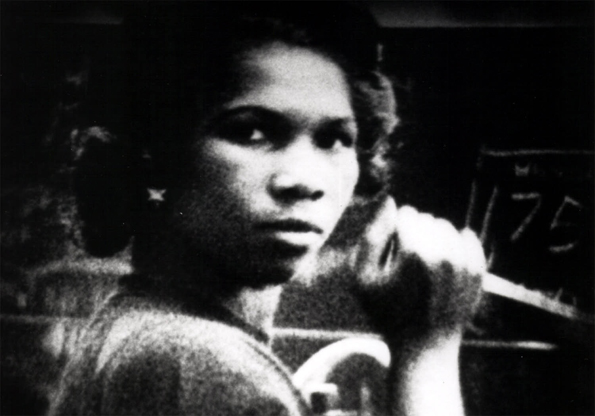
On Sunday September 8th at 19.00 we’re screening Handsworth Songs, a film by Black Audio Film Collective. The film takes as its’ starting point the riots which occurred in Birmingham and London in 1985, and the way these events were portrayed in British media. In daily newspapers and TV the people involved in the riots can only be demonised or rationalised, not understood.

HANDSWORTH WOMAN_PRINT 2

Handsworth Songs by Black Audio Film Collective, 1986

(Courtesy of Black Audio Film Collective and LUX, London)

In Handsworth Songs the filmmakers explore a number of questions dealing with race, longing and belonging, going through decades worth of images. The format of the film attempts to mirror a multiplicity of black voices and positions in Britain, to show a heterogeneous black presence within the nation. The inclusion of older newsclips in the film builds up what the filmmakers have called “…an archive of black (un)belonging,  in the expression of hopes of belonging brutally deferred”.

van

Newsreels from the Gothenburg Commune, 2013

In the mobile screening unit of our cinema, we will present newly produced ten minute Newsreels from the Gothenburg Commune each week throughout the fall. The films have been recorded by a group of artists, filmmakers, and media activists, some of whom have a background in Indymedia Gothenburg. More info about these films will follow shortly!

Unknown's avatar

Best Audience Ever

IMG_4434

Some got angry at the films, some got stiff from the cold…

IMG_4433

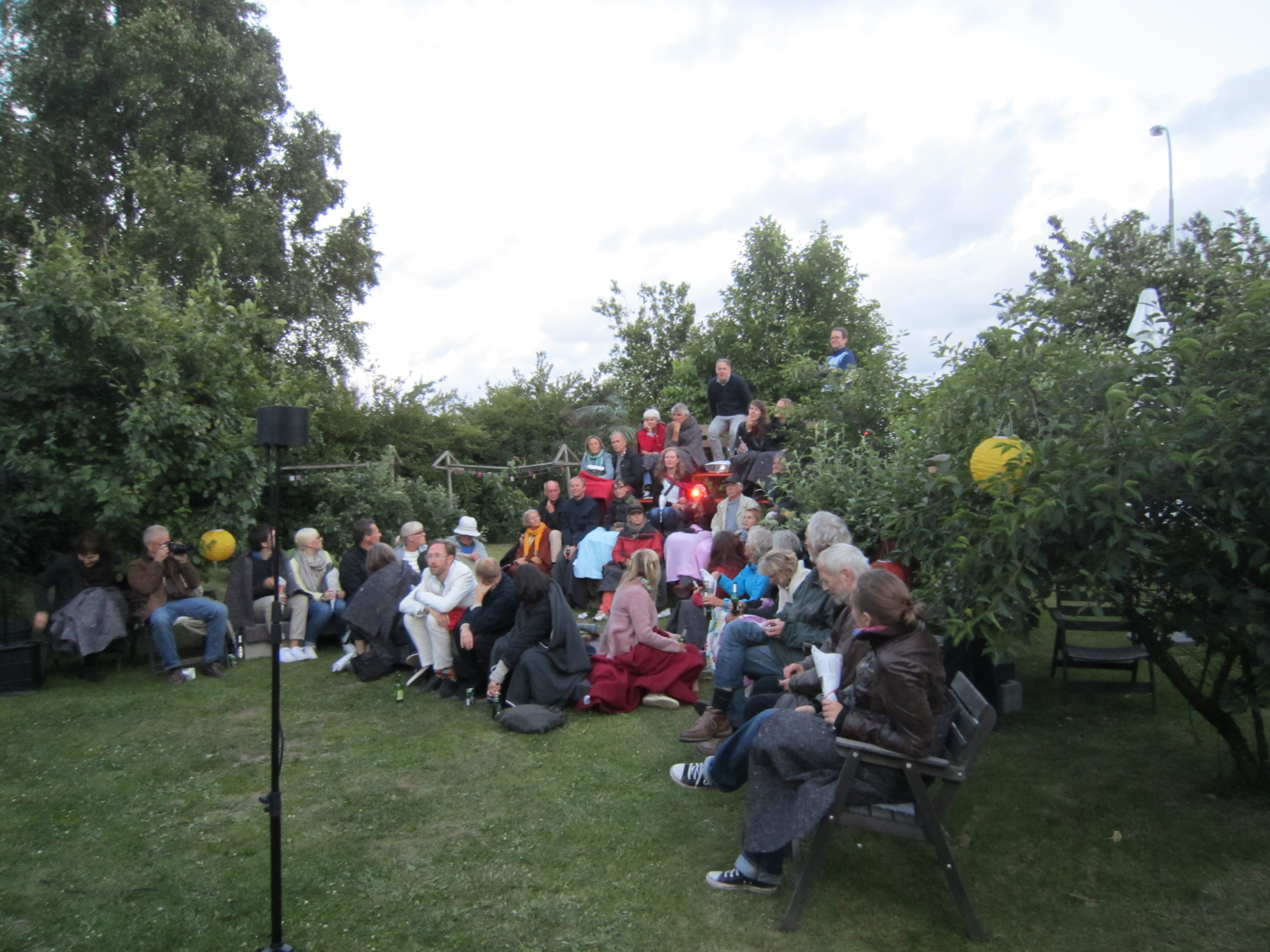
…but the debate got really good at times. Thank you everyone for coming.

Parts of the discussion concerning Tomorrow is recapitulated in the review written by Emil Schön in HD.

(link)

The discussion on Pirate is not documented anywhere, but in the latest article the interviewer Joel Winqvist keeps returning to copyright issues, provoked in part by our screening of Annika Larssons’ film and in part by our story of an outdoor cinema in Buenos Aires showing pirated films for free.

IMG_4905

From ad paper Lokaltidningen