Unknown's avatar

Sister Corita in We Have No Art, by Baylis Glascock

Sister Corita
All images are (c) Corita Art Center
.
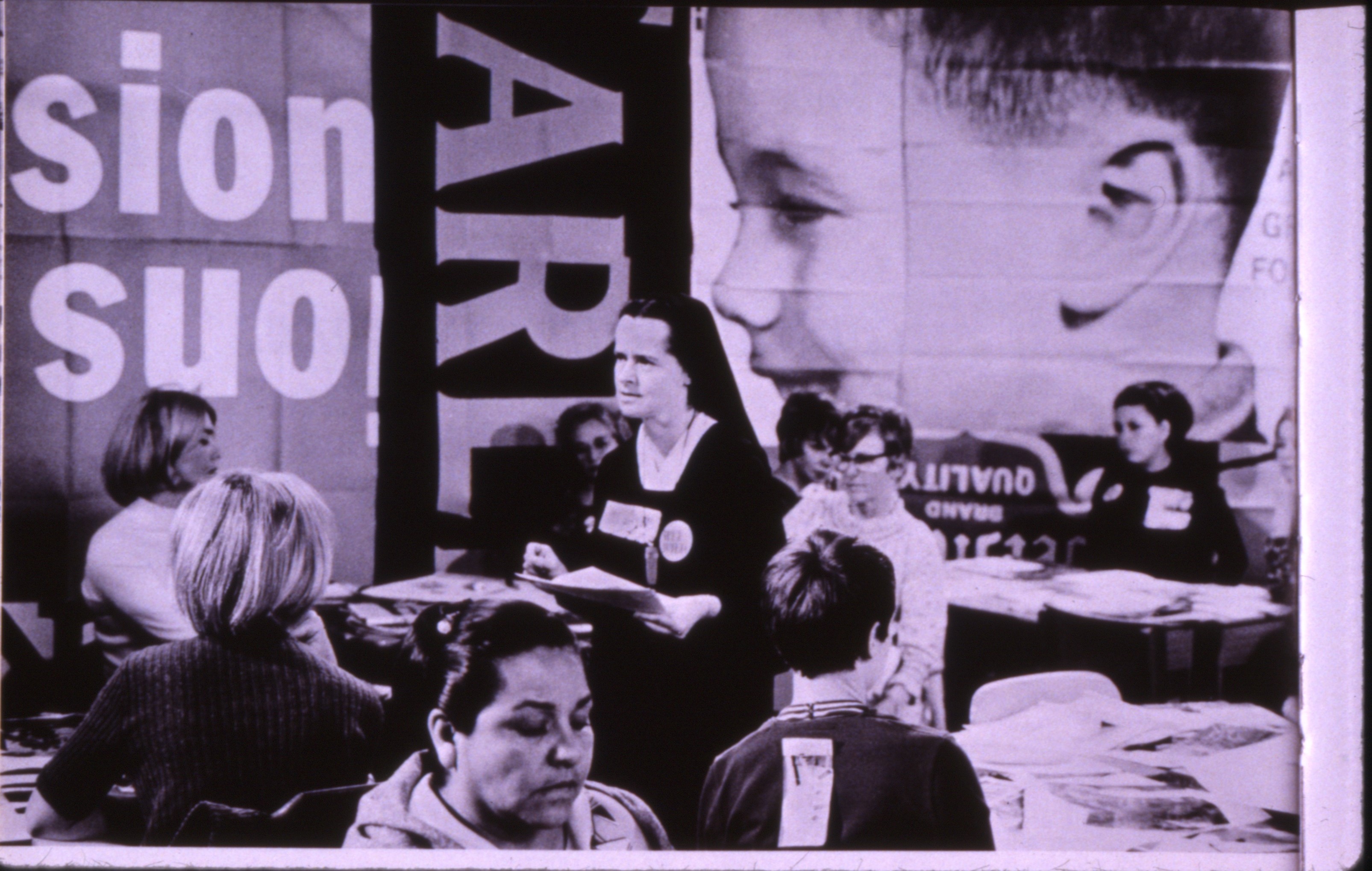
For the outdoor screening we’ve arranged at the Munka Folk High School, we’ll present We Have No Art, a film about Sister Corita made by Baylis Glascock in 1967. The film covers the teaching methods and ideas of artist-teacher Sister Corita Kent at the Immaculate Heart College in Los Angeles. It shows classroom conversations about art and teaching, and includes a scene with the students going on a field trip to a local car wash. We see Sister Corita explain to a full auditorium what a Happening is. The film also covers her list of Ten rules for students, teachers and life, otherwise commonly attributed to John Cage.
.
Sister Corita
Corita Kent (1918-1986) became known for her silkscreen prints during the 1960s and 1970s. She was an innovative and unusual pop artist whilst living and practising as a Catholic nun in California. As a Sister of the Immaculate Heart of Mary in Los Angeles, she ran the Art Department at Immaculate Heart College until 1968 when she left the Order to work on her art.
.
Sister Corita
Sister Corita
All images are (c) Corita Art Center
Unknown's avatar

About the Enthusiasts: Archive

enthusiasts catalogue

The Enthusiasts: Archive will start off a series of screenings devoted to films developed in amateur workshops led by established artists and filmmakers. These workshops have varied in form and content, and have been arranged in various times and geographies, but they also share a few common charcteristics: the wish on the part of the filmmaker to help create a cinema of the people, and a belief in creative filmmaking as a tool for personal and societal transformation.

labour4 copy

We’re starting our 2013 season with a screening of the Enthusiasts: Archive, a collection of amateur films made by Polish workers within the context of the film clubs in socialist times. In these film clubs, the enthusiasts would receive instruction in filmmaking techniques from visiting professional filmdirectors, and the films would be screened in locally arranged filmfestivals. The films often reflect the conditions of life of the workers, and the film clubs opened up a social space for critique, discussion and celebration of these conditions.

The Enthusiasts: Archive has been compiled and the films restored by artists Marysia Lewandowska and Neil Cummings after two years of research. Their interest in the Polish film clubs came in part from seeing the film Amator made by Krzysztof Kieslowski.

Mirror 01 copy

A catalogue from when Enthusiasts: Archive was exhibited at  Centre for Contemporary Art in Warsaw is available online here

From the website Chanceprojects:

With 16mm film stock, cameras and editing tables supplied by the factory/state, a large number of clubs were created throughout Poland from 1950′s onwards. By the late 1960’s there were almost 300 clubs in existence. Out of this growing network, and in a mirror reflection of the professional media, film competitions evolved, prizes awarded, and festivals were organized on a local, regional, and eventually national and international level.”

“The films made, range from 2-minute animations, short experimental films, documentaries on family, village, city or factory life; to historical dramas, features and ambitious mini epics.”

Cool 01 copy

Unknown's avatar

This Month and Next

This April, we’re doing a couple of talks and presentations in the south of Sweden, a public screening, a workshop, and a rave cinema (which equals a secret outdoor screening).

1

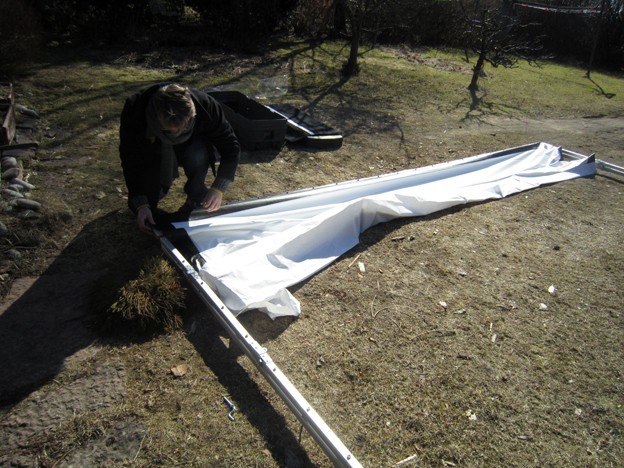
Extremely lightweight portable cinema screen

On April 4, Kalle Brolin will present the Sunshine Socialist Cinema at the public library in Bromolla. The talk starts at 19.30 and is free of charge. There will be trailers for the films of the upcoming season, among other things. On the day before the talk, Paula Von Seth will hold a workshop for local youth, on the theme of images of the future. These videos may become part of our screenings further down the road.

2

Screen snaps on

On April 17, we’re doing a screening of the Enthusiasts Archive, a collection of amateur films made by Polish workers within the context of the film clubs under socialism. The archive has been compiled and the films restored by artists Marysia Lewandowska and Neil Cummings.

From the website Chanceprojects:

“With 16mm film stock, cameras and editing tables supplied by the factory/state, a large number of clubs were created throughout Poland from 1950’s onwards. The films made, range from 2-minute animations, short experimental films, documentaries on family, village, city or factory life; to historical dramas, features and ambitious mini epics.

We are aware of around 300 clubs registered since 1960 in a number of different industrial zones e.g. Nowa Huta, Biesko Biala, Poznan, Oswiecim, Bialystok, Warszawa, Katowice, Szczecin and Gdansk.”

The screening is arranged in cooperation with the International Cafe of Angelholm.

3

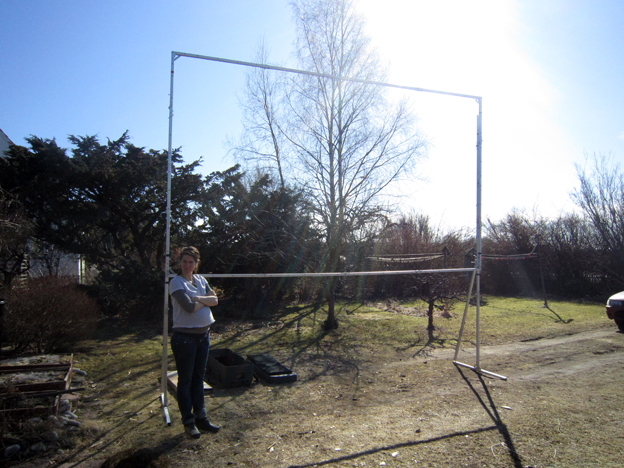
Widescreen format

Throughout April and May we’re doing a workshop with the artstudents of Nordvastra Skane Folk High School. The students will work on art videos imagining The Future, and these videos will be screened to the public by the end of May. The outdoor screening takes place on the evening of May 25, on the lawn in front of the folk high school, and will celebrate the 100 year jubilee of the school. A folk high school is a form of popular adult education, and originated as part of the peoples movements of 19th and 20th century Sweden. The screening will start with a slideshow of old glass print photographs of the school from when it was newly built. As part of the screening, we will also show the film We Have No Art by Baylis Glascock, a documentary made in 1967 about Sister Corita Kent. Sister Corita was a Roman Catholic nun who taught at an art school in Los Angeles.

3 2

Fits in a coffin-sized box on wheels

On April 25th, Kalle Brolin will present the Sunshine Socialist Cinema at the Glimakra Folk High School. There will be trailers for the films of the upcoming season, among other things.

4

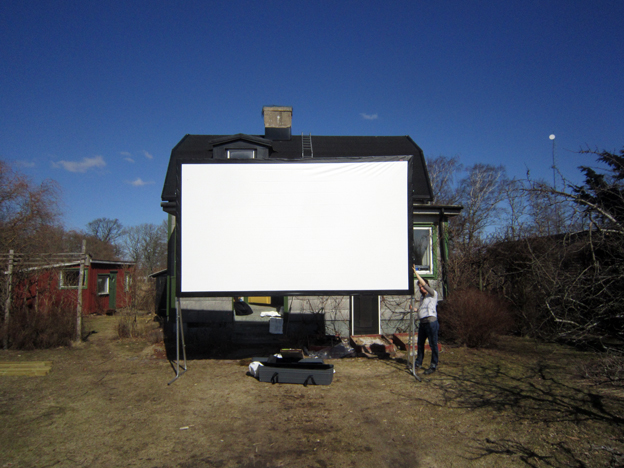
Screen measures 4 meters wide and 1,80 meters high

As we’ve received a large sum of money to produce a portable version of our solar powered cinema and take the show on the road, we will begin in mid-April with a secret outdoor screening, part of our Rave Cinema series. More info on this momentarily.

5

Portable screen in full glory obscures house

Our program this summer is starting to take shape, and we’ve got confirmed screenings of Centaur by Tamás St. Auby, Tomorrow by Andrey Gyazev, and Todos Vos Sodes Capitans by Oliver Laxe. More to come as summer approaches.

Unknown's avatar

Our interview with Lene Berg, the filmmaker behind Stalin By Picasso

Below is the Swedish version of our short interview with Lene Berg, the filmmaker behind Stalin By Picasso. We’ll try to work out an English translation shortly. Stalin by Picasso or Portrait of Woman with Moustache will be screened during a presentation of the Sunshine Socialist Cinema during the Socialist Forum in Stockholm on Saturday December 1 2012. Check out previous posts or the Program-page for more info on the screening. Huge thanks to Lene Berg for doing the interview.

1. Vad ser du som det centrala motivet i din film? Vari består konflikten mellan konstnären och partiet, vad ligger till grund för konflikten? Vilka olika syner på vad konst är och gör?

Min första reaktion på Picassos porträtt av Stalin var att det var komiskt, på alla sätt. Det liknar inte Stalin, och det liknar inte heller Picasso. Det skorrar med allt man vet om båda männen. Sådana oöverensstämmelser intresserar mig. När jag senare läste om kontroversen porträttet väckte 1953 tyckte jag att argumenten var intressanta. Man sa att porträttet inte var tillräckligt heroiskt, att Picasso inte var bra nog att rita den store Stalin, att han inte hade förmågan att se och tänka som vanliga människor. Argumenten påminde om saker jag hört tusen gånger i diskussioner om statlig kulturpolitik till exempel, där man talar om “vad folk vill ha” som att det är något självklart och statiskt. Eftersom objektet här är Stalin och eftersom uppfattningen om Stalin har ändrats en hel del sen 1953, får argumenten en lite annan klang än i nutida diskussioner om vad folk vill ha. Sett med nutida ögon kan man säga att Picasso var intelligent nog att inte följa sina kamraters smak och åsikter. Samtidigt tyder inget på att han önskade att provocera, snarare tvärt om, och han fattade inte att han gjort det innan han och porträttet fördömdes offentligt. Kanske kan man säga att det handlar om konflikten mellan en konstnärlig inställning och en ideologisk inställning. Poeten Louis Aragon, som var högt uppe i det franska kommunistpartiet, valde att foga sig till partilinjen och ångrade offentligt att han publicerat porträttet. Picasso å andra sidan bad aldrig om ursäkt, även om kritiken sårade honom. Jag vet inte om det här beskriver det centrala motivet i filmen, men någonstans här låg den första impulsen.

2. Vi kände inte till historien om Picassos porträtt av Stalin förrän vi såg din bok på Konsthall C i våras. Historien är för oss både intressant som diskussionsunderlag, och gripande i de känslor som väcks. Vilka reaktioner har du fått på filmen när den visats tidigare? Från publik, press/debattörer, institutioner eller myndigheter? Och från människor som jobbar/är aktiva i vänsterorganisationer och radikala politiska partier?

Generellt har projektet fått mycket positiva reaktioner, det har visats en hel del och i många olika sammanhang och länder, såsom Indien, Taiwan och Ryssland. Det vill säga filmen och boken. Men när jag ville hänga ett fasadbanér med Picassos teckning utomhus i samband med utställningar blev det bråk. I Oslo blev projektet stoppat, även om banéret bara skulle hänga i 24 timmar. I New York skulle det hänga i sex veckor, men de tog ner det efter två dagar. Det visade sig att när det här porträttet visas i ett offentligt rum, utanför en konstkontext, läses det som propaganda, eller som reklam. Även om jag tycker det är uppenbart att teckningen inte är någon enkel hyllning till Stalin, något dåtidens franska kommunister skulle hålla med mig om, uppfattades den av många som det. Jag blev lite överraskad över de starka reaktionerna. Min intention var inte att diskutera Stalin, men snarare att lägga något till den ganska stela macho-myten som Picasso blivit och på så sätt bidra till en bredare diskussion om konst och politik. Jag försökte säga till Cooper Union (som tog ner banéret i New York) att de hade tagit ner Picasso och inte Stalin från sin fasad. Men de trodde mig inte, de trodde jag skojade. Skillnaden på hur man läser en bild innanför och utanför “konstrummet” chockerade och överraskade mig egentligen. Det gjorde också att jag kände stor sympati med Picasso och hans inställning under den kontrovers han var med om 1953.

3. Med filmens Picasso i åtanke  – hur vill du att din egen film skall fungera som konstverk, och i vilket sammanhang? Vad skulle den kunna tillföra, inom vilken gemenskap?

Jag vet inte hur jag ska svara på en sådan fråga. Kanske finns det ett svar, men det är svårt att skriva eller uttala det utan att riskera att det går förlorat.

Unknown's avatar

Stalin By Picasso shown at Socialist Forum

“If they had been here I would have looked down upon both of them – even without heels” – filmstill from Stalin by Picasso or Portrait of Woman with Moustache by Lene Berg

On December 1 2012 we’ll do a brief presentation of the Sunshine Socialist Cinema and screen the film Stalin by Picasso or Portrait of Woman with Moustache by Lene Berg during the Socialist Forum 2012 in Stockholm. The screening takes place at 15.45 in the ABF house at Sveavägen 41.

In 1953 Joseph Stalin died. Pablo Picasso was asked to draw a portrait of Stalin for a commemorative issue of the French Communist weekly Les Lettres françaises, which was edited by Louis Aragon, a friend of Picasso. The drawing provoked strong reactions from the French Communist Party, and the party’s Central Committee published a condemnation of both Picasso and Aragon on the front-page of the daily L’Humanité. The major criticism of the portrait was that the style in which it was drawn did not do justice to “the moral, spiritual, and intellectual personality of Stalin”.

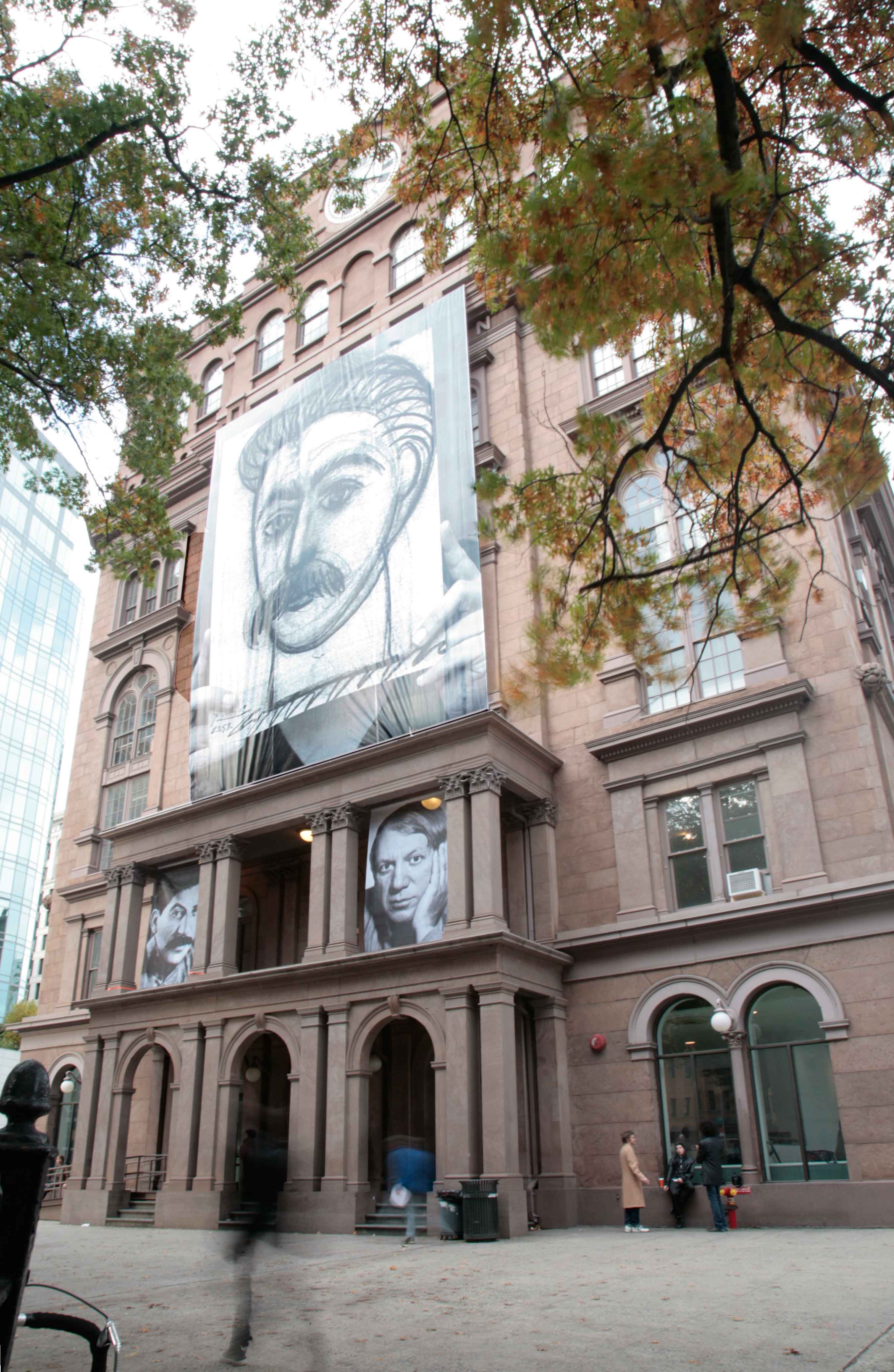
Stalin by Picasso or Portrait of Woman with Moustache consists of a video, a book and three façade-banners. The project deals with the so-called ‘Portrait Scandal’, or `L’affaire du Portrait`, which later has been named the first consequence of Joseph Stalin’s death in 1953. It centers around two great, short men and a drawing that created strong reactions. On one level, it is about how two icons from the 20th Century, Stalin and Picasso, once were perceived and how much their public personas have changed since then. On another level, it is about art and artistic freedom, or un-freedom, and of ways of reading and using images, particularly images of so-called great men. But perhaps the most interesting aspect of this anecdote from the beginning of the Cold War, is how one simple charcoal drawing can initiate so many feelings, discussions and intrigues as this one did – both in 1953, and in 2008.

The reactions towards Picasso’s drawing in 1953 expressed a need to control what was
presented in public, and strong demands for obedience towards common beliefs in something
particular, in this case Joseph Stalin. Seemingly these are thoughts from a distant past. But the project proved to be less nostalgic than expected when the party-secretary of the governing Norwegian Labor-party unexpectedly withdrew the permission to use the façade of the People’s Theatre Building in Oslo for the public part of the project, a permission that had been granted by the board of the building some months before.This attitude was later more or less repeated when I was invited to show the project at Cooper Union in New York in October 2008. After two days of a planned 6 weeks show, the three façadebanners were taken down from the façade without a warning and without discussing it neither with me nor with the curator before hand. In 1953 one of the problems with Picassos drawing was that it was considered bad propaganda for Stalin and thus for the communist cause. In 2008 one of the problems was that the façade-banners were not clear publicity, and that some people found it unacceptable that the project did not express a clear critique of Joseph Stalin.

Stalin by Picasso or Portrait of Woman with Moustache was first presented on the topfloor of
the People’s Theatre in Oslo March 2008 (without the façade-banners). Later that year it
was part of the show Headlines and Footnotes at Henie Onstad Artcenter in Oslo and the
Taipei-Biennial. It has later been shown among other places at the Bienale Cuvée in Linz
2009 and Contour, Mechelen 2009.”

– Lene Berg, New York, November 2008

The Sunshine Socialist Cinema will be sharing the stage with artist Nina Svensson and writer Margareta Ståhl, who’ll be presenting a graphics portfolio made by Albin Amelin and Ruben Blomqvist in 1933, Humanitet, with images protesting against the rise of fascism. We’ll look at similarities and differences in how a political work of art can be constituted and distributed.

The Socialist Forum takes place between 10-18 on December 1 2012 in the ABF house at Sveavägen 41. The program includes talks, presentations, discussions, debates and recitations by people like Nina Björk, Stina Oscarsson, Kajsa Ekis Ekman, Liv Strömqvist, Stefan Jonsson, Mattias Gardell, Jenny Wrangborg, Guy Standing, Ann Ighe, Anna-Klara Bratt, and a hundred more. The full program for the Socialist Forum 2012 can be found here.

Free entrance, open to all.

Unknown's avatar

Screening!

On Wednesday July 25 2012 at 20.30:

Workers Leaving the Factory by Harun Farocki

Politicamente Correcto! by Claudia Del Fierro

Space Debris by Lina Persson

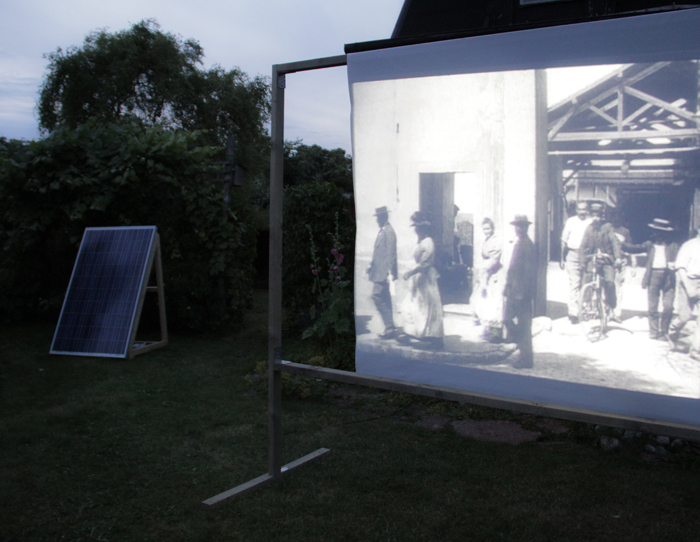
“Workers leaving the Factory” c Harun Farocki, 1995

Sunshine Socialist Cinema is an outdoor cinema powered by solarpanels, run by artists Kalle Brolin and Kristina Müntzing. We’re re-distributing surplus light from day to night by solarpanel and projector, and screen films that generate discussion on socialist topics. Some themes for the films and videos to be screened include redistribution of surplus and contemporary commons, post-industrial survival strategies, and artists committing to a collective.

The cinema is installed in a garden in the southern Swedish countryside, with screenings occurring regularly during the summer months. A 230 W solarpanel provides power for a 270 W projector, meaning two hours of sunlight gives us one and a half hour of projected film at night. Screen and bleachers purposebuilt, free entrance, artworks on display, and connections developed gradually with local organizations. Programming is discussed and technical issues worked out in a study group run within the local workers educational association, ABF, where we’re also figuring out a typology of political film and filmmaking. The Sunshine Socialist Cinema is inspired by public screenings attended in Parque Rivadavia in Buenos Aires in the noughties.

On opening night, Wednesday July 25 2012:

Workers Leaving the Factory by Harun Farocki starts from the first film ever shown in a cinema, and traces the recurring image of workers exiting a factory throughout filmhistory, setting the stage for the post-industrial condition. What is the image of the worker, when the worker has left the factory, and labor is performed in every aspect of life? Is the dissolution of the workforce outside the factory gates where films pick up on individual characters and follow them away from collective life?

In Politicamente Correcto!, Claudia Del Fierro dresses up like the workers at a textile factory in Santiago, Chile, and joins them whenever they exit the building for a cigarettebreak. An artist blending in visually with the workers, entering and exiting the gate unnoticed, she creates an ambiguous picture of both alienation and of the artists’ desire to place herself on the side of the workers.

We end with Space Debris by Lina Persson, a film showing the perspective of a camera detached by accident from an astronaut, who is in the process of trying to free a stuck solar array on the international space station. The camera drifts into space and continues transmitting film as it moves further and further out of range.

Unknown's avatar

CTAYKA!

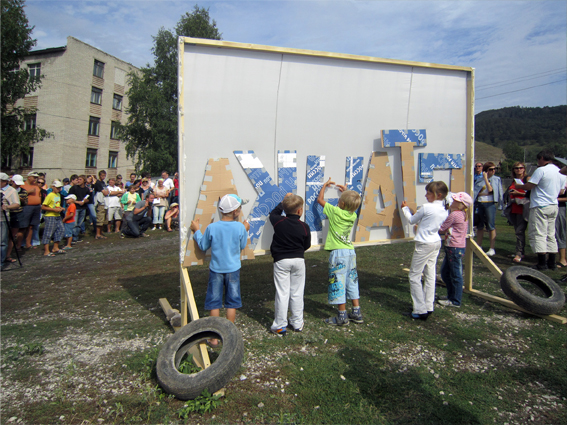
Early attempt at solarpowered outdoor cinema. In Shiryaevo the House of Culture was closed to the public, so we built a cinemascreen for the lawn outside, and used the sun as a projector for a shadow theatre. Pictured is our recreation of the first frame of the first film made by Sergei Eisenstein, after he quit agitprop street theatre and  turned to film instead. Ctayka, meaning Strike, performed by the kids of Shiryaevo for the 2011 biennale.