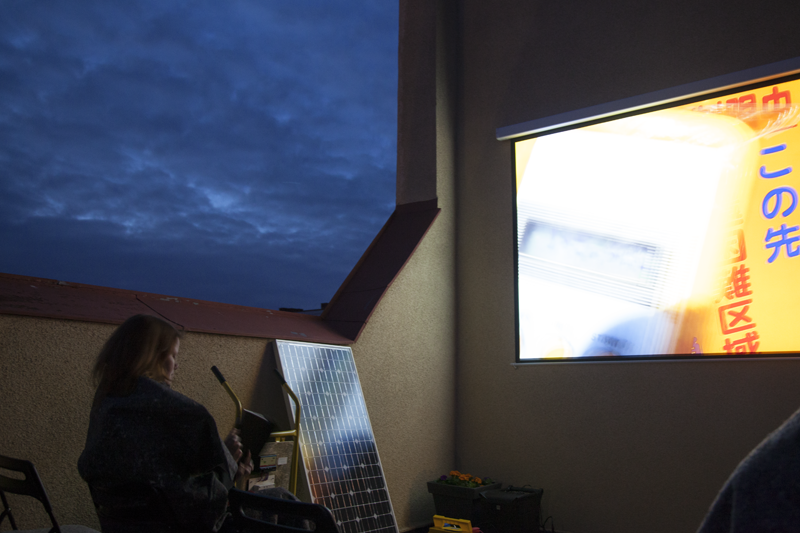
Photographer: Evelyn Thomasson / Kristianstads konsthall. 2015
On screen: Black Of Death by Chim Pom

Photographer: Evelyn Thomasson / Kristianstads konsthall. 2015
On screen: Black Of Death by Chim Pom
![Jonathas_de_Andrade_O Levante [2012] - still 3](https://sunshinesocialist.org/wp-content/uploads/2015/05/jonathas_de_andrade_o-levante-2012-still-3.jpg)
Still from O Levante (The Uprising) by Jonathas De Andrade
Astrid Noack’s Atelier in Nørrebro, Copenhagen, is our second stop on the summer tour. On May 29th we’ll be screening a short film by artists Søssa Jørgensen and Geir Tore Holm, called Astrid Noack’s Atelier, based on a series of filmed interviews with people involved with the preservation and development of the former backyard studio of artist Astrid Noack.
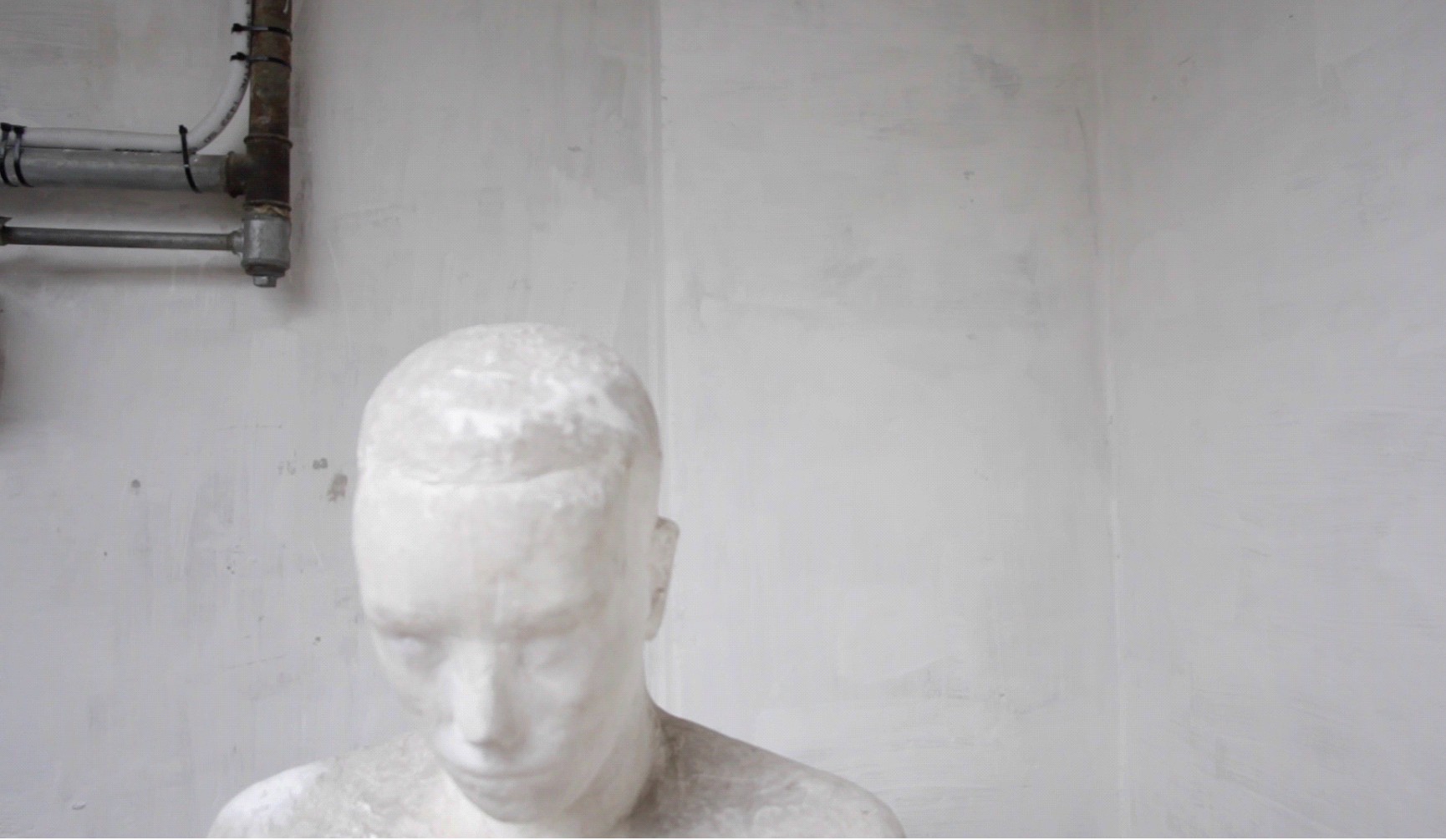
Still from Astrid Noack’s Atelier by Søssa Jørgensen & Geir Tore Holm, 2015
Søssa Jørgensen and Geir Tore Holm were artists in residence at Astrid Noack´s Atelier in August-September 2014. The recordings for the video documentary were made in the studio in Copenhagen and at the farm of the artists, Ringstad in Østfold, Norway.
About the work of Søssa Jørgensen and Geir Tore Holm
Other films this evening:
The Uprising, by Jonathas De Andrade, documents a horse and cart race in Recife, Brazil. Horse-drawn carts are officially prohibited in the city, mainly because of how they clash visually with the notions of order and progress. But horses and carts are still in use among some people in the city, and the law turns a blind eye to them. Jonathas De Andrade got involved with organizing the delirious first race of horse-drawn carts in Recife. By saying the race was staged for the shooting of a film, thus a fiction, it got the necessary permissions. An aboiador improvises a song about what he witnessed during the day of the race, calling it an uprising, in a rural revolutionary essay in the form of a song.
![Jonathas_de_Andrade_O Levante [2012] - still 1](https://sunshinesocialist.org/wp-content/uploads/2015/05/jonathas_de_andrade_o-levante-2012-still-1.jpg)
Still from O Levante (The Uprising) by Jonathas De Andrade
Black of Death, by Chim Pom, shows members of the Japanese artist group gathering huge flocks of crows and bringing them to the monuments of Tokyo. Driving around the city on a motorbike, while playing the sound of crows singing through a megaphone and trailing a stuffed crow, they are followed by growing swarms of black birds, an ominous cawing cloud that is the black of death. The 2013 version of the film includes added footage from the deserted evacuation zone around the Fukushima nuclear power plant, and a swarm of crows gathering over the offices of Tepco (Tokyo Electric Power Company).
Illuminated, by Caroline Mårtensson, is a film of the Swedish army practicing target shooting with tracer lights at night. The shooting takes place at Ravlunda shooting range, an area of natural beauty next to the ocean. In the field, there’s plant life, animals and insects struggling to co-exist under the bombardments by the army, which increases in frequency as Sweden rents out the area to foreign armies.
On May 22nd we’ll be screening videos in the very first film studio started in Sweden. The old studio building of Svenska Bio is now the local Museum of Film in Kristianstad. The rooftop terrace was formerly used as an outdoor studio, where cameras could take advantage of the light conditions better than they could indoors. Stage sets depicting indoor environments were built on the rooftop terrace, and indoor scenes were shot outdoors. Sometimes, in old films, you can see tablecloths flapping in the wind, or the breath of the actors forming clouds because of the cold, disturbing the illusion. At the moment we’re looking around for some short clips of these ghostly breaths, in order to add them to the screening.

In this former rooftop studio we’ll be screening a program of videos beginning with Workers Leaving The Factory by the brothers Lumière, allegedly the first film shown in a cinema, a 40 second clip of workers literally exiting the factory gates. From there, we expand upon the title by association.  Makwayela was made by Jean Rouch, a visual anthropologist, and Jacques D’Arthuys, a cultural attaché, in Mocambique in 1978. A group of people who used to work in the mines in South Africa have returned to Mocambique after their country won its’ independence from Portugal and formed a new socialist nation. The former miners now work in a bottle factory. Each morning they gather outside the factory to perform a dance together, called the Makwayela, and to sing, before starting the days’ work. The song performed in the film begins with a call to tear down capitalism and imperialism. Then the lyrics switch from portuguese to a secret language called fanakalo. Fanakalo was used in the mines in South Africa, by miners who would communicate without being understood by their overseers. We’ve provided the film with its’ first ever subtitles, with kind assistance from Isabel Löfgren who translated the portuguese into english. The bits in fanakalo have been left untranslated, and the secret language remains secret.
  A Ruda Roadmovie by Marie Bondeson is an old favorite of ours, and we’ve written about it on this blog before. In short, the film shows Douglas Fransson from the village Ruda as he takes the artist on a tour of the village, pointing out to her all the local businesses and public services that have had to close down as a consequence of the outsourcing of the main company in town, Mateco. The verbal delivery of Douglas Fransson is deadpan and laconic, and the village seems to be all but shut down.
  Black Of Death by Chim↑Pom shows the Japanese artist group gathering a huge flock of crows in the evacuated contaminated zone near Fukushima, and leading them across the landscape towards the offices of TEPCO (Tokyo Electric Power Company. A stuffed crow dangled from the rear of a motorcycle, and the sound of crows calling played through a megaphone, gradually draws together a growing number of crows, a black cloud of death.
  Finally, the film Sekvens 1 och 2 i Huaröd 2 is a repeating loop of a film shot by artist and poet Beata Berggren in her former home village Huaröd, just south of Kristianstad. Scenes recorded around the pump at an umanned gasstation, some staged and some documentary, repeat themselves as day turns to night. Fragments of text and sound are added according to an associative logic. Here’s the Filmmuseum in Kristianstad
As we are now officially registered as a non-profit organization, our reference library has been able to include DVDs to be used for research and educational purposes, that is, DVDs donated or sold only to institutions. Visitors to the library can’t borrow them home, but you can watch the films on site, for research purposes.
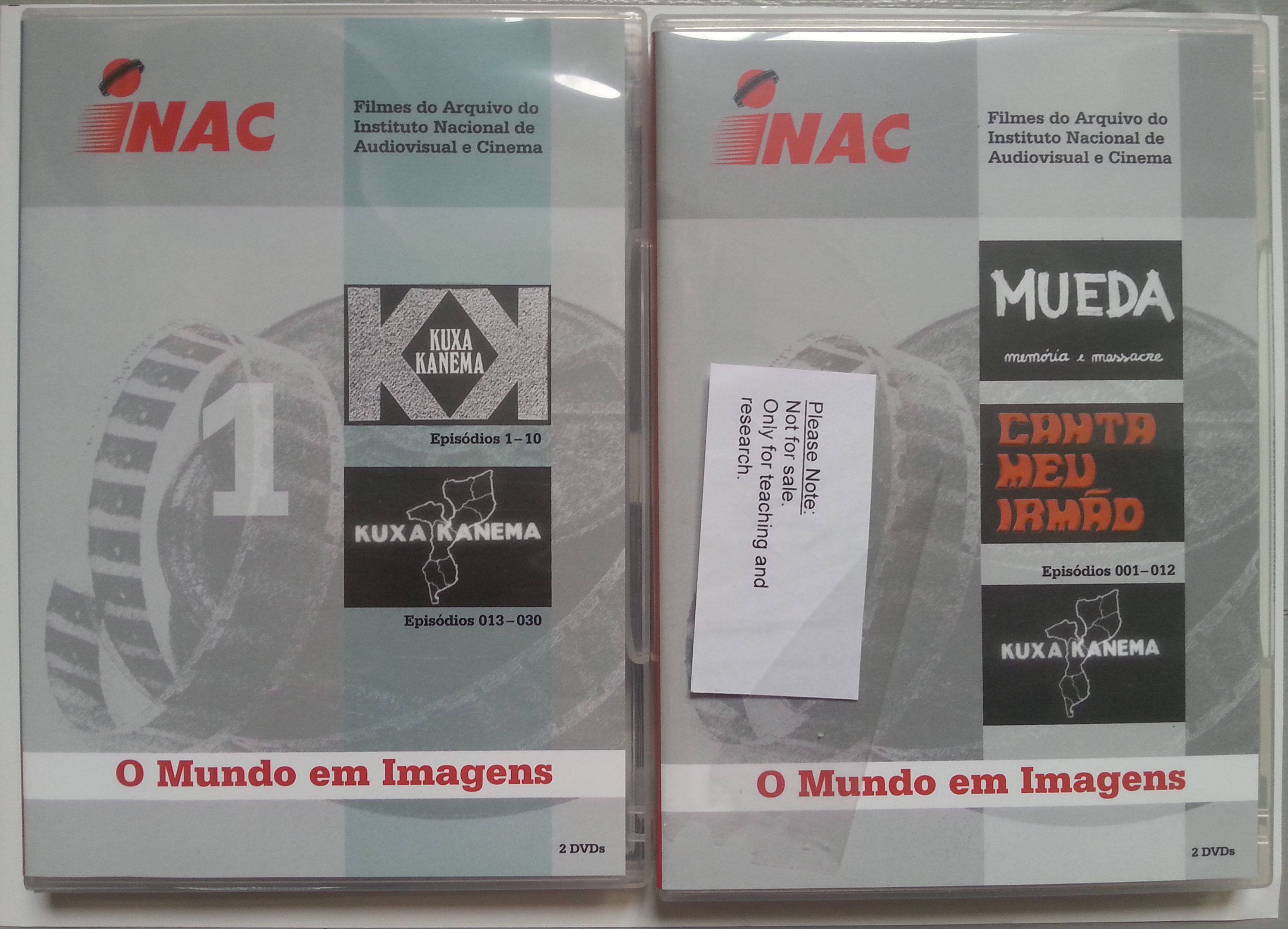
Four DVDs were donated by the University of Bayreuth, with many thanks to professor Ute Fendler and her associates. They contain (among other things) 30 episodes of the Kuxa Kanema newsreels, made in Mozambique during the 1970’s.

We have also managed to aquire a DVD of the film Makwayela, made by visual anthropologist Jean Rouch and cultural attaché Jaques D’Arthuys. The film was recorded outside a factory in Maputo in Mozambique in 1977. Parts of the dialogue are in Portuguese, and we are at the moment trying to get those translated into English and Swedish. Other parts of the dialogue are in Fanakalo, “a secret language, created from Zhangane, Zoulou and English passed on from generation to generation”, according to the distributors, CNRS Images. The Fanakalo we will not attempt to translate, it is probably meant to remain secret. The DVD is for institutional use only, but we have also aquired a license to screen the film in our cinema as part of the program for the coming season.

Old mineshaft in Angelholm, visible as indentation in the ground
When drilling for coal in Angelholm in the 1870’s and 1880’s, methane gas would shoot from the drillholes. Near Hoja, where our cinema is located, several thin layers of coal were found between 90 and 230 meters down. None was extracted. In 1877, a mining shaft was dug in the woods between the city of Angelholm and the seashore. A company from Cardiff in Wales assisted in the digging. 52 men worked in the shaft. It was 5 meters wide, and reached a depth of 39 meters before the project was aborted. No coal was extracted.
Between 2008 and 2011, Shell Exploration and Production obtained the rights to search around 25% of the area of Skane (Scania) for minerals, mainly along the Colonus sink. The Colonus sink stretches diagonally across Skane from the southeast corner to the northwest (our region), and contains fossile gases. Shell performed trial drills in three sites, and planned for extraction using fracking. Protests and appeals put a stop to these plans.
The methane gas that shot from the drillholes in Angelholm in the 1870’s was eventually collected in a gasbell and used to light up cowsheds and gasstoves in a nearby farm for a few decades. The gas was 210 million years old.
About the drills in Angelholm >
About fracking in Scania >
Our cinema uses electricity generated by the sun to power a digital projector. But now there’s a cinema in London which uses sunbeams directly for projection of films. The sunlight is collected by a glass dome and channelled through an old overhead projector, passing through an LCD screen playing films. The Sun Cinema was constructed at the Imperial College London Physics department. It is housed in a yurt, and films are shown in a pool of light on a tabletop. A new type of flexible solarcells cover the yurt, and provide electricity for a small computer and an LCD screen.
The website for the project has instructions and blueprints for anyone wishing to build something similar:
We were fascinated by the projector that channelled sunlight, and got in touch with Geraldine Cox, who was artist-in-residence at the physics department when the Sun Cinema was built. Here’s how she describes the projector:
“The sunlight is directed through the lcd panel that has been extracted from an old computer screen (this is a fairly delicate operation and takes someone with electrical know how). The optical arrangement is simply an upside down overhead projector with the lcd panel placed where the transparency would normally sit and the projection lens focused down onto the table.”
On a recent trip to London we managed to visit to the amazing MayDay Rooms in 88 Fleet Street.
The building is used as an archiving transit space, where historical material on protest- and social movements is digitized, activated or connected to movements active in the present, and eventually passed on to suitable archives elsewhere. Quoting the website maydayrooms.org: “MayDay Rooms is a safe haven for historical material linked to social movements, experimental culture and the radical expression of marginalised figures and groups. It offers communal spaces to activate archives’ potential in relation to current struggles and informal research, challenging the widespread assault on collective memory and historical continuity.”
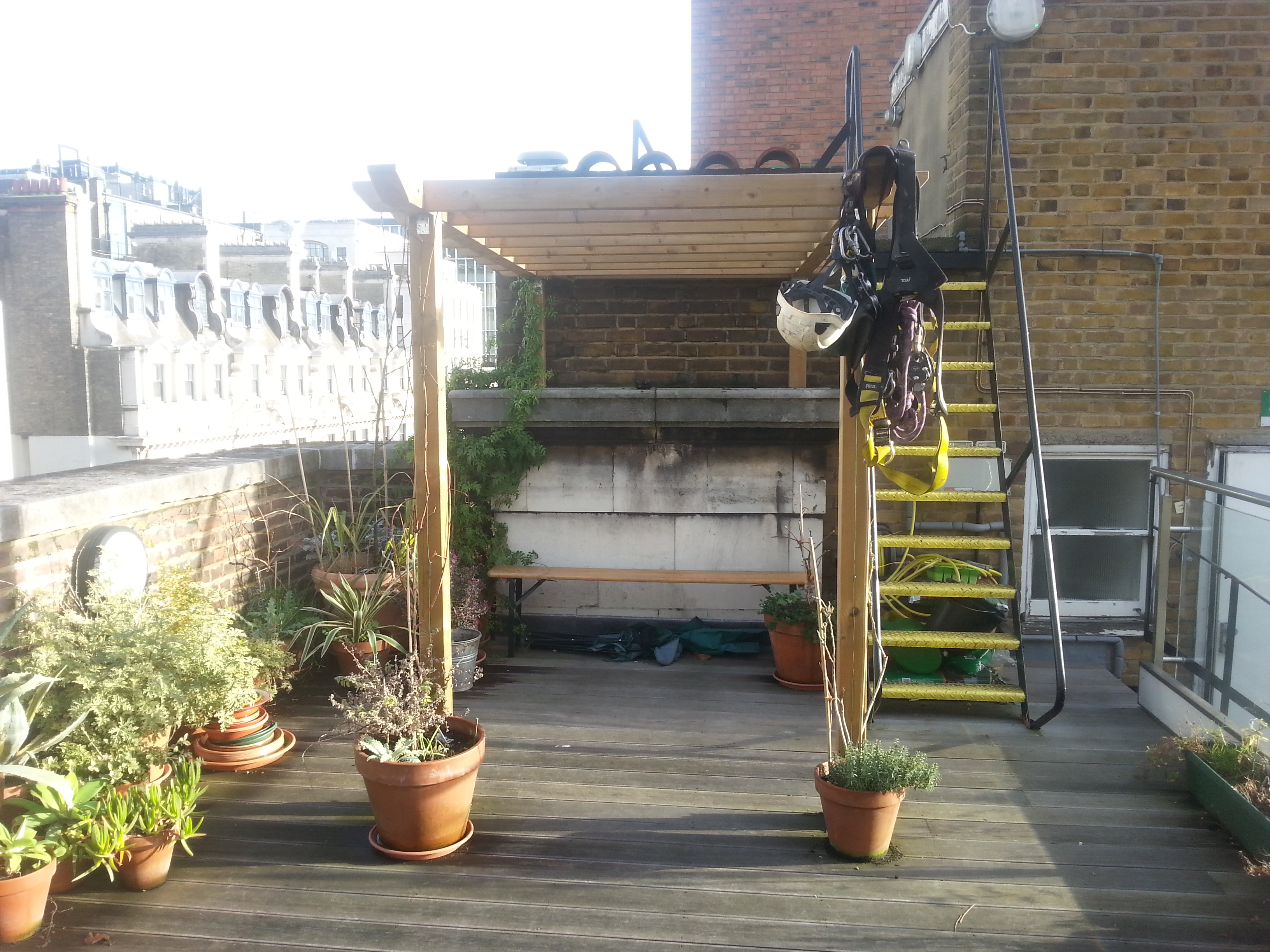
The building contains informal meeting spaces which can be used by outside organisations lacking premises of their own, or currently engaged with the archive material. Here’s the roof garden, designed by artist Nils Norman, across the street from the offices of investment bankers Goldman Sachs.

We were given a generous and personal introduction to the organisation and activities of MayDay Rooms by one of the founders, Anthony Davies, over a cup of tea in the canteen.

Lisa and Kalle in the Canteen
One of the documents that Anthony introduced us to was a soundrecording of Charles Mann, recounting his experiences working with a mobile outdoor cinema in 1930’s East End, showing Soviet films from a projector powered by the battery in his car.
Listen to it here
If anyone anywhere has any more information on the cinema of Charles Mann, please let us know!

We’ve had a very nice mention in the ‘Best of 2014’ written by Frida Sandström for webmagazine Kunstkritikk. All the kind words are in Swedish, and can be found here.
The panel discussion for Creative Time at Moderna Museet Malmö also had some Swedish press. This is a nice one right here, by Clemens Altgård, writing for Skånskan.
Thanks to each and all who came to our screenings this year. We’ll try to shape ourselves up a bit, and hope you’ll come back for more next season.

The Socialist Forum in Stockholm is the largest forum for leftwing debate in Sweden, drawing a couple of thousand visitors. This is the third year in a row in which we’ve arranged a panel at the Socialist Forum. The general theme for the forum this year was discussions about solidarity, and for our panel we brought up our regular theme of artists and filmmakers working within and at the service of various political collectives. This year we’d prepared by going through books like Arbetarna lämnar fabriken (Workers Leaving The Factory) by Carl Henrik Svenstedt, and found some interesting examples of films and filmmakers in those chapters. We started off the panel with a very brief introduction to the Rhodiaceta-films, which involved Chris Marker and The Medvedkin Group, as an example of a shift in attitude – from filmmakers expressing solidarity through a documentary about workers struggles in a specific site, to assisting the selfsame workers in making their own films about their own struggles. We wanted to use this as a quick introduction to the theme, and thought of it as a very basic example of re-distributing power over the image.
Next, the participants in the panel were introduced: Michele Masucci, artist, activist, writer, and Corina Oprea, curator, producer. They both took turns talking about working with films together with activist groups. Michele has participated in militant workplace investigations involving precarious workers, and Corina is producing a film with artist Saskia Holmkvist made together with a number of anti-racism groups in the Stockholm area. We got some background history on militant workplace investigations, beginning in 1960’s Italy, and how that could be translated onto current-day Swedish precarious workers’ conditions, from Michele. We also got some background from Corina, involving the 1967 film I Am Curious Yellow by Vilgot Sjöman and The Theatre of the Oppressed by Augusto Boal as templates to evolve a current day film on Swedish racism from. Both had thoughts on the role of the audience, or the need for one.
Time ran short at the forum. We hope to return to both these panelists for further discussion in the future. We will also update this post with links continuously as we encounter them.
More on Militant Investigations in a book edited by Stevphen Shukaitis and David Graeber (PDF)
A bientot, j’espere on Youtube
Classe de lutte on Youtube

Creative Time Summit, photo by MalinMatilda Allberg
As New York-based Creative Time held its’ annual summit in Sweden this year, our cinema was invited to speak about art and public space in a panel arranged by Edi Muka at the Museum of Modern Art in Malmoe. Other panel participants were Laura Rakovich from Creative Time, artist Myriam Lefkowitz, and producer Ann Wallberg from Inkonst.
Our part of the talk started out with a story about outdoor cinema in the Parque Rivadavia in Buenos Aires, and ended with the DIY outdoor cinema publications that we’re working on. Currently we have a simple folder (inspired by that page from the punk zine Sideburns, you know, with the three chords, “…now start a band!”), and we’re working on a more detailed description for a 16 page booklet to be released this summer. The booklet wil also be available as a PDF, but stay tuned for more info on that as the time of publication draws near.
Someone posted the Sideburns zine here
Creative Time here
 Sunshine Socialist Cinema