Unknown's avatar

Beggars And Choosers

The reference library that we’ve started up in the village of Hoja is set for a larger presentation next summer. Plans have been drawn for an unfolding structure to host the books on a shelving system, to be constructed this winter. We’ve also started to receive donations of books, from both organisations, publishers, and private persons.

books

A number of books come from ABF, the workers educational association, organisers of study groups all over the country, and hosts of the annual Socialist Forum in Stockholm. Above left: Pa Promenad Med Master Palm by Erik Wiklund, illustrated by Sara Granér – on how to organise public talks, debates and roundtable discussions before an audience. Above right: Sockerbetan Pa Faltet Och Pa Bruket – documenting a studygroup on sugarbeets (one of the more common crops in our region).

more books

Above right: The Secret Gardener by Elin Unnes – on smallscale self sufficiency from an allotment. Above left: Den Arbetsfria Tradgarden by Ruth Stout and Ingrid Olausson – on a workfree garden through mulching.

When we arranged a screening last month on the invitation of an urban gardening project in Stockholm, we asked the organiser artist Malin Lobell for a reading list, which we’ve then tried to follow when buying up books for the library. The list looks like this:

Books on Urban Gardening:

Gatsmart odling by Ulrika Flodin Furås

The secret gardener by Elin Unnes

Konsten att odla staden by Sara Danielsson

Any book by Lena Israelsson

Books on Art and Gardening:

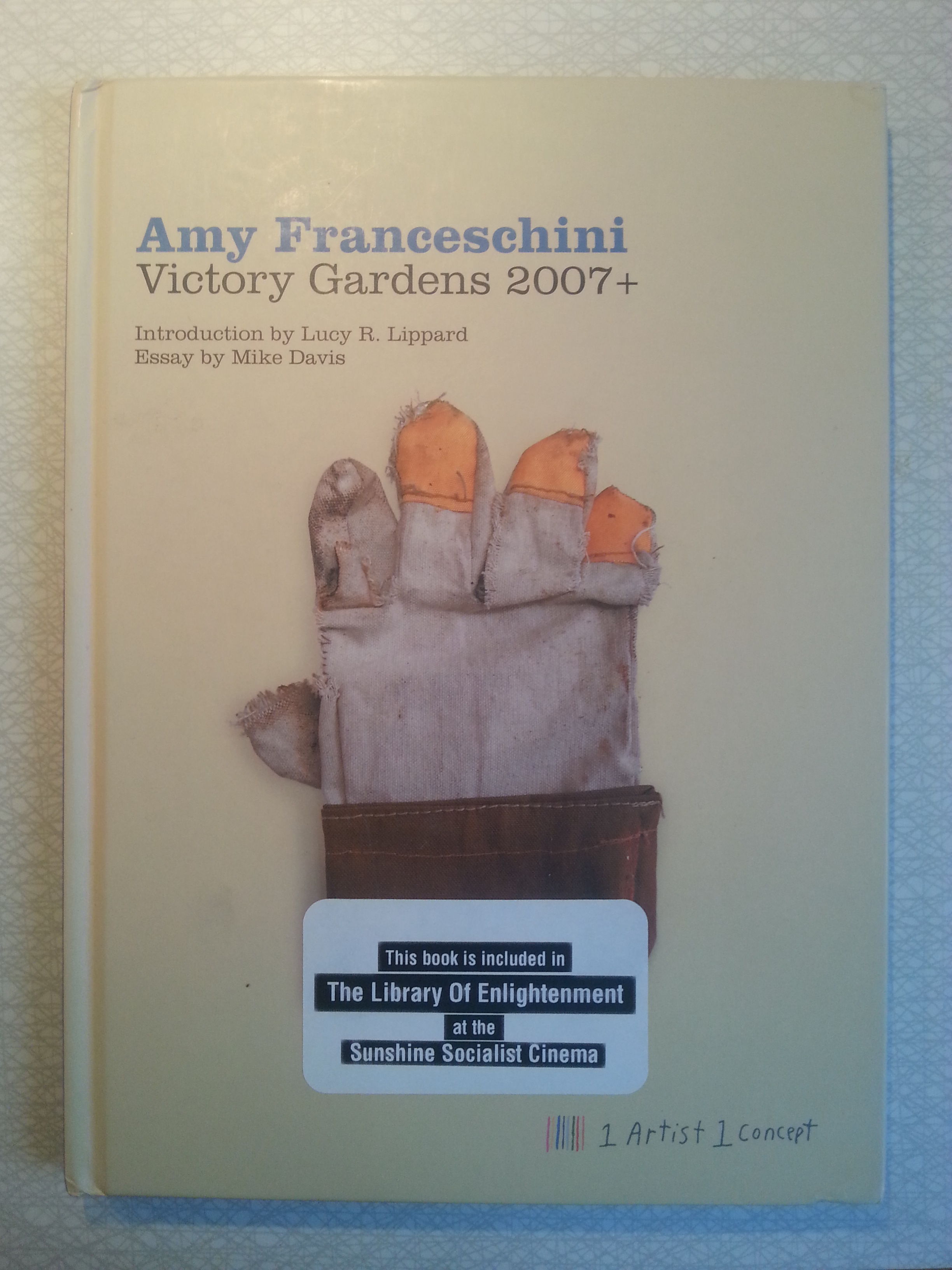
Victory gardens by Amy Franceschini

The edible front lawn by Fritz Haeg

Books on Forrest Gardening:

Creating a forrest garden by Martin Crawford

How to make a forrest garden by Patrick Whitefield

How to grow perennial vegetables by Martin Crawford

Books on Self Sufficiency:

Self sufficiency by John Seymor

The secret gardener by Elin Unnes

Självhushållning på Djupadal by Mandelmanns Trädgårdar

Books on Mulching:

Jord by Håkan Wallander

Some of these have been easy to find, others more difficult. Victory Gardens, which documents an art project by an old friend of ours, Amy Franceschini from San Francisco, seemed to be rare and, if available at all, prohibitively expensive.
book

But when arranging a talk last week, for the Living Archives project in Malmo, we were presented with this book as a donation to our library, from producer Veronica Wiman.

A heartfelt thank you goes out to organisations, publishers, and private persons who’ve provided both tips on essential reading and donated books for the library.
 

Unknown's avatar

A Coalmine In The Garden

Wednesday October 22:nd, we’re presenting our work and collected materials on specific aspects of the coalmining industry in northwest Scania (nordvastra Skane). The presentation will be held in a greenhouse in the central park Slottstradgarden in Malmo.

Pa kolgruvornas tid

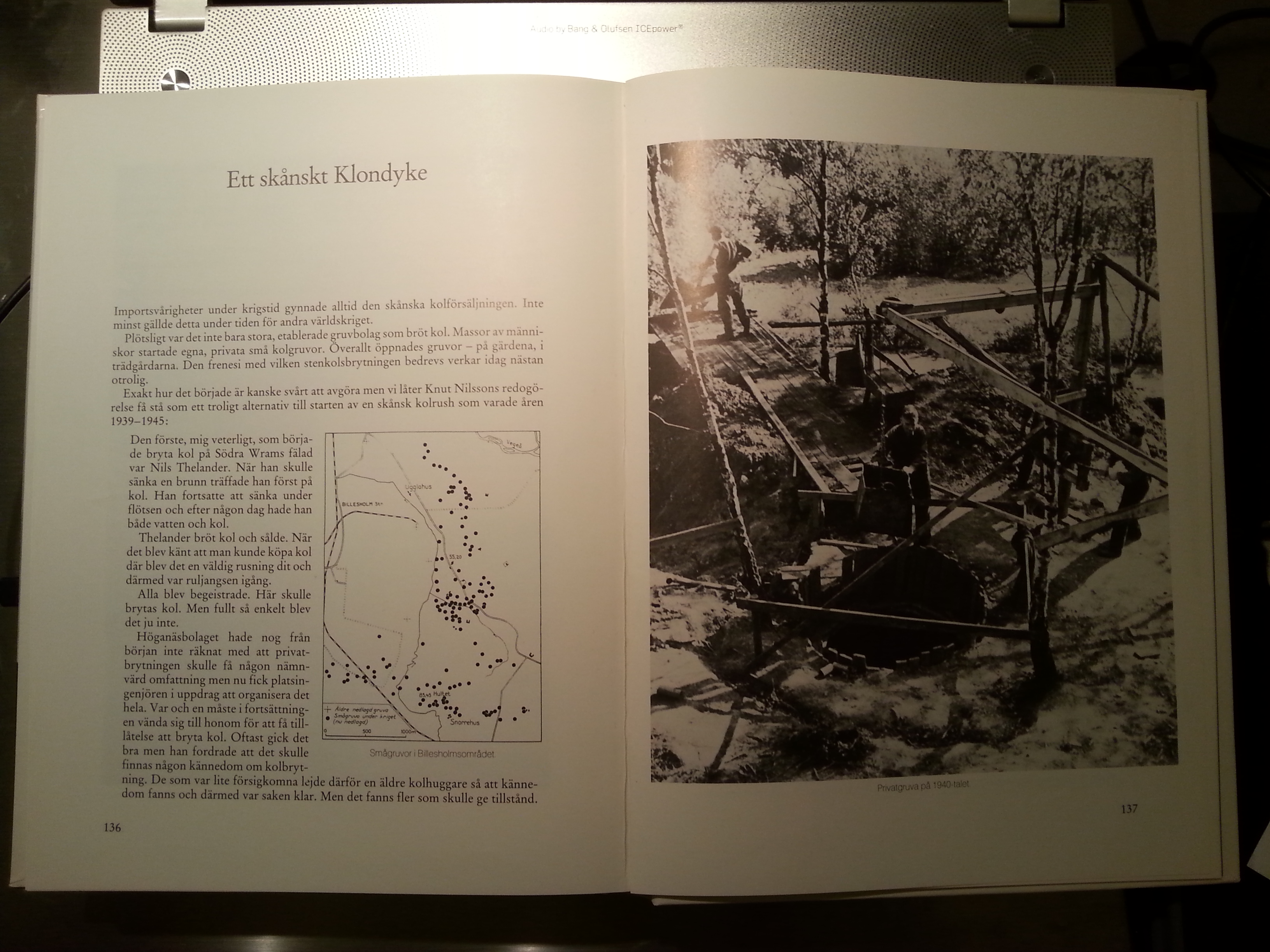
spread from På Kolgruvornas Tid, edited by Brita Hardenby

The brilliant and angry poet Elsa Grave grew up in Nyvang, in a garden next to the slagheap and the mining shafts. In the open archive of Swedish television there’s a film in which she speaks of her childhood environment (about ten minutes into the film):

Livstecken

The slagheap in Nyvang and the closed down dinosaur theme park placed upon it was the subject of our first post-industrial fieldtrip, previously covered on the blog here.

We’ve also collected films recorded during the 1940’s, the Klondyke-period of the coalmines, when private citizens opened coalmines in their gardens and farmlands. Read about The Klondyke-period in an article from Ny Teknik here.

The first film was recorded by Billesholm Hembygdsforening in 1947. Billesholm I Helg Och Socken has a short segment on the private coalmines, with running commentary from a local historian. The second film was recorded by Hoganasbolaget Inc. in 1941-2. Det Svarta Guldets Klondyke has images from the early days of the Klondyke-period, when equipment  was sometimes primitive and ad hoc solutions were common. Current day Billesholm Hembygdsforening has a DVD of Billesholm I Helg Och Socken available from their website, and Stawfordska Stiftelsen are caretakers of the archives, including filmreels, at Hoganasbolaget Inc. The films made at Hoganasbolaget Inc. used to be screened in a special cinema, placed in a mine 100 meters below ground.

Read more about the event here.

About the organizers of the event, Living Archives here.

Unknown's avatar

Urban Gardening In Stockholm

The cinema was asked to arrange a screening as the endpoint of a bicycle tour around urban gardening sites in Stockholm. All part of the Urban Gardening Safari-program, organized by artist Malin Lobell and Gröna Linjen.

image by Malin Lobellphoto (c) by Malin Lobell

The screening was set to take place on the rooftop of a powerstation embedded into the mountainside of the park Vanadislunden. The rooftop has a large flat area, and warm exhaust from the powerstation is pumped out onto the roof through ventilation shafts. There are already a couple of old appletrees growing on the roof, forgotten and shrunken. The site is not completely overlooked though, as there were evidence of the roof being used by homeless people. The site of the powerstation was formerly used as an outdoor theatre, with the mountainside as backdrop.

The screening was impeded by torrential rains and a thunderstorm, and for the first time since  we began, one of our outdoor screenings had to move indoors. An audience member lived across the street form the park, and opened his home to the cinema.

The films we showed were

The Return of Lenin by Kolonial Odling (Lena Ignestam, Per Gustafsson, Christel Lundberg)

A short film with Lenin visiting an allotment garden during his trip through Sweden in 1917. The film is based on an unconfirmed story about how Anna Lindhagen brought Lenin to visit Barnangens allotment garden in Stockholm. Lenin is said to have become angry that workers engaged in farming rather than revolutionary work, and saw it as a sign of false class consciousness.
Anna Lindhagen, sister of the Social Democratic mayor of Stockholm, was active in introducing allotment cultivation in Sweden. During the First World War, when Sweden was isolated from the import and export of food, the gardens would help the poorer part of the population with their food supply. Hunger Riots and looting of shops were common in Sweden at this time, and may have been the breeding ground for later reforms such as the 8 hour working day.
Hjalmar Hammarskjold, Swedish Prime Minister 1914-1917, nicknamed Hungerskjold: “I do not believe in democracy’s ability to make the people happy. Repression from above is horrible, but oppression from below, from the mass, is unbearable.”
Anna Lindhagen: “A raw and selfish nature can be refined and become helpful under the influence of that which grows and is dependent on nursing care.”

Talk about Ingeborg Holm by Victor Sjöström
Excerpts from Ingeborg Holm by Stumpenensemblen

Ingeborg Holm is a play written by Nils Krok from Helsingborg in northwest Scania. Kroks play is based on a real event, a case he was involved in as part of his social work. The play was filmed by Victor Sjöström in 1913. A striving family are working in their allotment when they are told that they have received a loan to start up a grocery shop. But the man dies, and the widow Ingeborg Holm can not feed their children, nor pay off the loan. The children are placed in foster homes, while Ingeborg has to work within the social services. She is then stricken with mental illness. The impact of the film was so great that it incited Swedish lawmakers to rewrite the Poverty Law.
Stumpenensemblen is a theater group from Helsingborg, active since the year 2000. The ensemble consists of a mixture of theater professionals and amateurs both on and behind the stage; most of the amateurs come with experiences – their own or from family/friends – of mental illness, substance abuse, homelessness and exclusion. They have annually put up new shows, such as The Threepenny Opera, Ingeborg Holm, and a specially written piece by Henning Mankell, I Thought I Heard Dogs.

Urban Farming In Kvillebäcken by Newsreels From The Gothenburg Commune

Kvillebäcken, an area of Hisingen in Gothenburg, was previously characterized by rental housing and small-scale businesses in temporary premises. When the city wished to extend its center with a showcase for sustainable urban development, the houses in Kvillebäcken were bought and the tenants were evicted. Local media and local politicians justified the demolitions with a vilification of the area, which was renamed the “Gaza Strip”.
In a film, made as a brief news report for Newsreels From The Gothenburg Commune, urban farmers who have temporarily been working on a demolition site talk about their work and their role in the area. The film was first shown in connection with Göteborg International Biennial for Contemporary Art in 2013.

CASESTORY_Komettorgets allotments by Maria Draghici and Anders T Carlsson

At Komettorget in the Gothenburg suburb Bergsjön a group of farmers have created a green oasis. During four months in 2011, Maria Draghici and Anders T Carlsson have talked with the farmers and documented what the place means to them and others in their vicinity. Gazebos built by farmers in 2009-2010 were photographed and presented as examples of architecture, in the context of the Göteborg International Biennial for Contemporary Art 2011. A Dialogue Table was set up to present and discuss the Komettorget allotments, together with the farmers, some representatives from City Planning and Parks and Landscape Management, and researchers working on urban planning issues. The discussion began with a screening of this film.


Unknown's avatar

Upon Our Return

Koyaanisqatsi o cirkus

Koyaanisqatsi screened on hill overlooking cirkustent at Tantolunden, Stockholm

After screening films at Tantolunden in Stockholm as part of the Climate Film Festival, we returned to Malmö where the city had just suffered flooding due to torrential rain. Cars were stuck in flooded streets, electricity was out, basements were filled with water.

One unexpected effect was the damage done to the cultural life of Malmö: since many bands rehearse and some artists have their studios in basements, their equipment and supplies were severely damaged by flooding, and it may take months to repair and reinstall everything.

Article in Swedish here

Floods, storms and quakes uprooted 22 million people worldwide in 2013. More than twice as many people are affected by natural disasters than 40 years ago and the trend is expected to worsen as more people move to crowded cities in developing countries.

Article here

August 2014 was the warmest since records began in 1881.

Article here 

Unknown's avatar

The Re-distribution Of Surplus

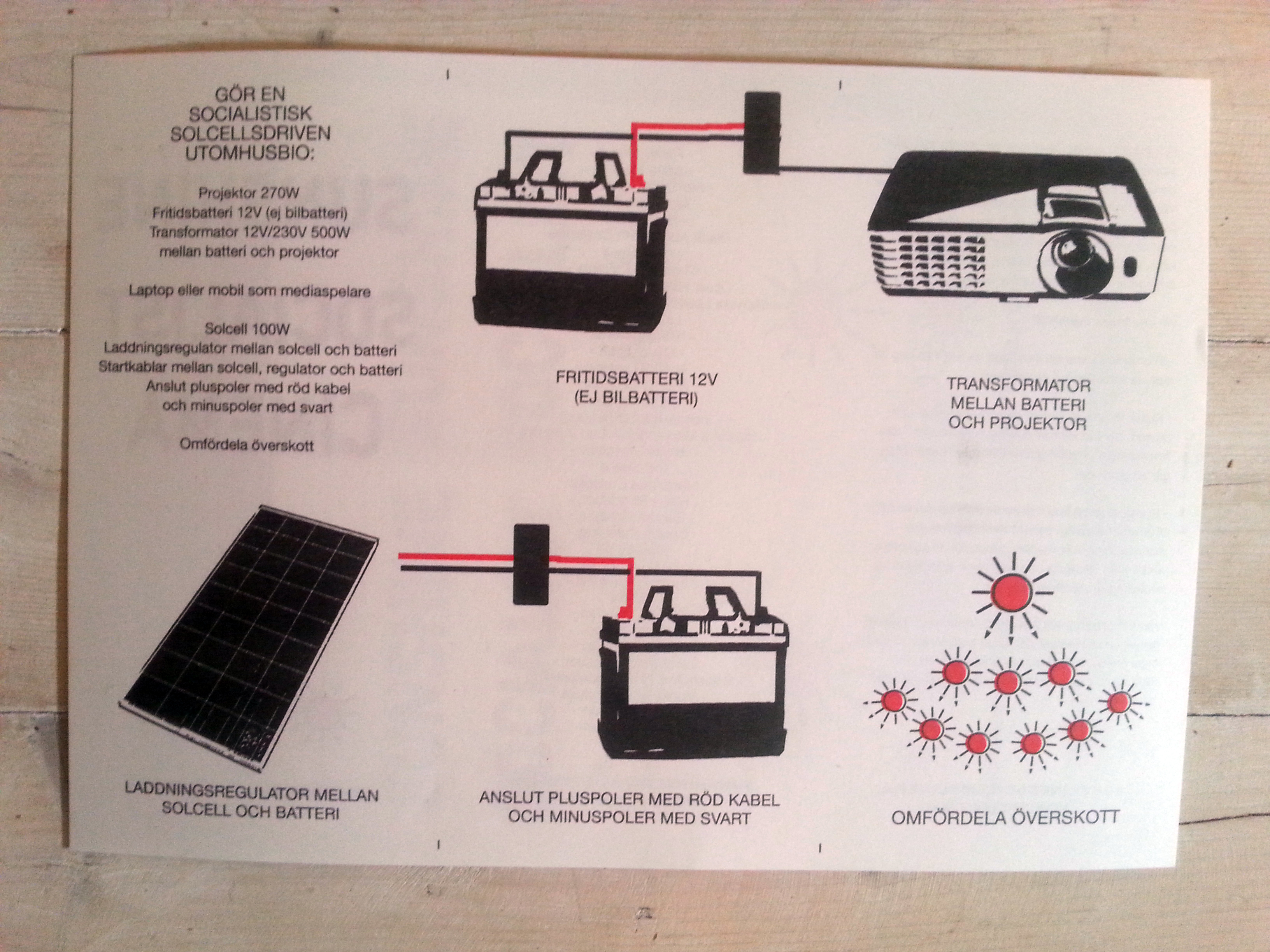
The Re-distribution Of Surplus is a folder we’ve just printed, containing simple instructions for anyone who wishes to assemble a solarpowered outdoor socialist cinema. We will hand out the first copies this weekend at the Climate Film Festival in Tanto, Stockholm.

folder 5

The re-distribution of surplus is briefly presented as a sharing of art and culture, and a sharing of knowledge – neither of which is consumed or spent when people make use of them. We are a small-scale operation, with strict limits on what we can afford to take part in, but we are very much open to assisting anyone who wishes to start up another cinema similar to ours.

folder 2

Printed on a Riso in two layers of soy-based ink. Thanks to Bonnie Fortune and Brett Bloom for introducing us to the wonders of the Riso many years ago!


Unknown's avatar

Climate Control

Our studygroup has read through a number of books in preparation for the upcoming Climate Film Festival in Stockholm. Some of the books have also found their way into our Library Of Enlightenment. Overall, it’s been an extremely depressing reading session.


books 1


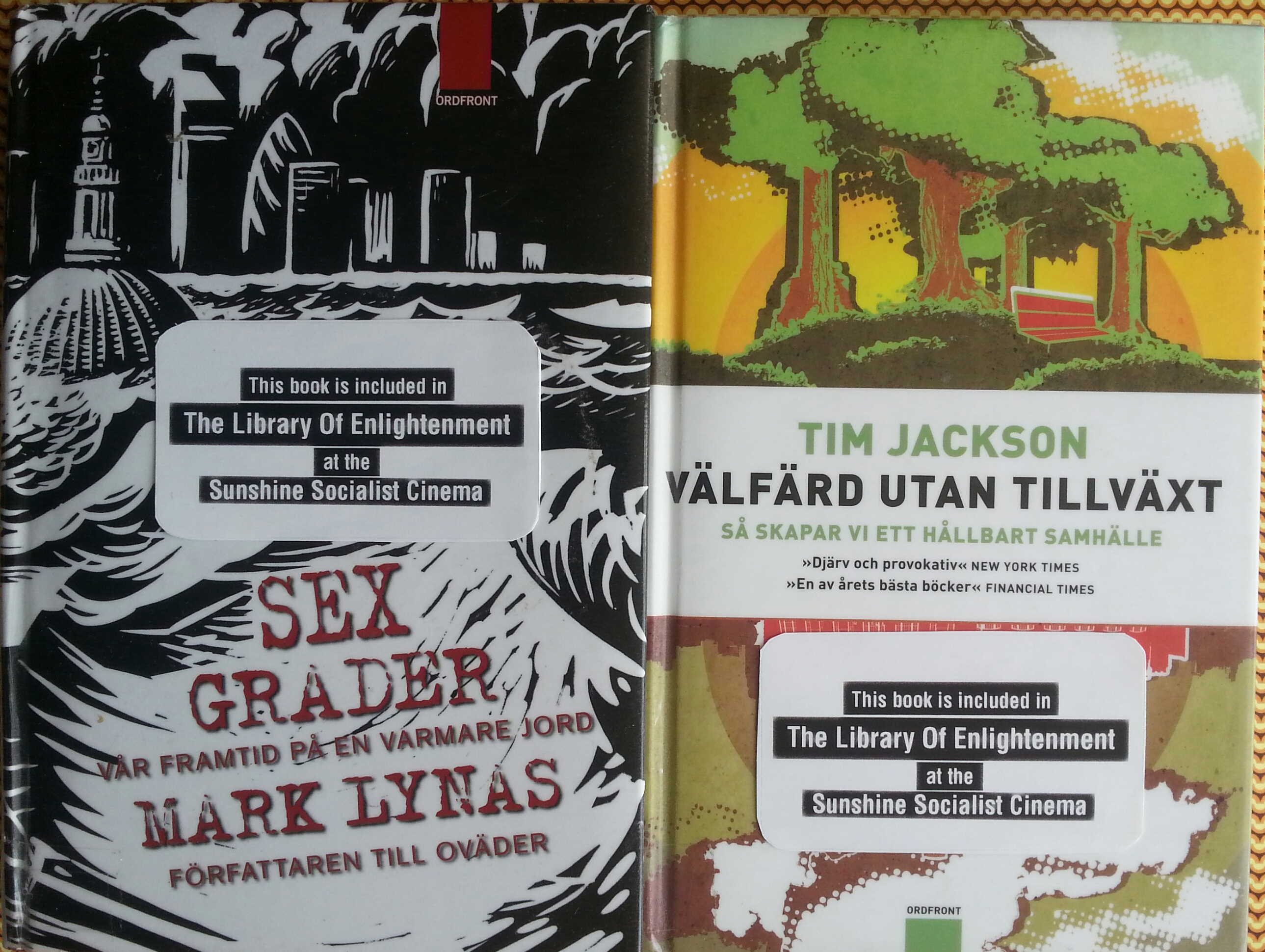
Six Degrees by Mark Lynas seems to be very well-researched, and paints a dark picture of what to expect the consequences upon our natural environment to be at a medium-temperature rise of one degree, of two degrees, of three degrees etc., up until a rise of six degrees. Since a rise of two degrees, as far as we understand it, is already unavoidable due to various slef-enhancing effects, even if we were to cease all emissions today, the first two chapters of the book are already a reality. So, apart from trying to find ways to reduce and stop emissions, we should also be looking for ways in which to live with chaotic climate conditions – ways in which to organise society, ways in which to deal with psychological consequences, cultural consequences, ethical and moral consequences.

Prosperity Without Growth by Tim Jackson goes into the economics and the politics of a sustainable society. He writes about a green version of the New Deal, and a return to Keynesian economics. It basically means that public investments can be politically directed towards environmentally beneficial projects, like for example clean energy. Chapter 10, which deals with what the political system can do to curtail unfettered expansion and growth is interesting for all the things it leaves out – what form of government would be suited to organise society in a chaotic climate? Jackson speaks of the schizoid condition for governments of today, as they are on the one hand bound to the idea of constant growth, and on the other hand bound to the defense of the public good.


books 2


We’re trying to include as many practical handbooks as  we can in our library, and were excited by the title of Brian Cleggs The Global Warming Survival Kit. But here’s a book which deals mostly with how to equip your home or house to withstand harsh weather conditions and power cuts, while skipping the societal level. Here’s tips on how to be one of the first people at the gas station when there’s a fuel shortage coming up, and never mind those who arrive late. Here’s tips on how to defend yourself and your family against looters, and never mind arranging for equal distribution of necessities.

Recipes For Disaster, An Anarchist Cookbook wins our hearts in this category, though the practical tips in this book might not be able to save us from catastrophic climate in any other way than through preserving our dignity. Instructions, or recipes, for Classroom Takeovers, Antifascist Action, Coalition Building, and Independent Media, coupled with chapters on How To Turn Your Bicycle Into A Record Player, this is all about the ecology of the mind of the protester.


20140822_113553[1]


A beautiful book about surviving disasters with your head held high. A Paradise Built In Hell by Rebecca Solnit discusses various natural and man-made disasters throughout the last 100 years, and how extraordinary circumstances bring out the very best in people. As it is filled with documented examples and witness accounts, we will not disregard it as optimistic fantasy. Although governments have reacted according to the idea that all people serve only their self-interest, protecting property above human lives, Rebecca Solnit have collected stories of how people, the victims of the disasters, actually abandon self-interest for the good of the community. Working together to relieve disaster they experience life as more full of meaning. As property is shared voluntarily, life is experienced as more rich. So there’s that to look forward to in the years ahead.

“This utopia matters, because almost everyone has experienced some version of it and because it is not the result of a partisan agenda but rather a broad, unplanned effort to salvage society and take care of the neighbors amid the wreckage.”


Unknown's avatar

Act As Yourself 24/7

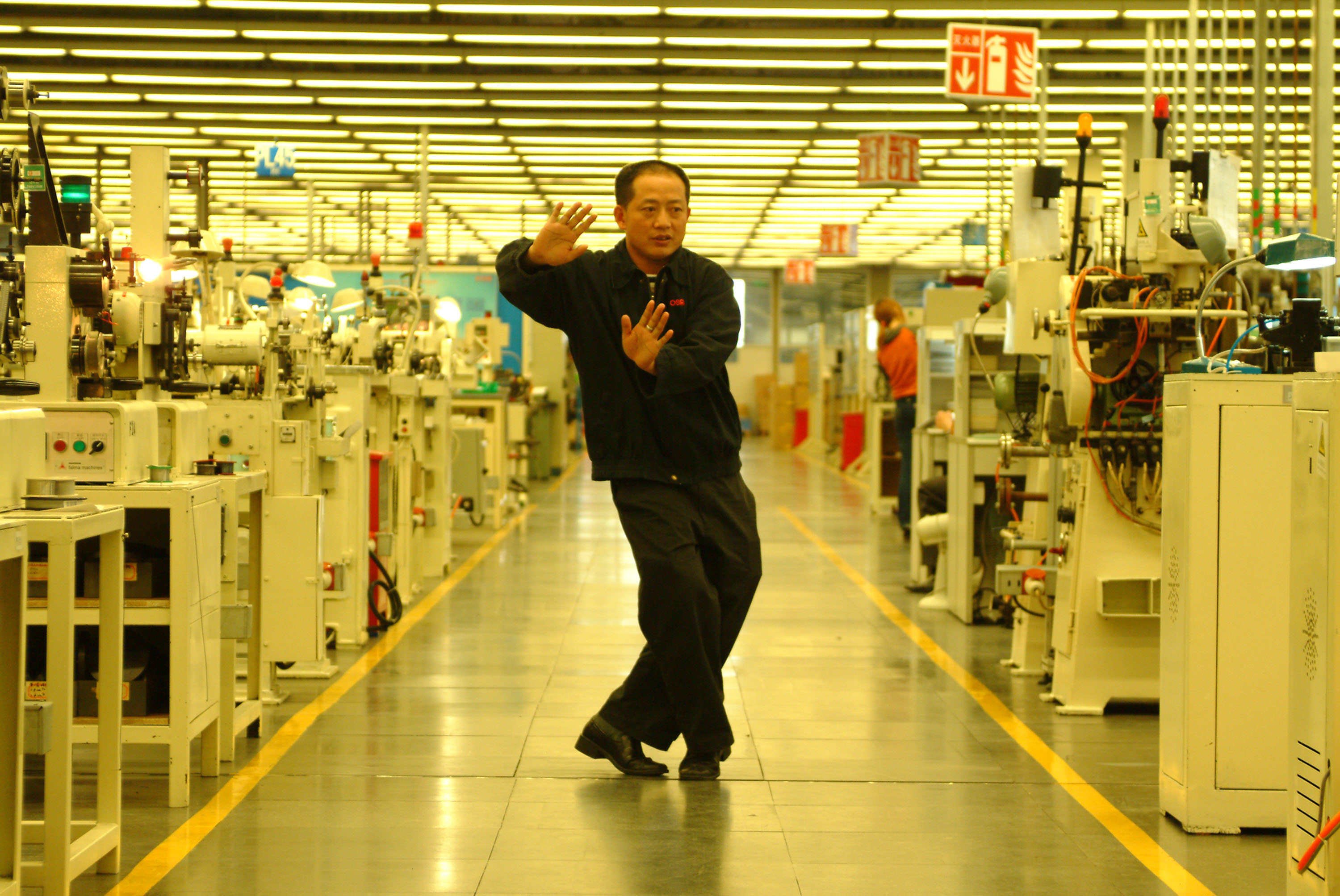
Cao_Fei-Whose_Utopia_2

Whose Utopia by Cao Fei, courtesy of Vitamin Creative Space

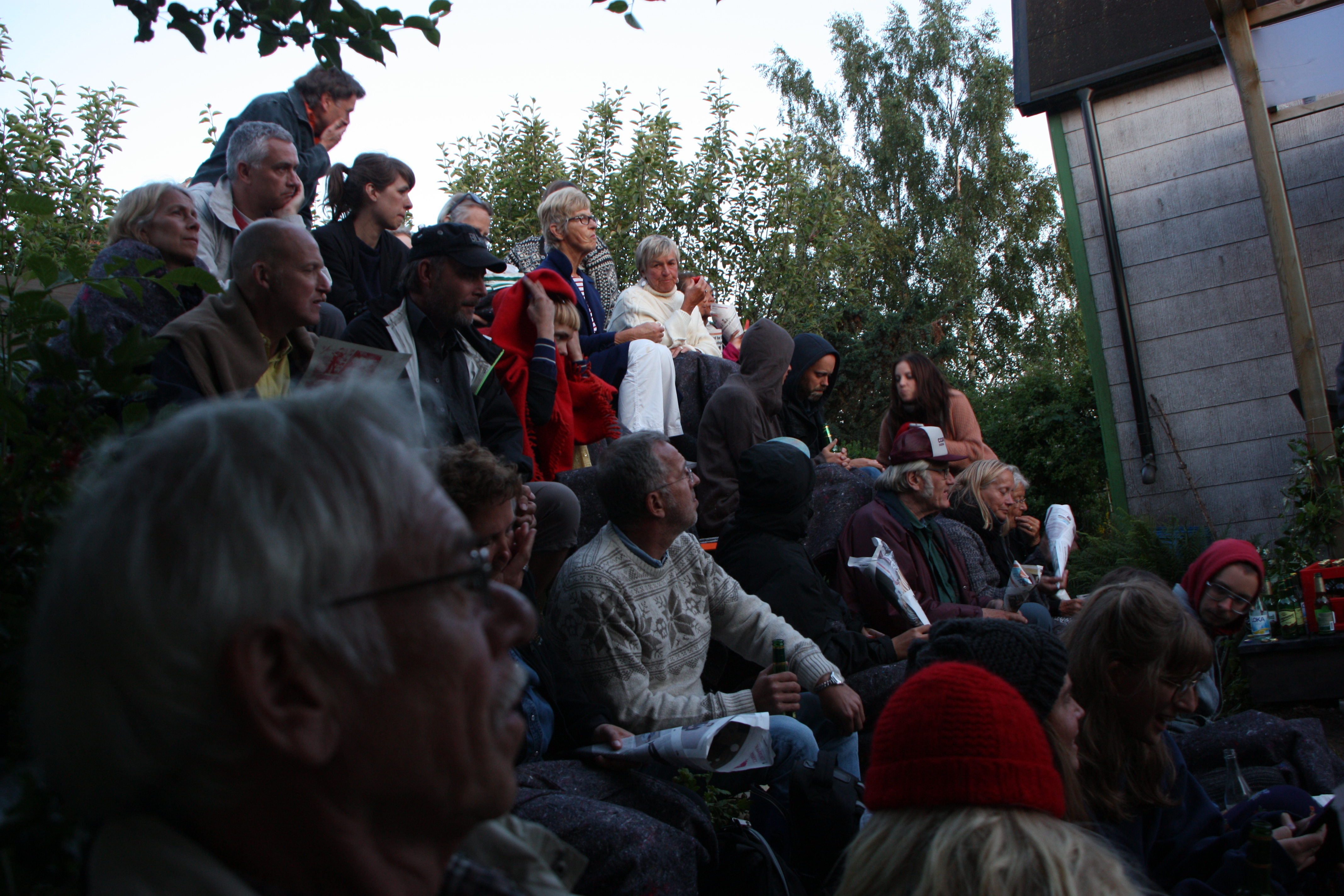
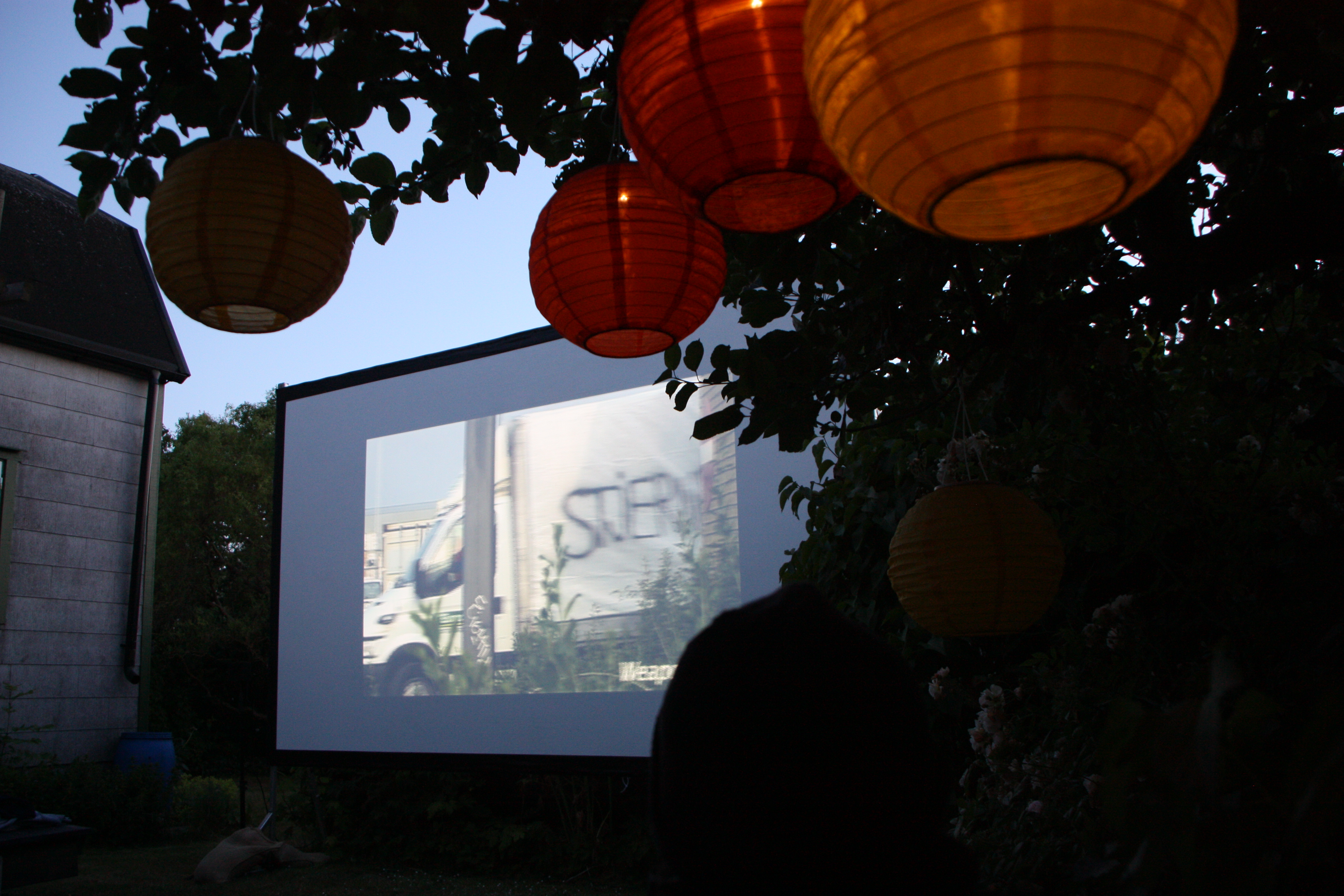
The screening on July 30 had a program inspired by discussions our study group, where we read 24/7 by Jonathan Crary and Nights Of Labor by Jaques Rancière.

We began the evening with the film One Year Performance 1980-1981 (Time Clock Piece) which documents a year long performance by Tehching Hsieh: once every hour, day and night, for the duration of one year, the artist stamps a time clock in his studio. Every hour a photograph is taken of Tehching Hsieh next to the time clock. When the photos are run as a filmstrip through a projector, they form a stop-motion animation in which we see the physical condition of the artist changing dramatically. A year is summed up in six minutes.

For those unfamiliar with the apparatus of control: A time clock was used in workplaces to keep track of the arrivals, departures, and breaks of employees, in order to follow and control workhours with precision.

More:  Tehching Hsieh

The idea of life and performance merging was developed further in a film by Swedish artist Saskia Holmkvist. In Interview with Saskia Holmkvist we see the artist Saskia Holmkvist being drilled in self-pesentation by an expert in media relations. Saskia Holmkvist tells us over and over what her art is about, and is adviced on how to present herself with honesty and natural authority. The artist is instructed in body language and posture, voice timbre and eye contact, all the while repeating phrases about how how her art deals with how we perceive something as honest and true. The interruptions, the visible microphones, and the self-awareness of the artist all point to how one of our stereotypically most honest figures, the artist, is involved in a constant ongoing performance of representing oneself.

More:  Saskia Holmkvist

We ended the evening with a film by Chinese artist Cao Fei. In one of the new industrial zones of China, the Pearl River Delta, lies the OSRAM lightbulb factory. The region sees the overflow of global capital with provincial workers’ migration, wherein young laborers from the inland are drawn to an ongoing reform of culture, capital and forms of working. the artist Cao Fei came to the OSRAM factory to produce an art project together with some of the young workers who dream of other utopias than the one which currently controls their lives. During six months, they attempt to express and give form to their dreams, through music, dance, and in a film which gets the title Whose Utopia. All around them, work goes on as usual at the conveyor belts.

More:  Cao Fei

A heartfelt thank you to the audience at the screening!

Unknown's avatar

There Were Calls Of ‘Bravo!’

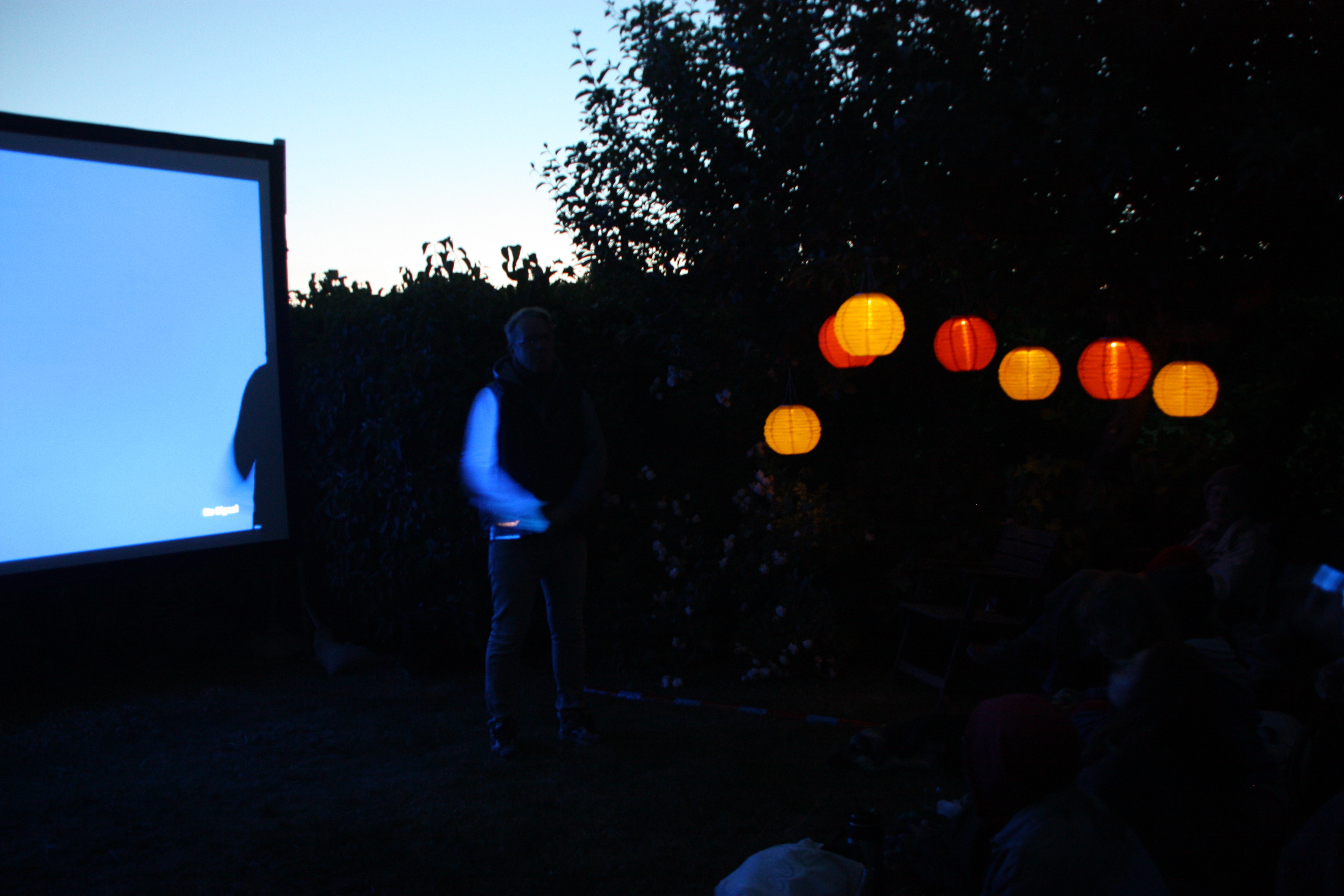
audience

The screening on June 26:th opened with the film With Soul, With Blood by Rabih Mroué. In the film Mroué scans a grainy newspaper photograph of a massive crowd at a political protest in a futile effort to find any trace of his own presence at the event.

Next we screened two parts of a film made by Fia-Stina Sandlund, An Idealistic Attempt and Reconstruction Of An Action That Never Took Place. While planning a protest action together with Danish activist Ulla Roder, the artist asks herself to what extent she is prepared to take risks for the sake of ideals. When Ulla Roder gets arrested, the artist produces a reconstruction of the action that they had planned together: an opera performance with lyrics about Maersk McKinney Moller transporting arms.

While introducing this film, and talking about some earlier works of the artist, there were shouts of ‘Bravo!’ from the audience. Read more about these works at www.fiastinasandlund.se

film

The evening concluded with a slideshow of images by photographer Tod Seelie, who accompanied the streetartist Swoon and her allies while constructing and sailing their armada of rafts across the Adriatic Sea, from Slovenia to Venice, Italy. The work is called The Swimming Cities Of Serenissima. Read more about this work at www.swimmingcities.org

lights

Unknown's avatar

Library Of Enlightenment

library one


With money earned from our studygroup in the workers educational association ABF, we’ve started buying books for a small library to be included in the Cinema. The library concentrates on three sections: Ecology, Climate and Energy; The Organizing Of A Society; Art and Cinema. Books can be borrowed by the people from our village on the first screening occasion and returned on the last. We’ll try to combine practical How To-books with books on critical thinking.

library two